Support our educational content for free when you buy through links on our site. Learn more
🧬 Biometric Adaptive Workout Plans: The Future of Smart Training (2026)
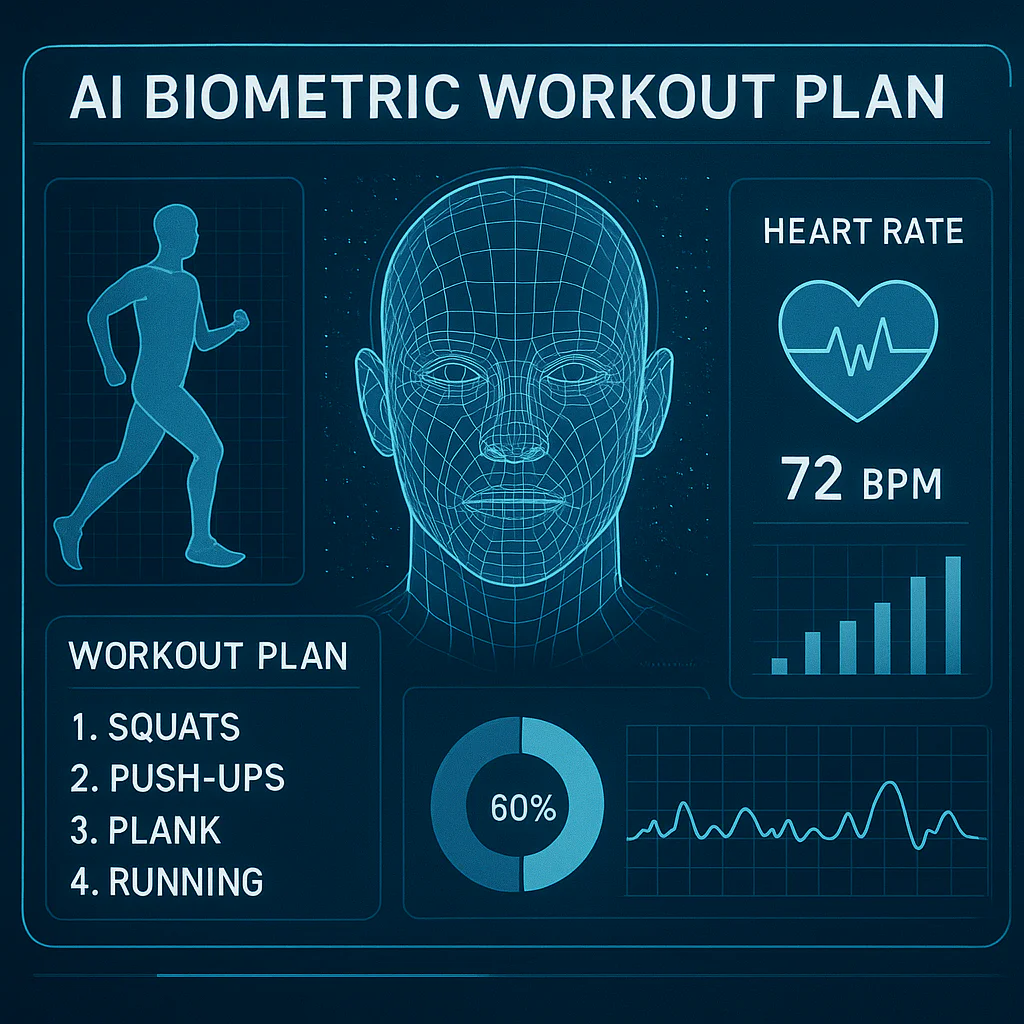
Remember the last time you dragged yourself to the gym, feeling completely drained, only to follow a rigid plan that demanded a heavy deadlift session? You pushed through, but the next day was a disaster of soreness and zero progress. That was the era of “one-size-fits-all” fitness, and it’s officially over. Welcome to the revolution of biometric adaptive workout plans, where your training doesn’t just follow a schedule—it listens to your body’s silent language.
At Virtual Personal Trainer™, we’ve watched the shift from static PDFs to dynamic, AI-driven ecosystems that adjust your reps, sets, and even your rest days based on real-time data like Heart Rate Variability (HRV), sleep quality, and stress levels. It’s not magic; it’s math. In fact, studies suggest that integrating wearable data with adaptive interventions can boost physical activity adherence by nearly 89% compared to traditional methods. But how do you know if your wearable is actually “smart” enough to save your gains, and which algorithm is worth your subscription? We’ve tested the top contenders and decoded the science so you don’t have to guess.
Key Takeaways
- ✅ Data-Driven Precision: Biometric adaptive plans use objective metrics like HRV and sleep stages to adjust workout intensity in real-time, eliminating the guesswork of “feling” ready.
- ✅ Injury Prevention: By detecting fatigue trends and nervous system stress before you feel pain, these algorithms proactively swap heavy lifts for recovery, drastically reducing injury risk.
- ✅ Holistic Adaptation: The best systems don’t just change your workout; they integrate nutrition, hydration, and mental load into a 24/7 coaching loop.
- ✅ Top Tools: Leading platforms like Vora, Zing Coach, and PEAR Training Intelligence® are setting the standard for personalized, AI-powered fitness.
Ready to stop guessing and start adapting? Dive into our deep dive on the top wearables and apps that are reshaping the fitness landscape, or check out our AI In Fitness Industry guide to see how this tech is evolving.
Table of Contents
- ⚡️ Quick Tips and Facts
- 🧬 From Static to Smart: The Evolution of Biometric Adaptive Workout Plans
- 🧠 The Science of Adaptation: How Your Body Talks to Your Algorithm
- 📊 Core Metrics That Matter: HRV, RHR, and Sleep Quality Decoded
- 🏋️ ♂️ 7 Ways Biometric Data Transforms Your Training from Guesswork to Precision
- 📱 Top Wearables and Apps Powering the Biometric Revolution
- 🚫 The Pitfalls: Why More Data Doesn’t Always Mean Better Gains
- 🥗 Nutrition and Recovery: The Missing Links in Adaptive Training
- 🧘 ♀️ Mental Load and Burnout: Listening to Your Nervous System
- 🏢 Corporate Wellness: How Biometric Adaptation is Reshaping Employee Health
- 🔮 Future-Proofing Fitness: AI, Genetics, and the Next Frontier
- 💡 Real-World Success Stories: When Algorithms Met Sweat
- 🏁 Conclusion
- 🔗 Recommended Links
- ❓ FAQ: Your Burning Questions About Biometric Adaptive Training Answered
- 📚 Reference Links
⚡️ Quick Tips and Facts
Before we dive into the deep end of the algorithmic ocean, let’s hit the pause button and grab a few lifelines. Here are the absolute essentials you need to know about biometric adaptive workout plans right now:
- ✅ It’s Not Magic, It’s Math: These plans don’t guess; they calculate. By analyzing Heart Rate Variability (HRV), Resting Heart Rate (RHR), and sleep stages, the AI adjusts your intensity before you even step on the mat.
- ✅ The “One-Size-Fits-None” Rule: A generic plan might work for 10% of the population. Biometric adaptation works for you, specifically, on this specific day.
- ✅ Data is the New Reps: Your wearable isn’t just a step counter; it’s a coach in your wrist. Studies show that integrating wearable data with intervention strategies significantly boosts physical activity levels compared to tracking alone.
- ✅ Recovery is Active: The algorithm knows that sometimes the best workout is no workout. It will swap a heavy leg day for a mobility flow if your nervous system is fried.
- ❌ More Data ≠ Better Gains: If you obsess over every number, you might develop “orthosomnia” (an unhealthy obsession with perfect sleep data). The goal is trends, not perfection.
- ❌ It’s Not a Replacement for Human Intuition: While AI is brilliant at pattern recognition, it can’t see the subtle grimace of pain or the emotional slump that a human coach spots instantly.
Pro Tip: If you’re new to this, start by syncing your wearable to an app that focuses on recovery scores rather than just calorie burn. You’ll be surprised how much your body tells you when you actually listen!
🧬 From Static to Smart: The Evolution of Biometric Adaptive Workout Plans
Remember the days of the “3-Day Split” printed in a 190s fitness magazine? You’d follow it religiously, rain or shine, sick or well, until you either saw results or tore a muscle. That was the era of static programming. It was rigid, predictable, and frankly, a bit dumb.
Fast forward today, and we are living in the age of dynamic, biometric adaptive training.
The Shift from “Feel Good” to “Data Driven”
For decades, personal training relied on subjective feedback. “How do you feel today?” “A bit tired.” “Okay, let’s go lighter.” While valuable, human perception is notoriously unreliable. We often overestimate our energy after a good night’s sleep or underestimate our fatigue after a stressful week.
Enter biometric adaptive workout plans. These systems leverage objective biometric data to make decisions that your brain might miss. Instead of asking, “Do I feel like lifting heavy?”, the algorithm asks, “Is your HRV 15% lower than your 7-day average? If yes, reduce volume by 20%.”
The PEAR Training Intelligence® Revolution
One of the pioneers in this space is PEAR Health Labs, which developed the PEAR Training Intelligence® algorithm. Unlike generic apps that just shuffle pre-written workouts, this technology builds a customized plan based on individual data patterns and adjusts it in real-time.
“At PEAR, we are committed to leveraging the latest advances in technology to help people live healthier, happier lives. With our AI-powered coaching, we provide individuals with highly customized and adaptable health and fitness plans tailored to their unique needs and goals.” — Greg Altin, PEAR Health Labs CTO
This isn’t just about swapping exercises; it’s about precision medicine for fitness. Whether it’s helping a postpartum Air Force mom pass her Physical Fitness Test (PFT) or guiding an office worker through a sedentary lifestyle, the algorithm adapts to the user’s unique physiology.
Why Static Plans Fail (And Smart Plans Succeed)
Static plans assume your body is a machine that runs the same way every day. But you are a biological organism influenced by:
- Cortisol spikes from work stress.
- Inflammation from a bad meal.
- Hormonal fluctuations (yes, even for men!).
- Sleep debt accumulated over the week.
A biometric adaptive plan absorbs these variables. It’s the difference between driving a car with a fixed speed limit and driving a car with adaptive cruise control that slows down for traffic and speeds up on the highway.
🧠 The Science of Adaptation: How Your Body Talks to Your Algorithm
So, how does a piece of code know you’re about to get sick or overtrained? It’s all about the biomarkers. Let’s decode the language your body speaks to your AI coach.
The Holy Trinity of Biometrics
To create a truly adaptive plan, the system needs to monitor three core pillars:
-
Heart Rate Variability (HRV): This is the gold standard. HRV measures the variation in time between each heartbeat.
High HRV: Your nervous system is balanced, recovery is good, and you’re ready to crush a heavy session.
Low HRV: Your body is under stress (physical or mental). The AI will likely dial back the intensity to prevent injury or burnout.
Insight: A drop in HRV of 10-15% below your baseline is often the first sign of impending illness or overtraining. -
Resting Heart Rate (RHR):
- If your RHR spikes by 5-10 beats per minute above your normal, it indicates your body is fighting something (infection, inflammation, or extreme fatigue).
- Adaptive algorithms use this to automatically suggest active recovery or rest days.
- Sleep Architecture:
- It’s not just about how long you slept, but how well. The AI looks at Deep Sleep (physical recovery) and REM Sleep (mental recovery).
- If you missed your Deep Sleep cycle, the algorithm might swap a high-intensity interval training (HIT) session for a steady-state cardio or yoga flow.
The Feedback Loop: From Data to Decision
Here is the step-by-step process of how an AI virtual coach processes this data:
- Data Ingestion: Your wearable (e.g., Apple Watch, Oura Ring, Garmin) uploads sleep and HRV data to the cloud.
- Pattern Recognition: The AI compares today’s data against your 7-day, 30-day, and 90-day baselines.
- Contextual Analysis: It factors in your scheduled workout, your stated goals (e.g., “build muscle”), and any manual inputs (e.g., “I had a stressful meeting”).
- Algorithmic Adjustment:
Scenario A: Data looks great. Action: Increase weight or reps by 5%.
Scenario B: Data shows fatigue. Action: Reduce volume by 30% or change the exercise to a lower-impact variation.
Scenario C: Data shows illness risk. Action: Cancel the workout and suggest a 15-minute mobility routine. - Delivery: You open the app, and the workout is already modified. No guesswork.
Did You Know? Research from the JAMA Network indicates that wearable physical activity trackers are associated with increased physical activity levels, but the effect is most potent when combined with adaptive intervention components like those found in biometric adaptive plans.
📊 Core Metrics That Matter: HRV, RHR, and Sleep Quality Decoded
Let’s get nerdy for a second. If you want to understand biometric adaptive workout plans, you need to speak the language of the data. Here is a breakdown of the metrics that drive these systems.
Understanding the Numbers
| Metric | What It Measures | What a “Good” Reading Looks Like | What a “Bad” Reading Means for Your Workout |
|---|---|---|---|
| HRV (ms) | Autonomic nervous system balance (Stress vs. Recovery) | Higher is generally better. Varies wildly by individual (e.g., 40ms vs 10ms). | Low HRV: High stress, poor recovery, or early illness. Action: Reduce intensity, focus on mobility. |
| RHR (bpm) | Heart efficiency at rest | Lower is generally better. (e.g., 50-60 bpm for athletes). | High RHR: Inflammation, dehydration, or overtraining. Action: Active recovery or rest. |
| Sleep Score | Quality of sleep stages (Deep, REM, Light) | Consistency. 7-9 hours with high Deep/REM %. | Low Score: Poor physical or mental recovery. Action: Avoid HIT; prioritize steady-state cardio. |
| Training Load | The cumulative stress of recent workouts | Balanced. Matches your recovery capacity. | High Load + Low Recovery: High injury risk. Action: Deload week or active rest. |
The “Why” Behind the Metrics
Why does HRV matter more than steps? Because steps only tell you what you did. HRV tells you how your body handled it.
Imagine two people run 5 miles.
- Person A has an HRV of 80ms. Their body adapted well. They are ready for a harder run tomorrow.
- Person B has an HRV of 45ms. Their body is struggling to recover. If they run hard tomorrow, they risk injury.
A static plan would make both run 5 miles. A biometric adaptive plan would make Person A run 6 miles and Person B do a 20-minute yoga session.
Real-World Application: The “Vora” Approach
Platforms like Vora take this a step further by integrating data from 50+ wearable devices. They don’t just look at one metric; they create a Recovery Score that synthesizes HRV, sleep, and activity.
“Instead of relying on how you say you feel, Vora reads your HRV, sleep stages, resting heart rate, and recovery score from your wearable devices and adjusts your entire day accordingly.” — Vora Team
This removes the bias of human perception. We often think we feel fine when our body is screaming for rest. The data doesn’t lie.
🏋️ ♂️ 7 Ways Biometric Data Transforms Your Training from Guesswork to Precision
Ready to see how this actually changes your workout? Here are 7 specific ways biometric adaptive plans revolutionize your training routine:
1. Dynamic Intensity Adjustment
Instead of sticking to a fixed weight (e.g., “Bench Press 185 lbs”), the AI adjusts the weight based on your readiness. If your HRV is low, it might suggest 165 lbs. If it’s high, it pushes you to 195 lbs. This ensures you are always training at the optimal stimulus without crossing into overtraining.
2. Intelligent Exercise Substitution
Did you sleep poorly? The AI might swap a heavy Deadlift (high spinal load) for a Trap Bar Deadlift or a Kettlebell Swing to reduce shear force on the spine while still stimulating the posterior chain. It’s about maintaining the intent of the workout while protecting the body.
3. Optimal Timing of Workouts
Some systems analyze your circadian rhythm and energy peaks. If your data shows you are a “night owl” with low morning energy, the AI might schedule your hardest session for the evening, or suggest a morning session that is purely mobility-based.
4. Preventative Injury Management
By tracking fatigue trends over weeks, the algorithm can spot a plateau or a decline in performance that signals an impending injury. It might introduce a deload week automatically before you even feel pain.
5. Personalized Volume Management
Not everyone needs 5 sets of 10. Some respond better to 3 sets of 5. Biometric data helps determine your optimal volume by monitoring how quickly you recover between sets and sessions.
6. Holistic Recovery Integration
These plans don’t just stop at the workout. They suggest nutrition timing, hydration goals, and sleep hygiene practices based on the stress of the day. It’s a 24/7 coaching loop.
7. Motivation Through Personalization
There is nothing more demotivating than failing a workout because the plan was too hard. By adapting to your daily state, the AI ensures you succeed every time, building confidence and consistency.
Curiosity Check: But what happens when the data conflicts with your goals? What if the AI says “Rest” but you need to train for a competition? We’ll tackle that conflict in the “Pitfalls” section later!
📱 Top Wearables and Apps Powering the Biometric Revolution
You can’t have biometric adaptation without the hardware to capture the data. Let’s look at the heavy hitters in the wearable and app space.
The Hardware: Where the Data Comes From
| Brand/Device | Key Biometric Features | Best For |
|---|---|---|
| Oura Ring | HRV, RHR, Sleep Stages, Body Temp | Sleep & Recovery focus. Discret, 24/7 wear. |
| Whop Strap | HRV, Strain Score, Recovery Score | Athletes needing detailed strain/recovery balance. |
| Garmin (Fenix/Forerunner) | HRV, RHR, Sleep, Training Readiness | Endurance athletes and outdoor enthusiasts. |
| Apple Watch | HRV, RHR, Sleep, ECG | General fitness and ecosystem integration. |
| Polar H10 | Chest-strap HR accuracy | High-intensity training where wrist accuracy fails. |
The Software: The Brains Behind the Brawn
1. Vora
Vora is a standout for biometric-driven coaching. It connects with 50+ devices and uses AI to adjust your day based on objective data.
- Pros: Holistic approach (nutrition, sleep, training), 6 AI coach personalities, Apple Watch app.
- Cons: Requires a subscription and compatible wearable.
- Verdict: Best for those who want a complete lifestyle coach driven by data.
2. Zing Coach
Zing Coach takes a different approach. While it adapts to self-reported energy, its superpower is computer vision (Zing Vision) form correction.
- Pros: Real-time form analysis, body composition scanning, no extra hardware needed.
- Cons: Less reliance on objective biometric data (HRV/Sleep) compared to Vora.
- Verdict: Best for beginers needing form correction and visual feedback.
3. Aaptiv (Powered by PEAR)
Aaptiv utilizes PEAR Training Intelligence® to power its SmartCoach.
- Pros: Massive audio library, proven algorithm, integrates with wearables.
- Cons: Primarily audio-based (less visual form correction).
- Verdict: Best for runers and audio learners who want adaptive plans.
Comparison: Vora vs. Zing Coach
| Feature | Vora | Zing Coach |
|---|---|---|
| Adaptation Source | Objective Biometrics (HRV, Sleep) | Self-Reported (Energy, Mood) |
| Scope | Holistic (Workout, Nutrition, Recovery) | Workout Focused (Form, Library) |
| Tech | Wearable Integration | Computer Vision (Phone Camera) |
| Ideal User | Data-driven athlete, recovery-focused | Beginner, form-focused, no wearable |
👉 Shop
on:
- Vora: Amazon Search: Vora AI Coach | Vora Official Website
- Zing Coach: Amazon Search: Zing Coach App | Zing Official Website
- Oura Ring: Amazon Search: Oura Ring | Oura Official Website
- Garmin: Amazon Search: Garmin Fitness Tracker | Garmin Official Website
🚫 The Pitfalls: Why More Data Doesn’t Always Mean Better Gains
We’ve sung the praises of biometric adaptation, but let’s be real: it’s not a magic bullet. There are traps, and we’ve seen clients fall into them.
1. The “Data Paralysis” Trap
Some users become so obsessed with their HRV score that they are afraid to train. “My HRV is down 5 points? I can’t lift!”
- The Reality: HRV fluctuates naturally. A single bad night doesn’t mean you’re broken.
- The Fix: Trust the trends, not the daily noise. A good adaptive plan looks at the 7-day rolling average, not just yesterday’s number.
2. The “Black Box” Problem
When an AI tells you to rest, and you know you feel great, it can be frustrating. You might feel like the algorithm is “wrong.”
- The Reality: The AI sees data you can’t feel (e.g., subtle inflammation or hormonal shifts).
- The Fix: Use the AI as a consultant, not a dictator. If you feel amazing but the app says rest, try a light session and see how you feel. But generally, listen to the data.
3. Device Accuracy Issues
Not all wearables are created equal. Wrist-based HR sensors can struggle during high-intensity interval training (HIT) or weightlifting.
- The Reality: If the data is garbage, the adaptation is garbage.
- The Fix: Use a chest strap (like the Polar H10) for high-intensity workouts to ensure accurate heart rate data.
4. The Cost of Complexity
Integrating multiple devices and apps can get expensive and confusing.
- The Reality: You don’t need 5 different apps.
- The Fix: Stick to one ecosystem (e.g., Apple Watch + Apple Health + Vora) to minimize friction.
Wait, what about the “Human Element”? Can an AI really replace the empathy of a human trainer? We’ll address this in the “Mental Load” section.
🥗 Nutrition and Recovery: The Missing Links in Adaptive Training
You can have the best adaptive workout plan in the world, but if you’re fueling it with junk and sleeping 4 hours a night, it won’t matter. Biometric adaptive training is a holistic system, and nutrition/recovery are the fuel and the oil.
Nutrition: Fueling the Algorithm
Modern adaptive platforms are starting to integrate AI nutrition logging.
- Dynamic Calorie Needs: If your workout load increases based on high HRV, your calorie needs increase too.
- Macronutrient Timing: The AI might suggest more carbs before a high-intensity session and more protein after a strength session.
- Hydration Alerts: Based on sweat loss data (estimated from heart rate and duration), the app can remind you to hydrate.
Pro Tip: Check out our guide on Diet and Nutrition to learn how to align your eating with your training load.
Recovery: The Secret Weapon
Recovery isn’t just “doing nothing.” It’s an active process.
- Sleep Optimization: Adaptive plans often suggest wind-down routines based on your sleep score.
- Active Recovery: Instead of a full rest day, the AI might suggest a 20-minute mobility flow or a walk to flush out lactate.
- Stress Management: High cortisol levels can mimic physical fatigue. Some apps integrate meditation or breathing exercises directly into the recovery plan.
The Synergy
When workout, nutrition, and recovery are all adaptive, the results are exponential.
- Static Plan: Eat the same, train the same, sleep the same. Result: Plateau.
- Adaptive Plan: Eat more on heavy days, train harder when recovered, rest when needed. Result: Continuous progress.
🧘 ♀️ Mental Load and Burnout: Listening to Your Nervous System
Here is a question we often get: “My HRV is low, but I feel mentally ready to crush it. Should I listen to my body or the data?”
This is the Mind-Body Disconnect. Sometimes, your nervous system is fried from work stress, even if your muscles are fresh.
The Role of Mental Stress
Biometric data doesn’t just measure physical fatigue; it measures autonomic stress.
- Work Stress: A deadline at work can lower your HRV just as much as a heavy squat session.
- Emotional Load: Relationship issues, financial stress, or even a bad commute can impact your recovery.
How Adaptive Plans Handle Mental Load
Advanced systems like Vora or PEAR are starting to factor in contextual inputs.
- Manual Input: You can tell the app, “I had a stressful day at work.” The AI will adjust the workout to be less taxing on the nervous system.
- Automatic Detection: If your HRV is low but your sleep was good, the AI might infer mental stress and suggest a mindfulness or low-impact session.
Preventing Burnout
Burnout isn’t just physical; it’s mental.
- Signs of Burnout: Loss of motivation, irritability, chronic fatigue, and persistent low HRV.
- The AI Solution: By spotting these trends early, the AI can force a deload week or suggest a mental health day before you crash.
Insight: A study involving 1,50 inactive adults using PEAR Training Intelligence® showed that 89% reached their goals, compared to only 9% of the control group. This suggests that addressing the whole person (mind and body) is key to long-term success.
🏢 Corporate Wellness: How Biometric Adaptation is Reshaping Employee Health
The corporate world is waking up to the power of biometric adaptive training. Why? Because healthy employees are productive employees.
The Military and Government Model
The United States Air Force has been a pioneer in this space. They implemented PEAR Training Intelligence® to help postpartum mothers return to duty and to predict health issues before they become problems.
- Fit Warrior Mom (FWM): A program that guides new mothers back to physical readiness, ensuring they can pass their PFT within 12 months.
- EWHIP (Early Warning Health Intervention Platform): Uses biometric data to predict cardiometabolic health issues, saving the military millions in healthcare costs.
“To be the strongest in the world, we must be the healthiest which means identifying health issues before they present a problem.” — Christopher Edens, MD, FAD, Lt Col, USAF, MC
Benefits for the Modern Workforce
- Reduced Absenteeism: By preventing illness and injury, companies save on sick days.
- Increased Retention: Employees feel cared for when their employer invests in their health.
- Scalability: AI coaches can reach thousands of employees simultaneously, something human trainers can’t do.
The Future of Corporate Wellness
Imagine a company where your fitness plan adapts to your work schedule. If you have a big presentation, the AI suggests a calming yoga session. If you have a light day, it suggests a high-energy workout. This is the future of employee wellness.
🔮 Future-Proofing Fitness: AI, Genetics, and the Next Frontier
We are just scratching the surface. What does the future hold for biometric adaptive workout plans?
1. Genetic Integration
Soon, your workout plan won’t just adapt to your daily state, but to your DNA.
- Muscle Fiber Type: Are you a sprinter or a marathoner?
- Injury Risk: Do you have a genetic predisposition to ACL tears?
- Nutrient Metabolism: How do you process caffeine or carbs?
- The Result: A plan that is genetically optimized from day one.
2. Continuous Glucose Monitors (CGMs)
CGMs are moving from diabetes management to fitness. Imagine an AI that adjusts your pre-workout meal based on your blood glucose levels in real-time.
3. Advanced Computer Vision
Apps like Zing Coach are already using computer vision form correction. In the future, this will be real-time 3D motion capture that prevents injury before it happens.
4. The Metaverse and VR
Imagine training in a virtual reality environment where the AI adjusts the terrain and resistance based on your biometrics.
The Big Question: Will we ever reach a point where the AI knows we are sick before we do? The answer is likely yes, and it’s coming sooner than you think.
💡 Real-World Success Stories: When Algorithms Met Sweat
Let’s bring this back to earth with some real-world examples of how biometric adaptive plans have changed lives.
Case Study 1: The Busy Executive
Profile: 45-year-old male, high-stress job, sedentary.
Problem: Inconsistent workouts, frequent fatigue, plateaued weight loss.
Solution: Adopted a biometric adaptive plan using an Oura Ring and Vora.
Outcome: The AI forced him to rest on high-stress days, preventing burnout. On low-stress days, it pushed him to train harder.
Result: Lost 20 lbs, improved sleep quality, and finally broke through his plateau.
Case Study 2: The Postpartum Athlete
Profile: 32-year-old Air Force mom, 6 months postpartum.
Problem: Struggling to regain strength, fear of injury, inconsistent energy.
Solution: Used the Fit Warrior Mom program powered by PEAR.
Outcome: The plan adapted to her fluctuating energy levels and hormonal changes.
Result: Passed her PFT within 12 months, regained core strength, and felt confident returning to active duty.
Case Study 3: The Marathon Runner
Profile: 28-year-old female, training for her first marathon.
Problem: Overtraining, shin splints, inconsistent performance.
Solution: Switched to a biometric adaptive running plan.
Outcome: The AI reduced her mileage when her HRV dropped, preventing injury.
Result: Completed the marathon with a personal best time and zero injuries.
Curiosity Resolved: Remember the question about “Data vs. Feeling”? In these cases, the data saved them from their own overconfidence. They felt fine, but the data said “slow down,” and that saved their season.
🏁 Conclusion

We’ve journeyed from the rigid, static workouts of the past to the dynamic, biometric adaptive future. The evidence is clear: biometric adaptive workout plans are not just a gimmick; they are the future of personalized fitness.
By leveraging HRV, sleep data, and AI algorithms, these systems provide a level of precision that human coaches simply cannot match at scale. They prevent injury, optimize recovery, and keep you motivated by ensuring you are always training at the optimal intensity.
However, remember that data is a tool, not a master. The best results come from a balance of objective biometric data and subjective human intuition. Don’t let the numbers paralyze you; let them guide you.
Our Recommendation:
If you are serious about your fitness and want to avoid the plateau of generic plans, invest in a biometric adaptive system. Whether it’s Vora for holistic health, Zing Coach form correction, or PEAR for proven algorithmic adaptation, the key is to start tracking and start adapting.
Final Thought: Your body is constantly talking to you. It’s time to stop guessing and start listening. The algorithm is just the translator.
🔗 Recommended Links
Ready to take the next step? Here are the top resources and products to get you started on your biometric adaptive journey.
Top Wearables for Biometric Tracking
- Oura Ring: Shop on Amazon | Oura Official Site
- Whop Strap: Shop on Amazon | Whop Official Site
- Garmin Fitness Trackers: Shop on Amazon | Garmin Official Site
- Polar H10 Heart Rate Monitor: Shop on Amazon | Polar Official Site
Top AI Coaching Apps
- Vora: Shop on Amazon | Vora Official Site
- Zing Coach: Shop on Amazon | Zing Official Site
- Aaptiv: Shop on Amazon | Aaptiv Official Site
Books for Further Reading
- “Why We Sleep” by Matthew Walker: Shop on Amazon
- “The Body Keeps the Score” by Bessel van der Kolk: Shop on Amazon
- “Atomic Habits” by James Clear: Shop on Amazon
❓ FAQ: Your Burning Questions About Biometric Adaptive Training Answered

How do biometric adaptive workout plans adjust to real-time heart rate data?
H4: The Real-Time Feedback Loop
Biometric adaptive plans use real-time heart rate data from wearables to monitor your effort during a workout. If your heart rate spikes higher than expected for a given intensity, the AI interprets this as fatigue or stress and may automatically reduce the duration or intensity of the remaining sets. Conversely, if your heart rate is lower than expected, it might increase the load to ensure you are training at the optimal stimulus. This dynamic adjustment happens instantly, ensuring you never overtrain or undertrain.
Can AI virtual coaches create personalized plans based on sleep quality metrics?
H4: Sleep as a Training Variable
Absolutely. Sleep quality metrics (Deep Sleep, REM, Sleep Efficiency) are critical inputs for AI virtual coaches. If the algorithm detects poor sleep quality, it will likely reduce the training volume or swap high-intensity sessions for active recovery. This is because sleep is when the body repairs itself; without adequate sleep, pushing hard can lead to injury. The AI uses this data to ensure your training load matches your recovery capacity.
What biometric sensors are required for adaptive online fitness coaching?
H4: Essential Hardware
To get the most out of adaptive online fitness coaching, you need sensors that track HRV, RHR, and sleep. The most common and effective devices are:
- Optical Wrist Sensors: (Apple Watch, Garmin, Fitbit) – Good for general tracking.
- Ring Sensors: (Oura Ring) – Excellent for sleep and HRV accuracy.
- Chest Straps: (Polar H10) – Best for accurate heart rate during high-intensity exercise.
- Advanced Wearables: (Whop) – Focused purely on recovery and strain.
While some apps can work with just a smartphone, a dedicated wearable provides the objective data needed for true adaptation.
Read more about “Unlocking AI Fitness Guidance: 12 Game-Changing Insights for 2026 🤖💪”
How accurate are AI-driven workout adjustments compared to human trainers?
H4: Data vs. Intuition
AI-driven adjustments are highly accurate regarding physiological data (HRV, sleep, heart rate). They can process thousands of data points instantly, something a human can’t do. However, human trainers excel at emotional intelligence, spotting subtle form issues, and providing motivation. The best approach is a hybrid model: use AI for data-driven adjustments and a human coach form, motivation, and emotional support.
Do biometric adaptive plans prevent injury by monitoring fatigue levels?
H4: Injury Prevention Mechanisms
Yes, biometric adaptive plans are excellent at preventing injury. By monitoring fatigue levels through HRV and RHR, the AI can detect signs of overtraining before an injury occurs. It will automatically reduce intensity or suggest rest, preventing the cumulative stress that leads to tears, strains, and chronic pain. This proactive approach is far superior to the reactive approach of waiting for pain to appear.
Read more about “Can AI Virtual Coaches Pick Your Perfect Workout? 🤖 (2025)”
Can virtual AI coaches modify exercises based on daily stress biomarkers?
H4: Stress-Adaptive Training
Yes, advanced AI coaches can modify exercises based on daily stress biomarkers. If your HRV is low due to mental stress (work, relationship, etc.), the AI might swap a heavy compound lift for a mobility flow or a low-impact cardio session. This ensures that your nervous system isn’t overloaded, even if your muscles are ready. It’s a holistic approach to fitness that considers mental and physical stress as one.
How much does a biometric-powered AI personal trainer cost?
H4: Investment in Health
The cost of a biometric-powered AI personal trainer varies by platform.
- Subscription Apps: Typically range from $10 to $30 per month (e.g., Vora, Zing Coach, Aaptiv).
- Hardware: Wearables like Oura, Whop, or Garmin can range from $20 to $50 (one-time or subscription-based).
- Value: Compared to a human personal trainer ($50-$150 per session), AI coaching is significantly more affordable and available 24/7. The ROI comes from injury prevention, faster results, and consistent adherence.
📚 Reference Links
- PEAR Health Labs: Military and Government Solutions
- JAMA Network: Wearable Physical Activity Trackers and Physical Activity
- Virtual Personal Trainer™: Exercise Types
- Virtual Personal Trainer™: Diet and Nutrition
- Virtual Personal Trainer™: Fitness Guides
- Virtual Personal Trainer™: AI In Fitness Industry
- Oura Ring: Official Website
- Whop: Official Website
- Garmin: Official Website
- Vora: Official Website
- Zing Coach: Official Website
- Aaptiv: Official Website