Support our educational content for free when you buy through links on our site. Learn more
🏋️ ♀️ 20 Different Types of Exercises to Master Your Body (2026)
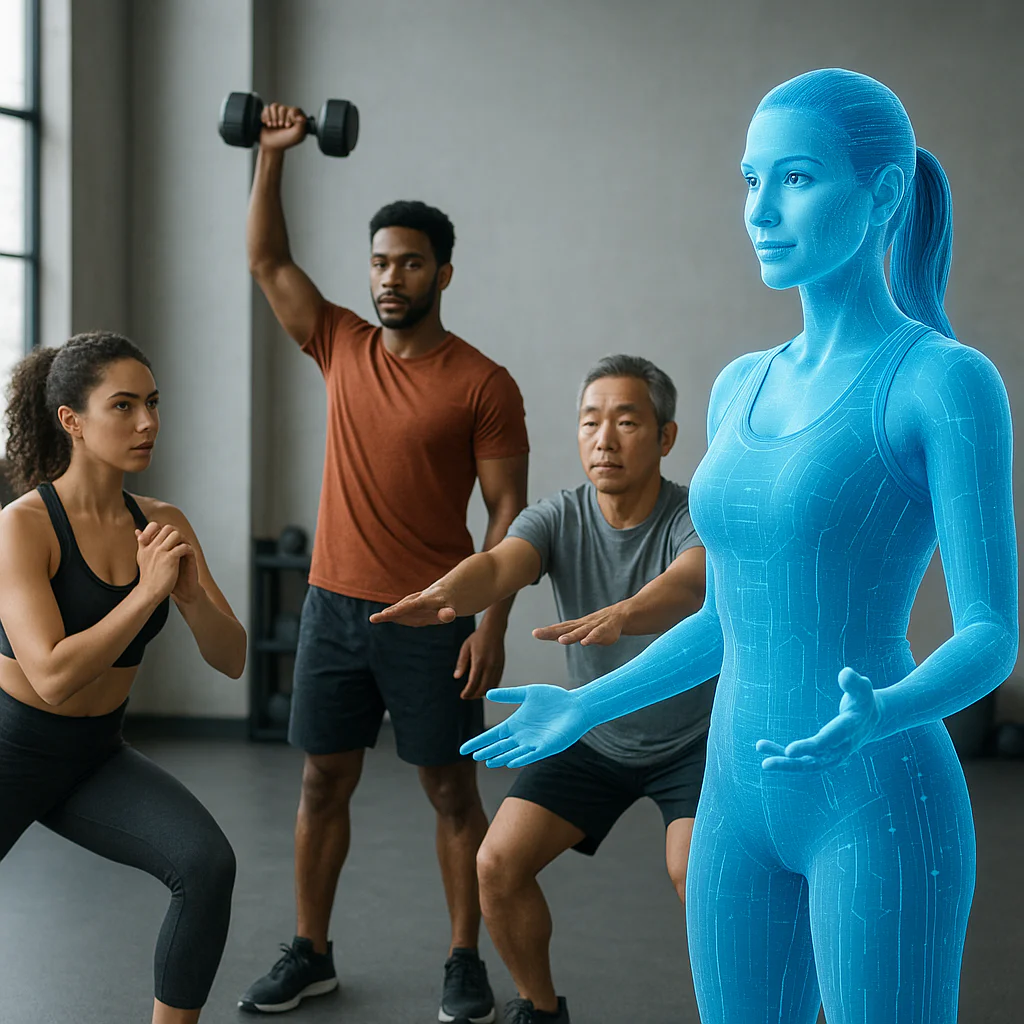

Ever feel like you’re stuck in a fitness rut, doing the same treadmill run or set of squats day after day? You’re not alone. In fact, the human body is a master of adaptation; if you keep doing the exact same thing, your progress will stall faster than a car running out of gas. But what if you could unlock a whole new world of movement, from the primal power of hiking to the precision of Pilates, and the high-octane thrill of Tabata?
At Virtual Personal Trainer™, we’ve analyzed thousands of workouts to bring you the ultimate guide to 20 different types of exercises. This isn’t just a list; it’s your roadmap to a balanced, injury-free, and endlessly engaging fitness journey. Whether you’re looking to burn fat, build muscle, or simply find joy in moving your body, we’ve got you covered. We’ll even reveal which specific combination of these 20 moves creates the perfect “full-body” routine for 2026, so you never have to guess again.
Key Takeaways
- Variety is the Secret Sauce: Incorporating 20 different types of exercises prevents plateaus, reduces injury risk, and keeps your metabolism guessing.
- Balance is Non-Negotiable: A true fitness regimen must blend cardiovascular endurance, strength training, flexibility, and balance for optimal healthspan.
- The “Best” Exercise is the One You Do: Consistency trumps intensity; choose from our list of 20 to find the movements that make you want to move.
- AI-Powered Personalization: Modern virtual coaching can dynamically rotate these 20 types based on your daily energy levels and goals, ensuring continuous progress.
Table of Contents
- ⚡️ Quick Tips and Facts
- 📜 The Evolution of Human Movement: A Brief History of Exercise Types
- 🏃 ♂️ Cardiovascular Powerhouses: Getting Your Heart Pumping
- 1. Walking and Hiking: The Unsung Heroes of Endurance
- 2. Joging and Running: Finding Your Pace
- 3. Cycling: Two Wheels, Infinite Possibilities
- 4. Swimming: The Low-Impact Full-Body Blast
- 5. Rowing: The Ultimate Total-Body Cardio Machine
- 💪 Strength and Resistance: Building Muscle and Bone Density
- 6. Strength Training with Weights: Lift Heavy, Live Strong
- 7. Bodyweight Exercises: No Gym? No Problem!
- 8. CrossFit: High-Intensity Functional Fitness
- 9. Circuit Training: Keep the Momentum Going
- 🧘 Mind-Body Mastery: Flexibility, Balance, and Control
- 10. Yoga: Stretch, Breathe, and Flow
- 1. Pilates: Core Control and Precision
- 12. Tai Chi: The Art of Moving Meditation
- 13. Bare: Ballet-Inspired Toning
- 🔥 High-Octane Intervals: Burn Fat and Boost Metabolism
- 14. High-Intensity Interval Training (HIT): Short Bursts, Big Results
- 15. Tabata: The 4-Minute Miracle
- 🥊 Combat and Climbing: Skill-Based Fitness
- 16. Boxing and Kickboxing: Rage Against the Bag
- 17. Climbing: Scale New Heights (Indors and Out)
- 💃 Rhythm and Fun: Moving to the Beat
- 18. Dancing: Fitness That Fels Like a Party
- 19. Aerobics: The Classic Cardio Revival
- 20. Jumping Rope: The Portable Cardio King
- 🚀 Get Your New Fitness Routine Started with Hydrow!
- 🌞 Get Ready for Summer: Hydrow Athletes Share Their Top Tips for a Fitter, Stronger Season
- 🧬 Healthspan vs. Lifespan: What Is the Difference, and Which Is More Important?
- 😤 How Exercise Helps Anger: Learn How to Rage Against the Machine (aka Your Emotions)
- 🛠️ Workout Benefits and Tips: Maximizing Your Gains
- ❓ Frequently Asked Questions About Exercise Types
- 🏁 Conclusion
- 🔗 Recommended Links
- 📚 Reference Links
⚡️ Quick Tips and Facts
Before we dive into the deep end of the fitness ocean, let’s grab a life vest and hit the high notes. Here are some non-negotiable truths about exercise that we’ve learned from years of coaching thousands of clients:
- Variety is the Spice of Life (and Gains): Your body is a master adapter. If you do the same 5 exercises forever, your progress will stall faster than a car in a snowstorm. Mixing up your routine keeps your metabolism guessing and your muscles growing.
- The “No Pain, No Gain” Myth: While some discomfort is normal, sharp pain is your body’s way of screaming “STOP!” Pain is not a badge of honor; it’s a warning sign.
- Consistency > Intensity: A 20-minute walk done every day beats a 2-hour gym session done once a month. Show up is the most important rep you’ll ever do.
- You Can’t Out-Train a Bad Diet: As we discuss in our Diet and Nutrition guides, what you eat fuels your engine. Exercise shapes the car; nutrition drives it.
- Rest is Part of the Workout: Muscles grow while you sleep, not while you lift. Recovery is where the magic happens.
Did you know? According to the Centers for Disease Control and Prevention (CDC), adults need at least 150 minutes of moderate-intensity aerobic activity every week, plus muscle-strengthening activities on 2 or more days. But here’s the kicker: how you get those 150 minutes matters just as much as the time itself.
Ready to find your perfect match among the sea of exercise options? Let’s explore the history of how we moved, so you can decide how you want to move today.
📜 The Evolution of Human Movement: A Brief History of Exercise Types

Ever wonder why we have so many different ways to sweat it out? It’s not just because fitness influencers like to invent new acronyms. The history of exercise is a mirror of human survival.
For our ancestors, movement wasn’t a “workout”; it was life or death. They didn’t have treadmills; they had to hunt, gather, climb, and run to survive. This natural movement pattern is what we call Primal Movement.
- The Hunter-Gather Era: Movement was functional. You squatted to pick berries, you ran from predators, you carried heavy loads. There was no separation between “exercise” and “living.”
- The Industrial Revolution: Enter the machine. Suddenly, we sat at desks. Our bodies, designed for movement, started to atrophy. This is when “exercise” became a conscious choice rather than a necessity.
- The Modern Fitness Boom: From the calisthenics of the 19th century to the aerobics craze of the 80s and the HIT explosion of the 2010s, we’ve been trying to recreate that primal necessity in a sedentary world.
At Virtual Personal Trainer™, we believe the best exercise is the one that bridges the gap between our ancient biology and our modern lives. Whether you’re climbing a rock wall or rowing a machine, you’re tapping into that primal drive.
But which movement pattern suits your modern lifestyle best? Let’s break down the Cardiovascular Powerhouses first.
🏃 ♂️ Cardiovascular Powerhouses: Getting Your Heart Pumping
Cardio isn’t just about burning calories; it’s about heart health, lung capacity, and stamina. Think of your heart as the engine of your car; cardio is the oil change that keeps it running smooth.
1. Walking and Hiking: The Unsung Heroes of Endurance
Don’t underestimate the power of putting one foot in front of the other. Walking is the most accessible exercise on the planet.
- Why it rocks: Low impact, zero cost, and you can do it while listening to a podcast.
- The Hiking Twist: Add uneven terrain and elevation, and you engage stabilizer muscles you didn’t know you had.
- Pro Tip: Aim for a “brisk” pace where you can talk but not sing.
2. Joging and Running: Finding Your Pace
Running is the classic. It’s high impact but incredibly efficient.
- The Benefit: It builds bone density and releases endorphins (the “runner’s high”).
- The Caveat: If you have bad knees, start slow or mix it with low-impact cardio.
- Virtual Trainer Insight: We often tell clients to focus on cadence (steps per minute) rather than speed to reduce injury risk.
3. Cycling: Two Wheels, Infinite Possibilities
Whether on a road bike, a mountain bike, or a stationary spin bike, cycling is a knee-friendly cardio beast.
- Why choose it: It builds massive leg strength without the pounding of running.
- Indoor vs. Outdoor: Indoor cycling (like Peloton or NordicTrack) offers controlled environments and data tracking.
4. Swimming: The Low-Impact Full-Body Blast
Water provides resistance in every direction. Swimming is the ultimate total-body workout that spares your joints.
- The Science: The buoyancy of water reduces stress on joints by up to 90%.
- Best for: Recovery days, arthritis sufferers, and those who hate sweating (ironically, you sweat in the pool, but you don’t feel it!).
5. Rowing: The Ultimate Total-Body Cardio Machine
Rowing is the dark horse of cardio. It engages 60% of your legs and 40% of your upper body.
- The Myth: “Rowing is just an arm workout.” False! It’s a leg drive first, then a core pull, then an arm finish.
- Brand Spotlight: Machines like the Hydrow or Concept2 offer immersive rowing experiences that make 20 minutes feel like 5.
Wait, is cardio enough? You might be thinking, “If I run every day, will I get strong?” The answer is a resounding no. Cardio builds endurance, but it doesn’t build significant muscle mass. That’s where we need to shift gears to the iron.
💪 Strength and Resistance: Building Muscle and Bone Density
If cardio is the engine, strength training is the chassis. It holds everything together, protects your joints, and boosts your metabolism 24/7.
6. Strength Training with Weights: Lift Heavy, Live Strong
This is the gold standard for building muscle.
- Free Weights vs. Machines: Free weights (dumbells, barbells) require more stabilization, engaging more muscles. Machines are great for isolation and safety.
- Progressive Overload: The key to growth is gradually increasing weight, reps, or sets over time.
- Brand Check: You don’t need a full gym. A set of Bowflex SelectTech Dumbells can replace an entire rack of weights.
7. Bodyweight Exercises: No Gym? No Problem!
As highlighted in our Home-based Workouts category, you are your own gym.
- The Big Moves: Push-ups, squats, lunges, planks, and burpees.
- Scalability: As seen in Healthline’s breakdown, you can progress from a knee push-up to a one-legged push-up.
- Why it works: It teaches your body to move as a unit, improving coordination and functional strength.
8. CrossFit: High-Intensity Functional Fitness
CrossFit combines weightlifting, gymnastics, and cardio into high-intensity WODs (Workouts of the Day).
- The Pros: Incredible community support and rapid fitness gains.
- The Cons: High injury risk if form is sacrificed for speed. Form first, always.
- Is it for you? If you love competition and variety, yes. If you prefer a quiet, controlled environment, maybe not.
9. Circuit Training: Keep the Momentum Going
Circuit training is a series of exercises performed back-to-back with minimal rest.
- The Hybrid: It blends strength and cardio, keeping your heart rate up while building muscle.
- Efficiency: Perfect for busy schedules. You can get a full-body workout in 30 minutes.
Still wondering about the “Big 5”? Many trainers swear by the “Big 5” compound movements: Squat, Deadlift, Bench Press, Overhead Press, and Row. These cover almost every muscle group. But what if you want to focus on flexibility and control instead?
🧘 Mind-Body Mastery: Flexibility, Balance, and Control
In a world of high-octane workouts, the mind-body connection is often overlooked. Yet, it’s crucial for longevity, injury prevention, and mental clarity.
10. Yoga: Stretch, Breathe, and Flow
Yoga is more than just touching your toes; it’s about the journey there.
- Styles: From the slow, meditative Hatha to the sweaty, dynamic Vinyasa and the intense Power Yoga.
- Benefits: Improves flexibility, balance, and stress reduction.
- Virtual Tip: Check out our Exercise Demonstrations for proper alignment cues.
1. Pilates: Core Control and Precision
Pilates focuses on the “powerhouse” (core, glutes, and back).
- The Difference: Unlike yoga’s flow, Pilates is about precision and controlled movement.
- Equipment: Can be done on a mat or with specialized machines like the Reformer.
- Who needs it? Athletes looking to prevent injury and anyone wanting a stronger core.
12. Tai Chi: The Art of Moving Meditation
Often called “meditation in motion,” Tai Chi involves slow, flowing movements.
- The Science: Studies show it improves balance and reduces fall risk in older adults.
- The Vibe: It’s the ultimate stress buster.
13. Bare: Ballet-Inspired Toning
Bare combines ballet, Pilates, and yoga.
- The Workout: High reps of small, isometric movements that burn out muscles.
- The Look: It’s great for long, lean muscles and core strength.
- Note: Don’t let the pink tutus fool you; it’s surprisingly intense!
But what if you want to burn fat FAST? That’s where we turn up the heat with High-Intensity Intervals.
🔥 High-Octane Intervals: Burn Fat and Boost Metabolism
If you have limited time and want maximum results, this is your zone. These workouts spike your heart rate and keep it elevated (EPOC effect) long after you stop.
14. High-Intensity Interval Training (HIT): Short Bursts, Big Results
HIT alternates between short bursts of max effort and periods of rest or low intensity.
- The Ratio: Commonly 2:1 or 1:1 (e.g., 30 seconds sprint, 30 seconds rest).
- Efficiency: A 20-minute HIT session can burn as many calories as a 45-minute steady-state run.
- Caution: Not for beginners. Build a base of fitness first.
15. Tabata: The 4-Minute Miracle
A specific form of HIT developed by Dr. Izumi Tabata.
- The Protocol: 20 seconds of all-out effort, 10 seconds of rest, repeated 8 times. Total time: 4 minutes.
- The Reality: It’s brutal. You will hate it. You will love the results.
- Best for: Time-crunched professionals who need a quick metabolic boost.
🥊 Combat and Climbing: Skill-Based Fitness
Sometimes you need to learn a skill while getting fit. These modalities are engaging, fun, and incredibly effective.
16. Boxing and Kickboxing: Rage Against the Bag
Throwing punches and kicks is a full-body workout that doubles as stress relief.
- The Benefits: Improves hand-eye coordination, footwork, and cardiovascular endurance.
- The Fun Factor: It’s hard to be bored when you’re dodging a heavy bag.
- Gear Up: You’ll need gloves and a bag. Check out Everlast for quality gear.
17. Climbing: Scale New Heights (Indors and Out)
Rock climbing (bouldering or top-rope) is a puzzle for your body.
- The Workout: It builds incredible grip strength, back muscles, and problem-solving skills.
- The Community: Climbing gyms are known for their supportive, inclusive culture.
- Safety First: Always use proper belay techniques and check your gear.
Feling the burn? Great! But let’s not forget that exercise can be fun. Who says you have to suffer to get fit?
💃 Rhythm and Fun: Moving to the Beat
If you hate the gym, these are your saviors. They feel like play, not work.
18. Dancing: Fitness That Fels Like a Party
From Zumba to Hip Hop, dancing is cardio with a soul.
- The Science: It improves coordination, balance, and mood.
- Accessibility: You can dance in your living room with a YouTube video or join a class.
- Virtual Option: Apps like Zumba offer on-demand classes.
19. Aerobics: The Classic Cardio Revival
Remember the 80s? Aerobics is making a comeback, but with a modern twist.
- The Format: Choreographed routines to music.
- The Benefit: High energy, great for socializing, and excellent for heart health.
20. Jumping Rope: The Portable Cardio King
Don’t sleep on the jump rope. It’s the favorite tool of boxers for a reason.
- The Stats: 10 minutes of jumping rope is roughly equivalent to 30 minutes of jogging.
- Portability: It fits in your pocket. You can do it anywhere.
- Skill: Start with basic jumps, then move to double-unders and crossovers.
🚀 Get Your New Fitness Routine Started with Hydrow!
Speaking of immersive workouts, have you considered bringing the studio experience home? Hydrow is revolutionizing home fitness with its live and on-demand rowing, cardio, and strength classes.
- Why Hydrow? It combines the low-impact benefits of rowing with the motivation of live instructors and a beautiful outdoor view on the screen.
- The Community: You’re not just rowing alone; you’re part of a global community of athletes.
- Versatility: Beyond rowing, they offer yoga, strength, and cardio classes to round out your 20 types of exercises.
👉 Shop Hydrow on:
🌞 Get Ready for Summer: Hydrow Athletes Share Their Top Tips for a Fitter, Stronger Season
Summer is coming, and the goal isn’t just to look good in a swimsuit; it’s to feel good in your skin. Hydrow athletes swear by consistency and variety.
- Tip 1: Mix your rowing with strength training to build lean muscle.
- Tip 2: Don’t skip the cool-down. Stretching prevents the “summer stiffness.”
- Tip 3: Stay hydrated! It’s easy to forget when you’re indoors, but sweat is sweat.
🧬 Healthspan vs. Lifespan: What Is the Difference, and Which Is More Important?
We often obsess over living longer (lifespan), but we should focus on living better (healthspan).
- Lifespan: The number of years you live.
- Healthspan: The number of years you live in good health, free from chronic disease and disability.
- The Goal: The 20 types of exercises we’ve discussed are the tools to maximize your healthspan. Strength training prevents sarcopenia (muscle loss), cardio keeps your heart strong, and flexibility prevents falls.
😤 How Exercise Helps Anger: Learn How to Rage Against the Machine (aka Your Emotions)
Ever had a bad day and felt like punching a wall? Don’t. Punch a bag instead.
- The Science: Exercise reduces cortisol (stress hormone) and increases endorphins.
- The Outlet: Boxing, kickboxing, and even high-intensity interval training are perfect for releasing pent-up frustration.
- Mental Clarity: After a good sweat, your brain feels clearer, and your anger feels manageable.
🛠️ Workout Benefits and Tips: Maximizing Your Gains
You have the list of 20 exercises. Now, how do you use them?
- The 80/20 Rule: 80% of your results come from consistency and diet; 20% from the specific exercise choice.
- Periodization: Plan your weeks. Week 1: Focus on strength. Week 2: Focus on cardio. Week 3: Mix it up.
- Listen to Your Body: If you’re exhausted, take a rest day. If you’re bored, try a new exercise from our list.
- Track Progress: Use a journal or an app. Seeing your progress is the best motivator.
❓ Frequently Asked Questions About Exercise Types
Can a virtual online coach powered by AI provide personalized workout plans that include 20 different types of exercises tailored to my needs and preferences?
Absolutely. At Virtual Personal Trainer™, our AI analyzes your goals, fitness level, available equipment, and even your schedule to curate a plan that rotates through these 20 types. Unlike a generic PDF, an AI coach adapts in real-time. If you say, “My knees hurt today,” the AI swaps running for swimming or cycling instantly.
What are some examples of exercises that I can do at home with minimal equipment and still achieve my fitness goals with virtual coaching?
You can do a full-body workout with just your body weight!
- Cardio: Jumping jacks, high knees, burpees.
- Strength: Push-ups, squats, lunges, planks.
- Flexibility: Yoga flows, dynamic stretching.
- Tools: A jump rope and a set of resistance bands are all you really need. Check out our Home-based Workouts for detailed guides.
How often should I switch up my exercise routine to avoid plateaus and see continuous progress with AI guidance?
Generally, every 4-6 weeks is a good time to change your routine significantly. However, with AI, you can micro-adjust every session. The key is progressive overload. If you’re doing the same 10 push-ups every day, you’ll plateau. The AI ensures you increase the difficulty gradually.
Can a virtual online coach powered by AI help me choose the best exercises for my fitness goals?
Yes! Whether your goal is weight loss, muscle gain, or improved mobility, the AI matches the right exercise type to your objective. For weight loss, it might prioritize HIT and circuit training. For muscle gain, it focuses on strength training and hypertrophy ranges.
What are the benefits of incorporating a variety of exercises into my fitness regimen with a virtual online coach?
Variety prevents boredom, reduces the risk of overuse injuries, and ensures you develop a well-rounded physique. It also keeps your metabolism guessing, preventing plateaus.
How can I create a workout routine with 20 different types of exercises for beginners?
Start small. Don’t try to do all 20 in one week.
- Week 1-2: Focus on 3-4 basics (Walking, Bodyweight Squats, Planks, Yoga).
- Week 3-4: Add 2-3 new types (Cycling, Push-ups, Dancing).
- Month 2: Introduce HIT and Strength Training.
Let the AI guide your progression so you don’t get overwhelmed.
What are the most effective exercises for weight loss and toning?
There is no single “best” exercise. The most effective routine combines cardio (to burn calories) and strength training (to build muscle, which boosts metabolism). A mix of HIT, strength circuits, and steady-state cardio is the gold standard.
What are 20 anaerobic exercises?
Anaerobic exercises are high-intensity, short-duration activities. Examples include:
- Sprinting
- Heavy weightlifting
- Burpees
- Box jumps
- Battle ropes
- Kettlebell swings
- Plyometric push-ups
- Sled pushes
- Tabata squats
- Mountain climbers
- Jump rope (fast)
- Deadlifts
- Bench press
- Pull-ups
- Dips
- Thrusters
- Clean and Jerk
- Snatch
- Wall balls
- High knees (sprint)
What are 10 aerobic activities?
Aerobic activities are sustained, moderate-to-high intensity movements:
- Walking
- Joging
- Swimming
- Cycling
- Rowing
- Dancing
- Hiking
- Elliptical training
- Stair climbing
- Aerobics classes
What are the 7 workouts?
The “7 workouts” usually refers to the 7-minute workout (HIT circuit) or the 7 major movement patterns:
- Squat
- Hinge (Deadlift)
- Push (Push-up)
- Pull (Row)
- Lunge
- Carry (Farmer’s walk)
- Rotate (Core twist)
What are different types of exercise?
As detailed in this article, they fall into four main categories:
- Endurance (Cardio): Running, swimming.
- Strength: Weightlifting, bodyweight.
- Balance: Tai Chi, single-leg stands.
- Flexibility: Yoga, stretching.
What are the big 5 exercise?
The “Big 5” compound lifts are:
- Squat
- Deadlift
- Bench Press
- Overhead Press
- Barbell Row
What are 10 workouts?
Ten distinct workout styles:
- HIT
- Steady State Cardio
- Strength Training
- Yoga
- Pilates
- CrossFit
- Circuit Training
- Tabata
- Boxing
- Bare
What are 10 examples of muscular endurance?
Exercises that require muscles to sustain effort:
- High-rep push-ups
- Plank holds
- Bodyweight squats (high reps)
- Jumping jacks
- Mountain climbers
- Burpees
- Lunges (alternating)
- Tricep dips
- Glute bridges
- Bicycle crunches
What are the 8 essential exercises?
Often cited as the “essential” functional movements:
- Squat
- Hinge
- Push (Horizontal)
- Push (Vertical)
- Pull (Horizontal)
- Pull (Vertical)
- Lunge
- Carry
What are the 6 types of physical exercise?
- Aerobic
- Anaerobic
- Strength
- Flexibility
- Balance
- Coordination
What is 20 20 20 exercises?
This usually refers to a 20-minute workout consisting of 20 seconds of work and 20 seconds of rest (a Tabata-style variation), or sometimes a routine involving 20 reps of 20 different exercises. It’s a framework for high-intensity, time-efficient training.
🏁 Conclusion

We’ve taken a whirlwind tour through 20 different types of exercises, from the primal roots of walking and hiking to the high-tech world of Hydrow and AI coaching.
The Verdict: There is no single “best” exercise. The best routine is the one that you enjoy and can stick to consistently.
- For Heart Health: Prioritize Cardio (Running, Swimming, Cycling).
- For Muscle & Bone: Don’t skip Strength Training.
- For Longevity: Add Balance and Flexibility (Yoga, Tai Chi).
- For Fun: Dance, Box, or Climb.
Our Confident Recommendation:
Don’t try to do all 20 at once. Start with 3-4 types that fit your lifestyle. Use a virtual coach to rotate them, ensuring you hit every muscle group and keep your body guessing. Remember, the goal is healthspan, not just a number on the scale.
Did we answer your question? If you were wondering, “Which of these 20 is right for me?” the answer is: All of them, at different times. Your body needs variety. Start today, mix it up, and let the journey begin.
🔗 Recommended Links
Ready to get started? Here are our top picks for gear and resources to support your 20-exercise journey:
- Hydrow Rowing Machine: The ultimate home cardio experience.
- Shop on Amazon | Shop on Walmart | Hydrow Official Site
- Bowflex SelectTech Dumbells: Perfect for home strength training.
- Shop on Amazon | Bowflex Official Site
- Everlast Boxing Gloves: For your combat training needs.
- Shop on Amazon | Everlast Official Site
- Resistance Bands Set: Essential for portable strength.
- Shop on Amazon | TheraBand Official Site
- Book: The 4-Hour Body by Tim Ferriss (Great for understanding body mechanics).
- Buy on Amazon
- Book: Becoming a Suple Leopard by Kelly Starett (The bible for mobility).
- Buy on Amazon
📚 Reference Links
- Centers for Disease Control and Prevention (CDC): Physical Activity Guidelines
- Healthline: At-Home Workouts
- Virtual Personal Trainer™: 20 Different Types of Exercises at Home You Can’t Miss in 2026
- Leaps and Rebounds: 20 Different Types of Exercises You Can Do At-Home for a Full Body Workout
- Concept2: Rowing Machine Info
- Peloton: Indoor Cycling & Strength
- National Institute on Aging: Exercise and Physical Activity