Support our educational content for free when you buy through links on our site. Learn more
🚀 Data Integrated Strength Conditioning: The 2026 Playbook for Peak Performance
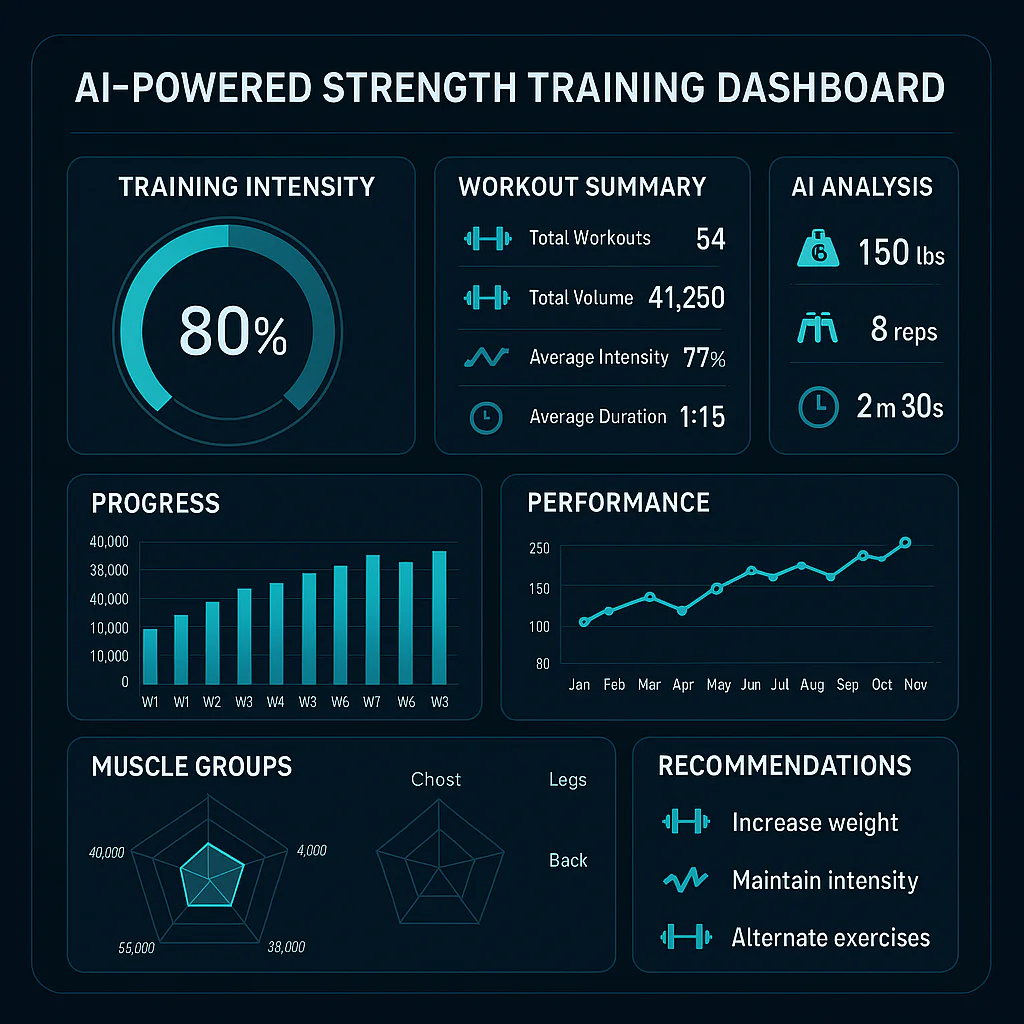

Remember the days when a coach’s “gut feeling” was the only metric that mattered? We do. But in the high-stakes world of modern athletics, intuition alone is no longer enough to prevent injury or unlock elite potential. Welcome to the era of Data Integrated Strength Conditioning, where the marriage of biomechanics, physiology, and artificial intelligence transforms guesswork into precision engineering.
In this comprehensive guide, we dive deep into the tech stack that elite teams use to dominate, from Velocity-Based Training (VBT) to Acute:Chronic Workload Ratios (ACWR). You’ll discover how to balance the cold hard numbers with the warm human touch, avoiding the trap of “paralysis by analysis” while leveraging AI-driven insights to personalize training at scale. We’ll even reveal the specific metrics that can slash your injury risk by up to 50%—a stat that might just save your season.
Whether you are a professional strength coach managing a roster of 50 athletes or a dedicated home gym enthusiast, the future of performance is here. It’s not about replacing the coach; it’s about giving you the ultimate co-pilot. Ready to stop guessing and start knowing? Let’s unlock your true potential.
Key Takeaways
- Data is a Compass, Not the Map: Successful integration relies on using metrics to guide decisions, not dictate them; subjective feedback (RPE) remains as vital as objective data.
- The Sweet Spot of Workload: Maintaining an Acute:Chronic Workload Ratio (ACWR) between 0.8 and 1.3 is critical for maximizing adaptation while minimizing soft tissue injury risk.
- AI as the Force Multiplier: Artificial Intelligence enables personalization at scale, adjusting programs in real-time based on biometric feedback like HRV and sleep quality.
- Velocity Over Volume: Prioritizing bar velocity and movement quality over sheer volume ensures athletes train effectively without accumulating unnecessary fatigue.
- The Hybrid Model: The most effective approach blends cuting-edge technology with coach intuition, creating a unified ecosystem where data informs the art of coaching.
Table of Contents
- ⚡️ Quick Tips and Facts
- 📜 The Evolution of Data Integrated Strength Conditioning: From Gut Feel to Big Data
- 🧠 The Science Behind the Numbers: How Biomechanics and Physiology Merge
- 🛠️ Essential Tech Stack: Wearables, Force Plates, and Load Management Software
- 📊 Mastering the Metrics: Interpreting GPS, RPE, and Velocity-Based Training Data
- 🚀 7 Proven Strategies to Integrate Data Without Overwhelming Your Athletes
- 🤖 AI and Machine Learning: The Future of Predictive Injury Prevention
- 🏆 Case Studies: How Elite Teams Leverage Data for Championship Wins
- 🛡️ Balancing the Scale: When Data Enhances Performance vs. When It Hinders Intuition
- 📱 Unified Mobile Experiences: Coaching on the Go with Real-Time Insights
- 📈 Personalizing at Scale: Tailoring Programs for Every Athlete’s Unique Physiology
- 📉 Reducing Risk: Using Load Monitoring to Prevent Soft Tissue Injuries
- 🗂️ Streamlined Roster Management: Organizing Data for Maximum Efficiency
- 🔍 The Coach’s Dashboard: Making Better Decisions with Actionable Insights
- 💡 Common Pitfalls: Why Your Data Integration Might Be Failing
- 🏋️ ♂️ Strength and Conditioning Your Way: Blending Art and Science
- 🧩 Conclusion
- 🔗 Recommended Links
- ❓ FAQ
- 📚 Reference Links
⚡️ Quick Tips and Facts
Before we dive into the deep end of the data ocean, let’s hit the high notes that every coach and athlete needs to know. If you’re feeling overwhelmed by spreadsheets and GPS tracks, take a breath. Here is the distilled wisdom from our team at Virtual Personal Trainer™:
- Data is a Compass, Not the Map: Never let a number dictate a workout if your athlete looks like they’ve been run over by a truck. Subjective feedback (RPE) is just as critical as objective metrics.
- The “More is Better” Myth: Collecting 50 data points per athlete is useless if you can’t act on 3 of them. Actionable insights trump data hoarding every time.
- Velocity Matters, But It’s Not the Goal: As highlighted in the featured video perspective, training for speed is great, but training to be a “less fatigued lifter” yields better long-term strength gains.
- Silos Kill Performance: If your nutritionist, physio, and strength coach aren’t talking, you aren’t integrating data; you’re just creating noise.
- AI is Your Co-Pilot: Artificial Intelligence doesn’t replace the coach; it handles the math so you can focus on the human element of motivation and technique.
Did you know? A study published in the Journal of Strength and Conditioning Research found that athletes who monitored their Acute:Chronic Workload Ratio (ACWR) reduced their non-contact injury risk by up to 50% compared to those who didn’t. But wait—what happens when that ratio is too low? We’ll uncover that mystery later!
For more on how to apply these concepts to your specific routine, check out our guide on exercise types to see where data fits into different modalities.
📜 The Evolution of Data Integrated Strength Conditioning: From Gut Feel to Big Data
Remember the “old days”? The era of the “Coach’s Gut”? We do. It was a time when a coach would look at an athlete, squint into the sun, and say, “You look fresh, hit 90% today!” or “You look tired, do some light jogging.”
While intuition is the soul of coaching, the evolution of data integrated strength conditioning has turned that gut feeling into a science-backed strategy.
The Gut-Feel Era
In the 1980s and 90s, strength and conditioning was largely anecdotal. Coaches relied on:
- Visual cues: Soreness, gait, and general demeanor.
- Simple metrics: One-rep maxes (1RM) and rep counts.
- The “No Pain, No Gain” philosophy: Often leading to overtraining and injury.
The Digital Dawn
Fast forward to the 2010s. The introduction of GPS tracking, heart rate monitors, and force plates changed everything. Suddenly, we could measure:
- Total Distance: Not just how far, but how fast.
- Load Management: Quantifying the stress on tendons and muscles.
- Recovery Status: Using Heart Rate Variability (HRV) to predict readiness.
The Current State: Integration
Today, we are in the Integration Era. It’s not enough to have a GPS watch; the data from that watch must talk to the nutrition app, the medical log, and the strength program.
Why does this matter to you? Because the gap between “feling tired” and “being ready to lift heavy” is now measurable. We can see the fatigue debt before it leads to a tear.
For a deeper dive into the career landscape of this evolving field, check out the NSCA’s analysis on sport science careers.
🧠 The Science Behind the Numbers: How Biomechanics and Physiology Merge
You might be wondering: How does a number on a screen actually make me stronger? It’s not magic; it’s the marriage of biomechanics and physiology.
Biomechanics: The Physics of Movement
Biomechanics analyzes the forces acting on the body. When we integrate data here, we look at:
- Bar Velocity: How fast the bar moves tells us about force production.
- Ground Reaction Forces: Measured by force plates, this tells us how much force an athlete generates during a jump or sprint.
- Range of Motion (ROM): Optical sensors can track if an athlete is cheating on their squat depth.
Physiology: The Engine Room
Physiology looks at the internal systems. Data integration here monitors:
- Metabolic Stress: Lactate thresholds and oxygen consumption (VO2).
- Neuromuscular Fatigue: How “fried” the nervous system is.
- Hormonal Response: Cortisol vs. Testosterone ratios (though this is harder to track in real-time).
The Synergy
When you combine these, you get Precision Training.
- Scenario: An athlete’s bar velocity drops by 15% on their squat.
- Old School: “Push through it!” (Result: Potential injury).
- Data Integrated: “Your velocity dropped, indicating high fatigue. Let’s reduce the load by 10% and focus on technique.” (Result: Optimal adaptation).
This synergy is the core of what we teach in our Fitness Guides.
🛠️ Essential Tech Stack: Wearables, Force Plates, and Load Management Software
You can’t build a house without tools, and you can’t do data-integrated conditioning without the right tech stack. Let’s break down the hardware and software that are changing the game.
1. Wearables: The First Line of Defense
These are the devices your athletes wear daily.
- Whop 4.0: Famous for its HRV (Heart Rate Variability) tracking and recovery scores. It’s great for monitoring sleep and strain.
Pros: Unobtrusive, 24/7 monitoring.
Cons: Expensive subscription; doesn’t measure GPS distance as well as others.
👉 Shop Whop on: Amazon | Whop Official - Garmin Fenix Series: A powerhouse for GPS and altitude data.
Pros: Excellent battery life, robust GPS.
Cons: Bulky for some athletes; data can be overwhelming.
👉 Shop Garmin on: Amazon | Garmin Official - Polar H10: The gold standard for chest-strap heart rate accuracy.
Pros: Medical-grade accuracy, affordable.
Cons: Chest strap can be uncomfortable for some.
👉 Shop Polar on: Amazon | Polar Official
2. Force Plates: The Gold Standard for Power
If you want to know how much force an athlete can generate, you need a force plate.
- Bertec Force Plates: Used in elite labs. Incredible precision but costs a fortune.
- Just Jump Mat: A more affordable, portable option for measuring vertical jump height and contact time.
👉 Shop Just Jump on: Amazon | Probotics Official
3. Load Management Software: The Brain
Hardware collects data; software makes sense of it.
- Teamworks S&C: As noted in our competitive analysis, this platform breaks down silos. It connects strength data with medical and nutrition data.
Key Feature: Auditable trail for staff transitions.
Learn more at: Teamworks Official - Hudl Technique: Great for video analysis combined with data tagging.
👉 Shop Hudl on: Hudl Official - TrainHeroic: A favorite for individual coaches and small groups.
👉 Shop TrainHeroic on: TrainHeroic Official
| Feature | Whop 4.0 | Garmin Fenix | Teamworks S&C | Just Jump Mat |
|---|---|---|---|---|
| Primary Use | Recovery & HRV | GPS & Performance | Data Integration | Power & Jump |
| Real-time Data | ✅ | ✅ | ✅ | ❌ (Post-set) |
| Cost Model | Subscription | One-time | Enterprise | One-time |
| Best For | Endurance/Recovery | Field Sports | Elite Teams | Power Athletes |
📊 Mastering the Metrics: Interpreting GPS, RPE, and Velocity-Based Training Data
You have the data. Now, what do you do with it? This is where many coaches get stuck. Let’s decode the Big Three: GPS, RPE, and Velocity.
1. GPS Metrics: It’s Not Just Distance
GPS data is often misused. Don’t just look at “Total Distance.”
- High-Speed Running (HSR): Distance covered above a specific speed (e.g., >19 km/h). This is crucial for injury risk in team sports.
- Player Load: A composite metric of all movements (acceleration, deceleration, jumping).
- Acute:Chronic Workload Ratio (ACWR): The ratio of last week’s load to the last 4 weeks.
Sweet Spot: 0.8 to 1.3.
Danger Zone: >1.5 (High injury risk) or <0.8 (Detraining).
2. RPE (Rate of Perceived Exertion): The Human Element
RPE is subjective, but when paired with data, it’s powerful.
- The Hybrid Approach: As discussed in the featured video, use preset goals with an RPE cap.
Example: “Target 85% 1RM, but if RPE > 8, stop.”
Why? This prevents the “grind city” scenario where athletes push too close to failure, accumulating unnecessary fatigue. - Session RPE (sRPE): Multiply the session RPE by the duration to get a “Training Impulse” (TRIMP).
3. Velocity-Based Training (VBT): The Objective Bar
VBT uses bar speed to determine intensity.
- Velocity Loss: If velocity drops by 20% during a set, the set is over. This ensures quality over quantity.
- Mean Propulsive Velocity (MPV): The average speed of the concentric phase.
- Why it works: Research by Miranda & Navarro (2017) shows that training with lower RPE (stopping further from failure) leads to greater strength gains with less fatigue.
Pro Tip: Don’t obsess over being the “fastest” lifter. Obsess over being the least fatigued lifter. Speed is a byproduct of freshness!
For more on how to structure these workouts, explore our Home-based Workouts category where we adapt these principles for the home gym.
🚀 7 Proven Strategies to Integrate Data Without Overwhelming Your Athletes
Integrating data is great, but data overload is real. If your athletes spend more time looking at screens than lifting, you’ve failed. Here are 7 strategies to keep it simple and effective.
- Start with One Metric: Don’t track GPS, HRV, VBT, and sleep all at once. Pick one (e.g., Morning HRV) and master it.
- Automate the Collection: Use wearables that sync automatically. If your athlete has to manually enter data, they won’t do it.
- The “Traffic Light” System: Simplify data into Red, Yellow, Green.
- 🟢 Green: Go hard.
- 🟡 Yellow: Moderate intensity.
- 🔴 Red: Recovery or deload.
- Educate, Don’t Dictate: Explain why you are tracking. “We track this to keep you healthy for the playoffs,” not “Because the computer says so.”
- Focus on Trends, Not Single Data Points: One bad sleep score doesn’t mean an athlete is injured. Look at the 7-day rolling average.
- Integrate into the Warm-up: Make data collection part of the routine (e.g., a 30-second jump test before the first set).
- Review Weekly, Not Daily: Don’t micromanage every set. Review the data weekly to adjust the next week’s plan.
🤖 AI and Machine Learning: The Future of Predictive Injury Prevention
We are standing on the precipice of a new era. Artificial Intelligence (AI) is no longer science fiction; it’s the co-pilot of modern strength conditioning.
How AI Works in S&C
AI algorithms analyze vast datasets to find patterns humans miss.
- Predictive Modeling: AI can predict an injury risk based on subtle changes in gait, sleep, and load that a human eye would miss.
- Personalized Programming: Instead of a generic template, AI generates a unique plan for your athlete based on their historical response to stress.
- Real-Time Adjustment: Imagine a system that says, “Based on this athlete’s HRV and yesterday’s sleep, reduce today’s volume by 15%.”
The Virtual Personal Trainer™ Advantage
At Virtual Personal Trainer™, we leverage AI to bridge the gap between elite data and the everyday athlete. Our system doesn’t just track; it adapts.
- Dynamic Adjustments: If you miss a workout or feel sore, the AI adjusts the next session automatically.
- Form Analysis: Using computer vision, AI can analyze your squat depth and bar path in real-time.
- Nutritional Integration: AI correlates your performance data with your nutrition logs to suggest dietary tweaks.
Curious about the future? We’ll discuss how AI is reshaping careers in the sport science field later in this article. But first, let’s look at who is winning with this tech.
Check out our deep dive into AI in the Fitness Industry for more on this revolution.
🏆 Case Studies: How Elite Teams Leverage Data for Championship Wins
Theory is great, but does it work in the trenches? Let’s look at how elite teams use data integrated strength conditioning to win championships.
Case Study 1: The NFL’s Data Revolution
Many NFL teams now employ full-time Sport Scientists.
- The Strategy: They use Catapult GPS to monitor practice intensity. If a player’s “Player Load” spikes too high, the coaching staff automatically reduces their reps in the next session.
- The Result: A significant reduction in non-contact hamstring injuries, keeping key players on the field for the playoffs.
Case Study 2: European Football (Soccer)
Top European clubs use VBT and force plates daily.
- The Strategy: They measure Countermovement Jump (CMJ) height every morning. If an athlete’s jump height drops by 5%, they are flagged for a recovery day.
- The Result: Consistent peak performance throughout a grueling 38-game season.
Case Study 3: The “Data-Driven” Powerlifter
Even individual sports, data is king.
- The Strategy: Using VBT to ensure every rep is performed with optimal velocity.
- The Result: Lifters who use VBT often see faster strength gains because they avoid “junk volume” (reps that are too slow to stimulate growth but still cause fatigue).
The Common Thread: It’s not about having the most expensive tech; it’s about acting on the data.
🛡️ Balancing the Scale: When Data Enhances Performance vs. When It Hinders Intuition
Here is the million-dollar question: Can you have too much data?
Absolutely. The danger lies in paralysis by analysis.
The Trap of Over-Reliance
- The “Robot” Athlete: Athletes who become so obsessed with hitting a number that they lose the joy of movement.
- Ignoring the Body: If the data says “Go,” but the athlete feels “Crushed,” the data is wrong. Intuition is a data point too.
- The Cost of Tech: Not every gym can afford $10,0 force plates. Does that mean they can’t do data-integrated training? No.
The Hybrid Model
The best coaches use a Hybrid Model:
- Data provides the framework and the guardrails.
- Intuition provides the steering and the nuance.
Remember: The goal is to become a “less fatigued lifter,” not a data-obsessed robot. As the video experts noted, “Velocity matters, but it is not the goal.”
📱 Unified Mobile Experiences: Coaching on the Go with Real-Time Insights
In the modern era, the gym is wherever the athlete is. Unified mobile experiences are the key to keeping data flowing.
The Power of the App
- Real-Time Feedback: Athletes can see their rep speed or heart rate zones on their phone during the set.
- Seamless Logging: No more paper logs. Data syncs instantly to the cloud.
- Remote Coaching: Coaches can adjust programs from their couch while the athlete is in the gym.
Teamworks and Beyond
Platforms like Teamworks S&C have revolutionized this by creating a Unified Mobile Experience.
- One App for Everything: Nutrition, medical, strength, and conditioning all in one place.
- Athlete Engagement: Since athletes already use their phones, they are more likely to engage with the data.
Imagine this: You’re at home, your athlete is at the gym. They log their warm-up. The app notices their HRV is low. It automatically adjusts their main lift volume. You get a notification. You approve it. Seamless.
📈 Personalizing at Scale: Tailoring Programs for Every Athlete’s Unique Physiology
One size does not fit all. This is the biggest challenge in strength conditioning. How do you personalize for 50 athletes at once?
The Problem with Generic Plans
- The “Average” Athlete: Doesn’t exist.
- The Risk: A generic plan might be too easy for one and too hard for another, leading to injury or stagnation.
The Solution: Data-Driven Personalization
- Biometric Baselines: Establish a baseline for every athlete (e.g., resting HR, 1RM, jump height).
- Dynamic Adjustments: Use AI to adjust the program daily based on that day’s data.
- Scalability: AI can manage 50 unique programs as easily as one.
This is the core of Virtual Personal Trainer™. We don’t just give you a PDF; we give you a living, breathing program that adapts to your physiology.
📉 Reducing Risk: Using Load Monitoring to Prevent Soft Tissue Injuries
Injuries are the enemy of performance. Load monitoring is the shield.
The ACWR Model
The Acute:Chronic Workload Ratio is the most cited metric for injury prevention.
- Acute Load: Last week’s stress.
- Chronic Load: Average stress over the last 4 weeks.
- The Ratio:
< 0.8:** Detraining (Risk of injury due to lack of conditioning).
**0.8 – 1.3:** Sweet Spot (Optimal adaptation).
**> 1.5: Danger Zone (High risk of soft tissue injury).
Practical Application
- Monitor: Track GPS load or sRPE daily.
- Calculate: Use software to calculate the ratio.
- Act: If the ratio spikes, reduce volume immediately.
Did you know? A study by Gabbett et al. showed that teams managing ACWR effectively had 50% fewer injuries.
🗂️ Streamlined Roster Management: Organizing Data for Maximum Efficiency
Data is useless if it’s messy. Streamlined roster management is about organization.
The Silo Problem
As noted in the NSCA article, many organizations suffer from silos.
- Medical has one database.
- Strength has another.
- Nutrition has a third.
- Result: Conflicting agendas and “turf wars.”
The Integrated Solution
- Centralized Database: All data in one place.
- Role-Based Access: Coaches see what they need, not everything.
- Audit Trails: Track who changed what and when.
This is where platforms like Teamworks shine, offering a Unified Performance Ecosystem.
🔍 The Coach’s Dashboard: Making Better Decisions with Actionable Insights
The Coach’s Dashboard is your command center. It should answer three questions:
- Who is ready to train?
- Who needs a break?
- Who is at risk?
Key Features of a Good Dashboard
- Visual Alerts: Red/Yellow/Green indicators.
- Trend Lines: See the trajectory of an athlete’s performance.
- Action Buttons: “Adjust Program,” “Schedule Recovery,” “Contact Athlete.”
The Goal: Turn data into decisions in seconds, not hours.
💡 Common Pitfalls: Why Your Data Integration Might Be Failing
Even with the best tech, things can go wrong. Here are the common pitfalls:
- Data for Data’s Sake: Collecting metrics you never look at.
- Lack of Buy-In: Athletes don’t trust the data or the coach.
- Over-Complication: Trying to implement too many tools at once.
- Ignoring Context: Focusing on the number without understanding the story behind it.
- Poor Communication: Not explaining why the data matters.
The Fix: Start small. Pick one metric. Explain it to your athletes. Act on it. Then add another.
🏋️ ♂️ Strength and Conditioning Your Way: Blending Art and Science
Finally, we arrive at the heart of the matter: Strength and Conditioning Your Way.
Data is the science. Coaching is the art.
- The Science tells you the load.
- The Art tells you how to deliver it.
The best coaches are those who can blend the two. They use data to inform their intuition, not replace it. They know when to push and when to pull back. They understand that every athlete is unique.
As we move forward, the future of strength conditioning is hybrid. It’s the fusion of AI, biomechanics, and human connection.
So, are you ready to take the leap? The data is waiting. The tools are ready. The only question left is: Will you let the numbers guide you, or will you let them lead you astray?
We’ll resolve this question in our conclusion, where we give you our final verdict on the path forward.
🧩 Conclusion

We’ve journeyed from the gut-fel days of the past to the data-integrated future of strength conditioning. We’ve seen how biomechanics and physiology merge to create a powerful training tool. We’ve explored the tech stack, from wearables to AI-driven software, and learned how to interpret the Big Three metrics: GPS, RPE, and Velocity.
The Verdict:
Data integrated strength conditioning is not just a trend; it is the new standard for performance and injury prevention. However, it is not a silver bullet. The most successful programs are those that balance data with intuition.
-
Positives:
-
✅ Reduced Injury Risk: Through load monitoring and ACWR.
-
✅ Personalized Training: Tailored to individual physiology.
-
✅ Efficiency: Automated tracking and program adjustments.
-
✅ Actionable Insights: Turning numbers into decisions.
-
Negatives:
-
❌ Cost: High-end tech can be expensive.
-
❌ Complexity: Requires education and training to use effectively.
-
❌ Over-reliance: Risk of ignoring the human element.
Our Confident Recommendation:
Adopt a hybrid approach. Start with one or two key metrics (like HRV and RPE) and integrate them into your routine. Use AI tools to handle the heavy lifting of data analysis, but keep your coach’s intuition in the driver’s seat. Whether you are an elite team or a home gym enthusiast, the future of strength conditioning is data-informed, human-led.
Don’t let the numbers scare you. Embrace them. Use them to become a less fatigued, stronger, and more resilient athlete.
🔗 Recommended Links
Ready to upgrade your training? Here are the top tools and resources we recommend:
- Wearables for Recovery:
Whop 4.0: Shop on Amazon | Whop Official
Garmin Fenix: Shop on Amazon | Garmin Official - Load Management Software:
Teamworks S&C: Teamworks Official
TrainHeroic: TrainHeroic Official - Force Plates & Power:
Just Jump Mat: Shop on Amazon | Probotics Official - Books for Further Reading:
Science and Practice of Strength Training by Vladimir Zatsiorsky: Shop on Amazon
Periodization: Theory and Methodology of Training by Tudor Bompa: Shop on Amazon
❓ FAQ

How does AI improve data-driven strength conditioning?
AI improves data-driven strength conditioning by analyzing vast datasets to identify patterns that humans might miss. It can predict injury risks, personalize training programs in real-time, and adjust loads based on biometric feedback (like HRV and sleep quality). This allows for precision training that maximizes adaptation while minimizing fatigue.
What are the best AI tools for virtual strength coaching?
Some of the best AI tools include Virtual Personal Trainer™ (for adaptive programming), Teamworks S&C (for team integration), and TrainHeroic (for individual coaching). These platforms use AI to automate data collection, analyze performance trends, and generate personalized workout plans.
Read more about “🏋️ ♀️ 20 Different Types of Exercises to Master Your Body (2026)”
Can virtual coaches personalize strength programs using biometric data?
Yes, absolutely. Virtual coaches can use biometric data (HRV, sleep, resting heart rate) to adjust training loads. If an athlete’s HRV is low, the AI can automatically reduce the intensity or volume of the workout, ensuring the athlete trains at the optimal level for their current state.
Read more about “🎥 Real-Time Motion Tracking Fitness: Top 10 Apps (2026)”
How accurate is AI analysis for strength training form?
AI analysis form is becoming increasingly accurate, especially with computer vision technology. Apps can track joint angles, bar path, and range of motion in real-time. However, while AI is excellent for detecting gross errors, human coaching is still essential for nuanced technique adjustments and safety.
Read more about “🤖 AI Computer Vision Form Correction: 10 Apps That Fix Your Squat (2026)”
What data points do AI strength coaches track for progress?
AI strength coaches track a variety of data points, including:
- Velocity: Bar speed and movement velocity.
- Load: Weight lifted and volume.
- Recovery: HRV, sleep quality, and resting heart rate.
- Performance: Jump height, sprint times, and strength metrics.
- Subjective: RPE (Rate of Perceived Exertion) and soreness levels.
Read more about “9 Key Components of a Healthy Diet for Weight Loss 🍽️ (2026)”
Is data-integrated strength conditioning effective for home workouts?
Yes. Data-integrated strength conditioning is highly effective for home workouts. Wearables and smartphone apps can track metrics like rep speed, heart rate, and volume. AI can then adjust the program based on this data, ensuring that home workouts are just as effective as gym sessions.
How do AI virtual coaches adjust strength plans in real-time?
AI virtual coaches adjust strength plans in real-time by monitoring biometric feedback and performance metrics. If an athlete reports high fatigue or shows a drop in performance (e.g., slower bar speed), the AI can automatically reduce the load, change the exercise, or suggest a recovery day. This dynamic adjustment ensures the athlete is always training at the optimal level.
📚 Reference Links
- NSCA: The Current State of the Sport Science Field and Careers
- Teamworks: Strength and Conditioning Solutions
- Miranda, F., & Navarro, F. (2017): The effect of velocity-based training on strength and power.
- Gabbett, T. J., et al.: The relationship between training load and injury in athletes.
- Virtual Personal Trainer™: AI In Fitness Industry
- Virtual Personal Trainer™: Exercise Demonstrations
- Virtual Personal Trainer™: Diet and Nutrition