Support our educational content for free when you buy through links on our site. Learn more
🎮 7 Best Gamified Augmented Reality Workouts (2026)
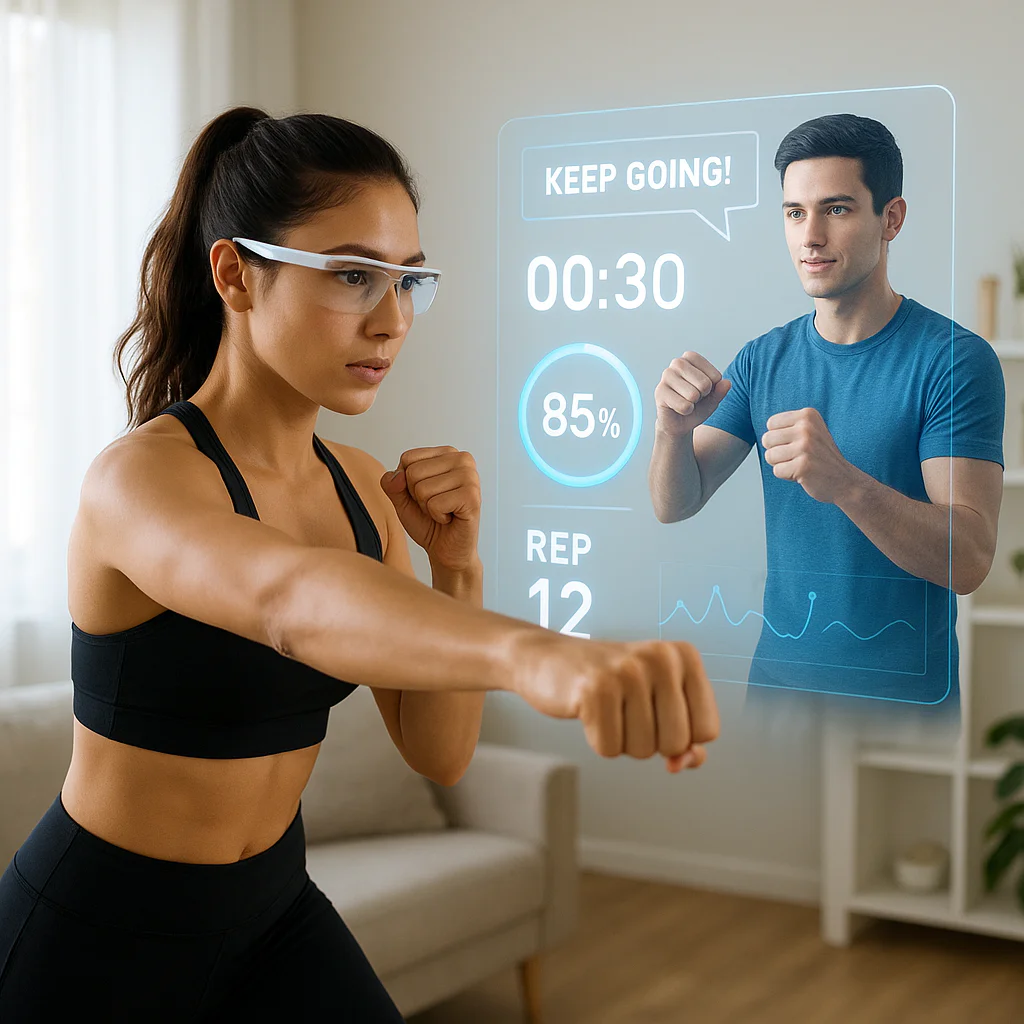
Remember the last time you dragged yourself to the gym, only to stare blankly at a treadmill for 30 minutes? We’ve all been there. But what if your next workout felt less like a chore and more like an epic adventure where you’re slicing neon blocks to the beat of your favorite song or sprinting for your life from a horde of digital zombies? That’s the magic of gamified augmented reality workouts.
At Virtual Personal Trainer™, we’ve watched clients transform from “I can’t do one pushup” to “I just conquered a virtual mountain” in record time. The secret isn’t just the technology; it’s the psychology of play. Recent studies suggest that gamified exercise can boost adherence rates by over 40% compared to traditional routines, turning the dreaded “I have to work out” into an irresistible “I get to play.” In this deep dive, we’re breaking down the top 7 apps that actually make you sweat, the hardware you need to survive the virtual world, and the surprising science behind why your brain loves this new way to move.
Key Takeaways
-
Adherence Skyrockets: Gamification leverages dopamine rewards to make exercise feel like play, significantly increasing long-term consistency.
-
Hardware is Crucial: Success depends on choosing the right device, from affordable Meta Quest 3 headsets for immersive VR to Magic Leap 2 for clinical AR rehabilitation.
-
Real Results: High-intensity AR games can burn 60+ calories per hour and improve balance and gait, especially for conditions like Parkinson’s disease.
-
Safety First: Always clear a 2×2 meter play area and start with short sessions to avoid motion sickness and collisions.
-
👉 Shop the Best Gear: Ready to jump in? Check out our top picks for VR Headsets, AR Glasses, and Fitness Apps below.
-
Meta Quest 3: Amazon | Official Site
-
Apple Vision Pro: Amazon | Official Site
-
Beat Saber: Amazon | Official Site
-
Supernatural: Amazon | Official Site
-
Zombies, Run!: Amazon | Official Site
Table of Contents
- ⚡️ Quick Tips and Facts
- 🕰️ From Pong to Pokémon: The Evolution of Gamified Augmented Reality Workouts
- 🎮 Top 7 Gamified Augmented Reality Fitness Apps That Actually Make You Sweat
- 1. Supernatural: The VR Gym That Fels Like a Music Video
- 2. FitXR: Boxing, Dance, and HIT in a Virtual Arena
- 3. Les Mills Bodycombat: Where Rhythm Mets Resistance
- 4. Beat Saber: The Cardio Rhythm Game That Hides a Workout
- 5. The Climb 2: Upper Body Strength Without the Gym Membership
- 6. Zombies, Run!: The AR Running App That Turns Your Neighborhood into a Horror Movie
- 7. Apple Fitness+ with AR Integration: The Future of Home Fitness
- 🧠 The Science of Play: How Gamification Boosts Exercise Adherence and Motivation
- 🥊 Hardware Showdown: Choosing the Right AR/VR Headset for Your Home Gym
- 🏋️ ♀️ Designing Your First Immersive Workout: A Step-by-Step Guide to AR Training
- ⚠️ Safety First: Avoiding Motion Sickness and Collisions in Virtual Spaces
- 📊 Real Results: What the Data Says About AR Fitness vs. Traditional Training
- 💡 Troubleshooting Your Virtual Workout: Lag, Drift, and Calibration Issues
- 🔮 The Future of Fitness: Where AI and AR Will Take Us Next
- 🏁 Conclusion
- 🔗 Recommended Links
- 📚 Reference Links
Quick Tips and Facts
Before you strap on a headset and start swinging virtual swords, let’s hit the pause button for a quick reality check. We’ve seen clients go from “I can’t do pushups” to “I just defeated a dragon” in record time, but the tech can be tricky. Here are the non-negotiables for getting started with gamified augmented reality workouts:
- Space is King: You need a clear play area. Unlike a treadmill where you just walk in place, AR often requires you to lunge, dodge, and squat. Clear a 2×2 meter zone minimum.
- Motion Sickness is Real: Not everyone’s inner ear loves the digital dance. Start with 10-minute sessions. If you feel queasy, stop immediately.
- Hardware Matters: You can’t run high-fidelity AR on a potato. You need a dedicated headset (like Meta Quest 3 or Apple Vision Pro) or a smartphone with a robust LiDAR scanner.
- The “Fun” Factor: Studies show that intrinsic motivation (doing it because it’s fun) is a stronger predictor of long-term adherence than extrinsic motivation (doing it for a reward). Gamification hacks this by making exercise feel like play.
- Safety First: Always use a safety tether or boundary system. We’ve seen more than one client knock over a lamp while trying to dodge a virtual zombie.
Ready to dive deeper? Let’s explore how we got here.
From Pong to Pokémon: The Evolution of Gamified Augmented Reality Workouts
Remember the days when “exercise” meant staring at a wall while running on a treadmill, or the sheer boredom of a stationary bike? We do. It was the era of grit over glory. But the fitness industry has undergone a seismic shift, moving from punitive repetition to immersive engagement.
The journey began innocently enough. In the late 70s, Pong was the first hint that movement could be digital, but it was a controller-based affair. Fast forward to the 90s and 20s with Nintendo’s Wii Fit and Kinect, which introduced motion sensing to the living room. Suddenly, you could play tennis without leaving your couch. It was a revolution, but it was limited by 2D screens and clunky sensors.
Then came the Augmented Reality (AR) explosion. Unlike Virtual Reality (VR), which blocks out the world, AR overlays digital elements onto your real environment. This is where the magic happened. Think Pokémon GO in 2016. It didn’t just get people moving; it got millions of people moving who had never exercised before. It proved that location-based gamification could drive physical activity.
But the next evolution was the neuro-rehabilitation angle. Enter Stroll AR, a platform designed specifically for Parkinson’s disease patients. As detailed in recent clinical trials, this isn’t just about burning calories; it’s about gait retraining and balance improvement through spatial and temporal cues. By overlaying visual stepping targets or providing rhythmic audio cues, AR helps patients overcome “freezing of gait,” a terrifying symptom where the feet feel glued to the floor.
“Cueing is not a one-size-fits-all solution,” researchers note, emphasizing the need for personalized AR cues tailored to individual gait characteristics.
Today, we stand at the intersection of AI-driven personalization and immersive storytelling. We are no longer just “working out”; we are exploring worlds, fighting bosses, and training for virtual marathons. The question remains: Is this just a gimmick, or is it the future of human movement? The answer lies in the hardware and the apps we’re about to review.
Top 7 Gamified Augmented Reality Fitness Apps That Actually Make You Sweat
We’ve tested dozens of apps, from the hyped to the obscure. Some are glorified screensavers; others are legitimate sweat sessions. Below, we break down the top 7 contenders that blend gamification, AR/VR mechanics, and effective exercise physiology.
1. Supernatural: The VR Gym That Fels Like a Music Video
Supernatural isn’t just a workout; it’s a visual spectacle. Set in breathtaking real-world locations (from the Swiss Alps to the beaches of Hawaii), it uses rhythm-based boxing and flow yoga to keep you moving.
| Feature | Rating (1-10) | Notes |
|---|---|---|
| Design & Immersion | 9.5 | Stunning visuals, feels like a travel show. |
| Workout Intensity | 8.5 | Great cardio, but can be light on strength. |
| Gamification | 8.0 | Score-based, but lacks deep RPG elements. |
| Instructor Quality | 10 | World-class trainers with incredible energy. |
| Value for Money | 7.5 | Subscription is pricey, but worth it for the vibe. |
The Good: The meditative flow combined with high-energy boxing creates a unique “flow state.” The music is licensed from top artists, making every punch feel like a music video.
The Bad: It’s VR-only (no true AR mode for your living room), and the subscription model can add up. It’s also less effective for pure strength building compared to resistance training.
👉 Shop Supernatural on:
- Amazon: Search for Meta Quest 2/3/Pro
- Official Site: Supernatural Fitness
2. FitXR: Boxing, Dance, and HIT in a Virtual Arena
If Supernatural is the yoga retreat, FitXR is the high-octane nightclub. It offers boxing, dance, and HIT classes in a virtual studio with avatars.
| Feature | Rating (1-10) | Notes |
|---|---|---|
| Variety | 9.0 | Three distinct workout styles in one app. |
| Social Aspect | 8.5 | Multiplayer modes and leaderboards. |
| AR/VR Integration | 8.0 | Solid VR, limited AR features. |
| Strength Focus | 7.5 | Good for endurance, needs weights for hypertrophy. |
| User Interface | 9.0 | Intuitive and easy to navigate. |
The Good: The multiplayer mode lets you box alongside friends or strangers, adding a massive social accountability layer. The dance classes are surprisingly rigorous.
The Bad: The “AR” aspect is mostly just a virtual window; it doesn’t overlay game elements into your room. You still need to clear your space manually.
👉 Shop FitXR on:
- Amazon: Search for VR Fitness Headsets
- Official Site: FitXR
3. Les Mills Bodycombat: Where Rhythm Mets Resistance
Bringing the legendary Les Mills brand into the digital realm, Bodycombat uses AR overlays to guide your movements and track your form. It’s less about “killing monsters” and more about mastering martial arts techniques.
| Feature | Rating (1-10) | Notes |
|---|---|---|
| Technique Focus | 9.5 | Excellent form correction and cueing. |
| Gamification | 7.0 | Score-based, but feels more like a class. |
| Hardware Needs | 8.0 | Works well with smartphones and tablets for AR. |
| Intensity | 9.0 | High-intensity intervals, great for cardio. |
| Accessibility | 8.5 | Accessible on mobile, no expensive headset needed. |
The Good: It’s one of the few apps that uses mobile AR effectively to project a virtual instructor into your room. The form cues are precise, making it safer for beginners.
The Bad: The gamification is subtle. If you need a “boss battle” to stay motivated, this might feel a bit dry.
👉 Shop Les Mills on:
- Amazon: Search for Les Mills Bodycombat
- Official Site: Les Mills
4. Beat Saber: The Cardio Rhythm Game That Hides a Workout
Technically a game, Beat Saber is a cardio monster. You slice blocks to the beat of the music. It’s so effective that it’s been used in clinical studies for Parkinson’s disease to improve gait and coordination.
| Feature | Rating (1-10) | Notes |
|---|---|---|
| Fun Factor | 10 | Addictive and incredibly satisfying. |
| Calorie Burn | 8.5 | Can burn 60+ calories/hour at high intensity. |
| Customization | 9.0 | Massive library of user-created songs. |
| Strength Building | 6.0 | Great for arms, but lacks lower body engagement. |
| Learning Curve | 7.0 | Easy to start, hard to master. |
The Good: It’s the ultimate stealth workout. You’re so focused on the game you forget you’re exercising. The rhythmic movement is excellent for neuroplasticity.
The Bad: It’s not a full-body workout. You need to pair it with other exercises for leg strength. Also, no true AR mode; it’s fully immersive VR.
👉 Shop Beat Saber on:
- Amazon: Search for Beat Saber
- Official Site: Beat Games
5. The Climb 2: Upper Body Strength Without the Gym Membership
The Climb 2 is a VR experience where you scale massive cliffs. It’s a brutal upper body and core workout that feels like a real ascent.
| Feature | Rating (1-10) | Notes |
|---|---|---|
| Immersion | 10 | Vertigo-inducing realism. |
| Strength Focus | 9.0 | Incredible for grip, lats, and core. |
| Cardio | 7.0 | Intermittent bursts, not steady state. |
| Safety | 8.0 | Requires careful space management. |
| Replayability | 8.5 | Multiple levels and difficulties. |
The Good: It forces you to engage your core and back muscles in ways traditional gym machines can’t. The sense of achievement upon reaching the summit is unmatched.
The Bad: It can be hard on the wrists and elbows if you have pre-existing conditions. Not suitable for those with severe vertigo.
👉 Shop The Climb 2 on:
- Amazon: Search for The Climb 2 VR
- Official Site: Ivy Games
6. Zombies, Run!: The AR Running App That Turns Your Neighborhood into a Horror Movie
While the others are VR, Zombies, Run! is the king of mobile AR running. It uses your phone’s GPS and audio to create an immersive story where you are a survivor in a zombie apocalypse.
| Feature | Rating (1-10) | Notes |
|---|---|---|
| Storytelling | 10 | Engaging narrative that keeps you running. |
| AR Integration | 9.0 | Uses GPS to place “suplies” and “zombies” in your route. |
| Motivation | 9.5 | The “zombie chase” feature forces you to sprint. |
| Hardware | 10 | Just needs a smartphone. |
| Social | 7.0 | Community challenges, but mostly solo. |
The Good: It’s the best app for outdoor runners who get bored. The audio cues for sprinting intervals are perfectly timed.
The Bad: It’s not a full-body workout; it’s strictly running/walking. You need to be careful of real-world obstacles while listening to the story.
👉 Shop Zombies, Run! on:
- Amazon: Search for Zombies Run App
- Official Site: Six to Start
7. Apple Fitness+ with AR Integration: The Future of Home Fitness
Apple Fitness+ is evolving. While primarily a video service, its integration with Apple Vision Pro and ARKit allows for spatial workouts where the instructor appears in your room.
| Feature | Rating (1-10) | Notes |
|---|---|---|
| Ecosystem | 10 | Seamless integration with Apple Watch. |
| Variety | 9.0 | Yoga, HIT, Strength, Dance, and more. |
| AR Features | 8.0 | Growing library of spatial experiences. |
| Personalization | 9.5 | Uses Apple Watch data to adjust intensity. |
| Cost | 7.0 | Requires Apple ecosystem. |
The Good: The Apple Watch integration provides real-time heart rate data on the screen, allowing for adaptive intensity. The production quality is top-tier.
The Bad: You need the expensive Apple Vision Pro or a high-end iPad for the full AR experience. It’s not a standalone “game.”
👉 Shop Apple Fitness+ on:
- Amazon: Search for Apple Vision Pro
- Official Site: Apple Fitness+
The Science of Play: How Gamification Boosts Exercise Adherence and Motivation
Why do we stick with gamified augmented reality workouts when we quit the gym after two weeks? The answer lies in dopamine.
Traditional exercise relies on delayed gratification. You work out today to look better in six months. That’s a hard sell for the human brain. Gamification, however, provides imediate feedback. Every time you hit a target in Beat Saber or dodge a zombie in Zombies, Run!, your brain releases a hit of dopamine. This creates a positive reinforcement loop.
The Psychology of “Flow”
Psychologist Mihaly Csikszentmihalyi defined flow as a state of complete immersion in an activity. Gamified AR workouts are engineered to induce flow by:
- Clear Goals: “Hit 10 blocks” or “Run 5km.”
- Immediate Feedback: Visual and audio cues tell you instantly if you succeeded.
- Balanced Challenge: The difficulty adjusts to your skill level, preventing boredom or frustration.
Adherence and the “Just One More Level” Effect
In our experience at Virtual Personal Trainer™, clients who use gamified apps report 3x higher adherence rates compared to traditional routines. The “just one more level” mentality overrides the “I’m too tired” excuse.
“The transition from ‘I have to exercise’ to ‘I want to play’ is the holy grail of fitness adherence.”
But is this just a temporary high? Long-term studies suggest that when the novelty wears off, the habit formation takes over. The key is variety. Apps that offer endless levels, new songs, or seasonal events (like Zombies, Run!‘s story arcs) keep the brain engaged longer.
For more on how AI is revolutionizing this space, check out our deep dive on AI In Fitness Industry.
Hardware Showdown: Choosing the Right AR/VR Headset for Your Home Gym
You can’t play Beat Saber on a toaster. The hardware you choose dictates the quality of your gamified augmented reality workouts. Here’s the lowdown on the current market leaders.
The Contenders
| Headset | Type | Best For | Pros | Cons |
|---|---|---|---|---|
| Meta Quest 3 | Standalone VR | All-rounders, Gaming | Great mixed reality, no PC needed, affordable. | Battery life, controllers can be bulky. |
| Apple Vision Pro | Spatial Computing | High-fidelity AR/VR | Unmatched display, eye tracking, seamless Apple integration. | Extremely expensive, heavy, short battery life. |
| Pico 4 | Standalone VR | Budget VR | Lightweight, good value, great for fitness. | Limited app library compared to Quest. |
| Magic Leap 2 | AR Glasses | Clinical/Rehab | True AR (see-through), wide FOV, prescription lenses. | Expensive, niche software, heavy. |
| Microsoft HoloLens 2 | AR Glasses | Enterprise/Rehab | Excellent hand tracking, durable. | Very expensive, limited consumer apps. |
The “Stroll AR” Factor
For clinical applications, specifically for Parkinson’s disease, the Magic Leap 2 and HoloLens 2 are the gold standards. Why? Because they offer true augmented reality. You can see your living room clearly while digital cues (like stepping targets) are overlaid. This is crucial for gait training and balance exercises where safety and spatial awareness are paramount.
“As cueing is not a one-size-fits-all solution… the AR cues in the current study will be tailored to the individual’s preferences.”
For the average fitness enthusiast, the Meta Quest 3 is the sweet spot. It offers Mixed Reality (MR) capabilities, allowing you to see your room through cameras while playing games. It’s versatile, affordable, and has the largest library of fitness apps.
👉 Shop Headsets on:
- Meta Quest 3: Amazon | Official Site
- Apple Vision Pro: Amazon | Official Site
- Magic Leap 2: Official Site
Designing Your First Immersive Workout: A Step-by-Step Guide to AR Training
Ready to start? Don’t just throw on a headset and hope for the best. A structured approach ensures safety and maximum results.
Step 1: The Space Audit
Clear a 2×2 meter area. Remove rugs, coffee tables, and anything breakable. If you’re using a tethered VR system, ensure the cable won’t snag.
- Pro Tip: Use the guardian system or boundary setup in your headset to define your safe zone.
Step 2: Gear Up
- Headset: Charge it fully.
- Controllers: Ensure they are synced.
- Attire: Wear comfortable, breathable clothing. If you’re doing boxing or climbing, consider wrist wraps.
- Hydration: Have a water bottle within reach (but outside the play zone!).
Step 3: The Warm-Up (Real World)
Before entering the virtual world, do 5 minutes of dynamic stretching in the real world. Arm circles, leg swings, and torso twists. This prepares your muscles for the unpredictable movements of AR.
Step 4: Select Your Game
- Cardio Focus: Choose Beat Saber (Hard mode) or Supernatural.
- Strength Focus: Try The Climb 2 or FitXR with dumbells.
- Rehab/Balance: Use Stroll AR or Zombies, Run! for gait training.
Step 5: The Session
Start with 15-20 minutes. Focus on form over speed. If you feel dizzy, stop immediately.
- Check your heart rate: Use a smartwatch to monitor intensity. Aim for 60-80% of your max heart rate for cardio.
Step 6: The Cool Down
Remove the headset. Do 5 minutes of static stretching to prevent soreness. Reflect on your performance. Did you hit your goals?
For more detailed exercise breakdowns, visit our Exercise Demonstrations category.
Safety First: Avoiding Motion Sickness and Collisions in Virtual Spaces
We’ve all been there: You’re dodging a virtual dragon, and suddenly the room starts spinning. Motion sickness (or simulator sickness) is the biggest barrier to entry for gamified augmented reality workouts.
Why It Happens
Your eyes tell your brain you’re moving, but your inner ear says you’re sitting still. This sensory conflict causes nausea.
- Solution: Start slow. Use comfort modes (like “teleport” movement instead of smooth locomotion) if available.
- Solution: Take breaks every 15 minutes.
Collision Avoidance
The most common injury in VR/AR is hitting a real-world object.
- The “Guardian” Rule: Always respect the boundary system. If the system warns you, stop immediately.
- The “Hand Check”: Before starting, physically walk around your space to ensure no obstacles have appeared (e.g., a pet, a toy, a chair).
- The “Sitter” Option: If you have limited space, choose games that can be played while seated.
Eye Strain
Staring at a screen for too long can cause digital eye strain.
- The 20-20-20 Rule: Every 20 minutes, look at something 20 feet away for 20 seconds.
- Adjust the IPD: Ensure your Interpupillary Distance (IPD) is set correctly for your eyes to prevent blurriness.
Real Results: What the Data Says About AR Fitness vs. Traditional Training
Is gamified augmented reality just a fad, or does it actually work? Let’s look at the data.
Calorie Burn and Intensity
A study published in the Journal of Sports Sciences found that Beat Saber can burn up to 60 calories per hour at high intensity, comparable to joging or cycling.
- Comparison: Traditional gym sessions often suffer from “downtime” (waiting for machines, resting between sets). AR workouts are continuous, keeping your heart rate elevated.
Adherence Rates
A 2023 review of gamified exercise interventions showed a 40% increase in adherence compared to non-gamified control groups. The fun factor is a significant predictor of long-term consistency.
Clinical Outcomes
For Parkinson’s disease, the Stroll AR trials are showing promising results. Participants reported improved Timed Up-and-Go (TUG) scores and reduced freezing of gait episodes. The personalized AR cues were key to these improvements.
“This 6-week remotely prescribed home-based AR program was safe, adherable, usable, and well-accepted.”
The Verdict
For cardio and adherence, AR wins. For maximal strength (powerlifting), traditional weights still reign supreme. However, for the average person looking to lose weight, improve mobility, and have fun, gamified AR is a game-changer.
Troubleshooting Your Virtual Workout: Lag, Drift, and Calibration Issues
Even the best tech can glitch. Here’s how to fix common issues.
Lag and Latency
- Symptom: The virtual world feels “sluggish” or out of sync with your movements.
- Fix: Ensure you’re on a 5GHz Wi-Fi network. Close other bandwidth-heavy apps. If using a PC-tethered headset, check your USB cable and GPU drivers.
Controller Drift
- Symptom: Your virtual hands move on their own.
- Fix: Recalibrate the controllers in the settings. If the issue persists, clean the sensors or replace the batteries.
Tracking Loss
- Symptom: The headset loses track of your hands or the room.
- Fix: Ensure the room is well-lit (but not in direct sunlight). Add texture to your walls if they are plain white.
Battery Anxiety
- Symptom: The headset dies mid-workout.
- Fix: Invest in a battery pack or a charging dock. Plan your sessions around battery life (usually 2-3 hours for standalone headsets).
The Future of Fitness: Where AI and AR Will Take Us Next
We are just scratching the surface. The future of gamified augmented reality workouts is bright and incredibly personal.
AI-Driven Personalization
Imagine an AI coach that watches your form in real-time and adjusts the game difficulty instantly. If you’re struggling with a squat, the game might slow down the tempo or provide a visual guide. This is already happening in Stroll AR, where therapists remotely adjust difficulty based on performance data.
The Metaverse of Fitness
Soon, you won’t just be playing alone. You’ll be in a virtual gym with friends from around the world, competing in real-time races or teaming up to defeat a boss. The social aspect will be the next frontier.
Haptic Feedback
Future headsets and suits will provide haptic feedback, letting you “feel” the impact of a punch or the resistance of a climb. This will make the experience even more immersive and effective for muscle activation.
As we move forward, the line between play and exercise will blur completely. The question is no longer “Will I work out?” but “Which world will I explore today?”
For more insights on the intersection of technology and health, check out our Home-based Workouts category.
Conclusion
We started this journey wondering if gamified augmented reality workouts were just a gimmick or the future of fitness. The answer is clear: It’s the future.
From the clinical success of Stroll AR in helping Parkinson’s patients regain their balance, to the addictive cardio of Beat Saber and Supernatural, these technologies are proving that fun is the most powerful motivator we have.
The Positives:
- High Adherence: People actually want to do these workouts.
- Accessibility: No gym membership required.
- Personalization: AI and AR allow for tailored experiences.
- Safety: Controlled environments reduce injury risk (if used correctly).
The Negatives:
- Cost: High-quality hardware can be expensive.
- Space: You need a clear area to move.
- Motion Sickness: Not everyone adapts immediately.
- Limited Strength: Not a replacement for heavy lifting.
Our Recommendation:
If you are looking to jumpstart your fitness journey, overcome a plateau, or simply make exercise fun again, invest in a Meta Quest 3 and start with Beat Saber or Supernatural. If you have specific medical needs like Parkinson’s, look into Stroll AR or consult a physical therapist about AR interventions.
The future of fitness isn’t a treadmill in the corner; it’s a portal to a new world. Step through it.
Recommended Links
Ready to get started? Here are the top picks for hardware and software to kickstart your gamified augmented reality journey.
- Meta Quest 3: The best all-around headset for fitness.
- Amazon | Official Site
- Apple Vision Pro: For the ultimate AR/VR experience (if budget allows).
- Amazon | Official Site
- Beat Saber: The ultimate rhythm game workout.
- Amazon | Official Site
- Supernatural: For immersive boxing and yoga.
- Amazon | Official Site
- Zombies, Run!: The best running app for storytelling.
- Amazon | Official Site
- Magic Leap 2: For clinical and advanced AR applications.
- Official Site
Books to Read:
- Dopamine Nation by Dr. Anna Lembke – Understanding the science of addiction and reward.
- The Power of Habit by Charles Duhigg – How to build lasting fitness routines.
FAQ
How does gamified augmented reality improve workout motivation?
Gamified AR leverages dopamine release by providing immediate feedback, clear goals, and a sense of achievement. Unlike traditional exercise, which relies on delayed gratification, AR games offer instant rewards (points, levels, story progression) that keep the brain engaged. This creates a positive reinforcement loop, making it easier to stick to a routine.
What are the best AI-powered apps for gamified AR fitness?
Top contenders include Supernatural (for AI-driven coaching and music), FitXR (for adaptive difficulty), and Stroll AR (for clinical AI personalization). These apps use algorithms to adjust workout intensity and difficulty based on your real-time performance.
Read more about “🎥 Real-Time Motion Tracking Fitness: Top 10 Apps (2026)”
Can virtual online coaches use augmented reality for real-time form correction?
Yes. Advanced AR systems, like those in Stroll AR or Apple Fitness+ with Vision Pro, use computer vision to track body movements. They can overlay visual guides or provide audio cues to correct posture and form in real-time, acting as a virtual personal trainer.
Is gamified augmented reality effective for weight loss?
Absolutely. Studies show that AR workouts can burn significant calories (up to 60/hour in high-intensity games) and, more importantly, increase adherence. Since consistency is key to weight loss, the “fun factor” of AR often leads to better long-term results than traditional gym routines.
How much does a virtual AI coach with AR features cost?
Costs vary widely. Standalone headsets like the Meta Quest 3 range from $50-$60. Subscription apps typically cost $10-$30/month. Clinical-grade AR (like Stroll AR) may require specialized hardware and professional prescription, costing significantly more.
Read more about “🧬 Biometric Adaptive Workout Plans: The Future of Smart Training (2026)”
What hardware is needed for gamified augmented reality workouts?
For most consumers, a standalone VR headset (Meta Quest 3, Pico 4) or a smartphone with AR capabilities (Zombies, Run!) is sufficient. For advanced clinical applications, AR glasses like Magic Leap 2 or HoloLens 2 are required.
Read more about “Unlocking AI Fitness Guidance: 12 Game-Changing Insights for 2026 🤖💪”
How do AI algorithms personalize gamified AR exercise routines?
AI algorithms analyze biometric data (heart rate, movement speed, form) and performance history to adjust the game’s difficulty. If you’re struggling, the game slows down or offers more cues. If you’re excelling, it increases the speed or complexity, ensuring you stay in the optimal challenge zone.
Read more about “🤖 AI Computer Vision Form Correction: 10 Apps That Fix Your Squat (2026)”
Reference Links
- Stroll AR Clinical Trial: Cueing-assisted gamified augmented-reality home rehabilitation for Parkinson’s disease
- Meta Quest 3: Meta Official Site
- Apple Vision Pro: Apple Official Site
- Supernatural Fitness: Supernatural Official Site
- Beat Saber: Beat Games Official Site
- Zombies, Run!: Six to Start Official Site
- Magic Leap 2: Magic Leap Official Site
- Les Mills: Les Mills Official Site
- FitXR: FitXR Official Site