Support our educational content for free when you buy through links on our site. Learn more
Virtual AI Coach for GLP-1 Diet Support: 12 Nutrition Priorities 🤖
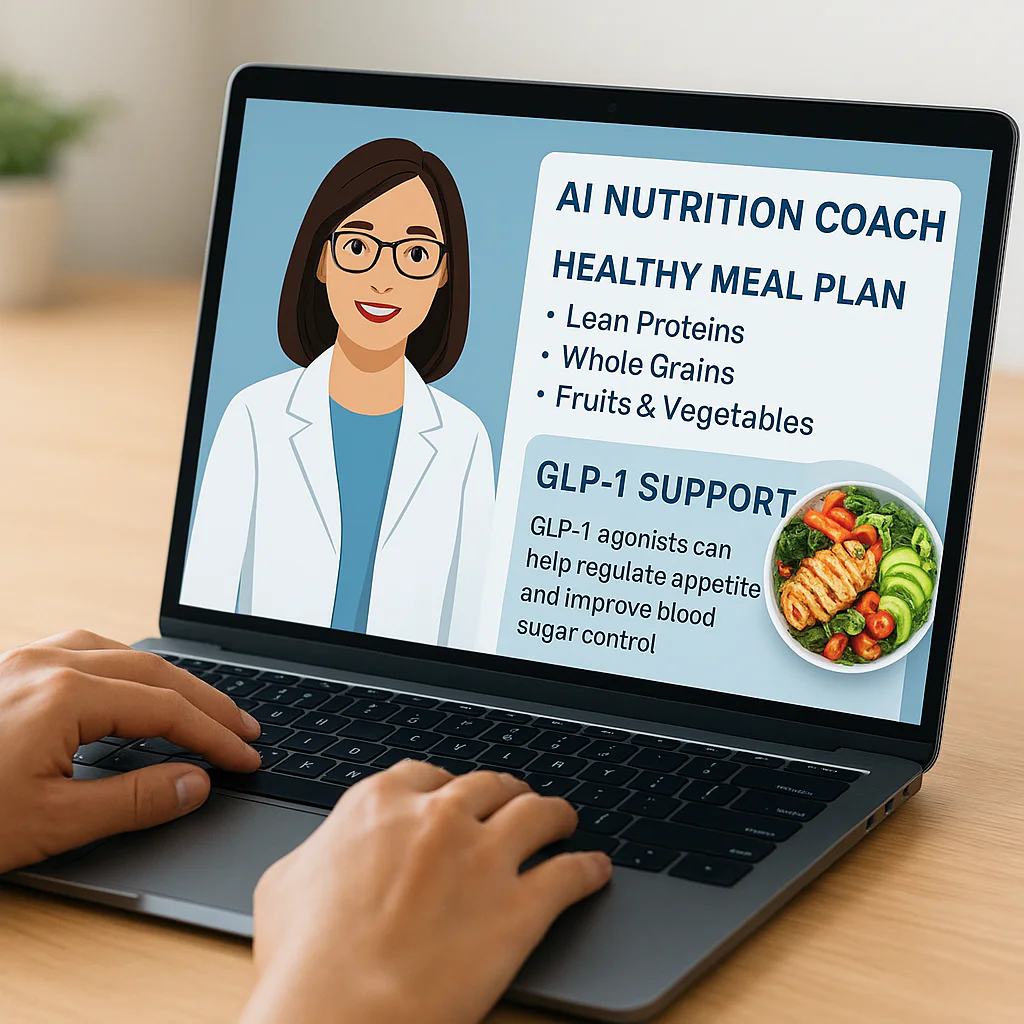
A virtual AI coach for GLP-1 medication diet support can help you plan meals, track habits, and spot patterns—but it should work alongside your prescriber or registered dietitian, not replace them. The most useful coach makes nutrition easier to manage when appetite changes, while leaving medication decisions to your medical team.
Our trainers often hear a familiar story: someone starts eating less, then realizes their old meal routine no longer fits. Smaller, comfortable meals, enough protein and fluids, and strength-focused movement can help support a more thoughtful plan—but the details should be tailored to you.
Key Takeaways
- Use AI for practical support: meal ideas, reminders, food logs, and habit tracking.
- Prioritize nutrition even when appetite is lower: discuss protein, fluids, fiber, and nutrient-dense choices with your care team.
- Protect strength with appropriate movement: resistance training and recovery matter during weight loss.
- Keep medical decisions human-led: an AI coach cannot diagnose symptoms or adjust GLP-1 medication.
- Choose tools carefully: look for transparent privacy practices, evidence-based guidance, and access to qualified professionals.
Table of Contents
- ⚡️ Quick Tips and Facts
- 🧭 What Is a Virtual AI Coach for GLP-1 Medication Diet Support?
- How AI coaching differs from a registered dietitian or medical team
- What a GLP-1 nutrition app can and cannot do
- 📚 GLP-1 Medications and Digital Nutrition Coaching: The Background
- How semaglutide, tirzepatide, and other GLP-1 medicines affect appetite
- Why nutrition support matters during medical weight management
- 🥗 12 Nutrition Priorities for GLP-1 Medication Support
- 1. Get enough protein to help preserve muscle
- 2. Eat fiber-rich foods for digestive health
- 3. Hydrate consistently throughout the day
- 4. Choose smaller meals that feel comfortable
- 5. Slow down and follow hunger and fullness cues
- 6. Prioritize nutrient-dense foods when appetite is low
- 7. Build balanced meals with carbohydrates, fats, and protein
- 8. Support bone health with key nutrients
- 9. Plan for nausea and other common digestive symptoms
- 10. Prevent constipation with food, fluids, and movement
- 11. Reduce the risk of losing too much lean mass
- 12. Make a sustainable plan for long-term weight management
- 🤖 How a Virtual AI GLP-1 Coach Works
- Food logging, meal planning, and personalized nutrition guidance
- Habit tracking, reminders, and progress check-ins
- Using wearable data and symptom tracking responsibly
- 📱 Features to Look for in a GLP-1 Diet Support App
- Personalization for medication, preferences, and dietary needs
- Evidence-based guidance and qualified human support
- Privacy, data security, and accessibility
- ⚖️ AI Coach vs. Dietitian vs. GLP-1 Prescriber
- What each type of support can help with
- When to contact your clinician or registered dietitian
- 🍽️ Practical GLP-1 Meal Planning
- A simple plate-building guide for smaller appetites
- Easy meal and snack ideas
- Grocery shopping and meal prep tips
- Eating out and traveling while taking GLP-1 medication
- 🏋️ Exercise and Muscle Preservation During GLP-1 Treatment
- Strength training and physical activity basics
- Pairing movement with adequate nutrition and recovery
- 🤢 Managing Side Effects and Nutrition Challenges
- Nausea, reflux, diarrhea, and constipation
- Low appetite, food aversions, and difficulty eating enough
- Dehydration and signs that need medical attention
- 🛡️ Safety, Limitations, and Responsible AI Use
- Why an AI coach must not change medication or diagnose symptoms
- Red flags that require prompt medical care
- Special considerations for diabetes, pregnancy, and other conditions
- 📊 Measuring Progress Beyond the Scale
- Nutrition, strength, energy, and health markers to track
- Setting realistic goals and reviewing progress with your care team
- 🔍 How to Choose the Right Virtual GLP-1 Nutrition Coach
- Questions to ask before signing up
- Common claims and features to treat cautiously
- 💬 Conclusion
- 🔗 Recommended Links
- ❓ FAQ
- Can an AI coach create a diet plan while I take Ozempic, Wegovy, or Zepbound?
- How much protein should I eat on GLP-1 medication?
- Can a virtual coach help with nausea or constipation?
- Does AI coaching replace a dietitian or doctor?
- What should I eat when I have very little appetite?
- How can I avoid muscle loss while losing weight?
- Is a GLP-1 diet app safe to use with diabetes or other conditions?
- 📖 Reference Links
⚡️ Quick Tips and Facts
A virtual AI coach can make meal planning and habit tracking easier while you take a GLP-1 medication, but it doesn’t replace your prescriber, pharmacist, or registered dietitian. Think of it as a helpful fitness-and-food sidekick: good at reminders and patterns, not the one to adjust your dose.
For a personalized foundation, start with our healthy diet guide and explore more evidence-informed ideas in Diet and Nutrition.
| Quick fact | What it means for you |
|---|---|
| GLP-1 medicines can reduce appetite and slow stomach emptying | Smaller meals may feel more comfortable; eating too little still deserves attention. |
| Nutrition needs do not disappear when hunger does | Prioritize protein, fluids, fiber, and nutrient-dense foods. |
| Protein targets should be individualized | A clinician or dietitian can account for kidney health, body size, activity, and treatment goals. |
| Resistance training helps support strength and function | Pair appropriate exercise with adequate food and recovery. See our Fitness Guides. |
| AI tools are best for organization and coaching prompts | They can log meals or suggest ideas, but should not diagnose symptoms or change medication. |
| Persistent or severe symptoms need human medical advice | Don’t ask an app to triage severe abdominal pain, repeated vomiting, or dehydration. |
Our quick-start checklist:
- ✅ Keep your prescriber informed about side effects and changes in eating.
- ✅ Try smaller, slower meals and stop when comfortably full.
- ✅ Include a protein-rich food at meals or snacks as tolerated.
- ✅ Sip fluids regularly; ask your care team what amount is right for you.
- ✅ Track symptoms only if it helps you spot useful patterns—not to chase perfect numbers.
- ❌ Don’t change your medication dose or schedule based on an AI response.
- ❌ Don’t force a high-fiber or high-protein target if it worsens symptoms or conflicts with medical advice.
The tricky part is that appetite can become quieter before your nutrition plan is ready. That’s where thoughtful coaching can help—provided it knows its lane.
🧭 What Is a Virtual AI Coach for GLP-1 Medication Diet Support?
A virtual AI coach for GLP-1 medication diet support is a digital tool that may help you organize meals, track habits, record symptoms, and get general nutrition suggestions while using medicines such as semaglutide or tirzepatide. Depending on the service, it may also connect you with clinicians or share progress with a healthcare team.
It is not one single kind of product. Some tools are general food trackers with AI features; others are part of a clinical weight-management platform. Their capabilities, privacy practices, and level of human oversight can vary considerably.
| Type of support | Typical features | Useful for | Main limitation |
|---|---|---|---|
| General nutrition app | Food logging, nutrient estimates, goals, recipes | Building awareness and planning meals | Database entries and recommendations can be inaccurate or overly generic |
| AI nutrition assistant | Conversational prompts, meal ideas, habit suggestions | Brainstorming and routine support | May misunderstand medical context or generate unsafe advice |
| Clinician-connected platform | Remote monitoring, messaging, care-team workflows | Coordinating digital support with a clinic | Availability and features depend on the provider and platform |
| Registered dietitian | Individual assessment, nutrition counseling, medical nutrition therapy | Complex needs, side effects, or individualized planning | Requires access to a qualified professional |
How AI coaching differs from a registered dietitian or medical team
AI can help you keep the small daily tasks from slipping through the cracks. A registered dietitian nutritionist (RDN) can assess your needs, account for medical conditions, and adapt guidance through professional judgment. Your prescriber evaluates medication safety and makes treatment decisions.
| Question or task | AI coach | RDN | Prescriber or pharmacist |
|---|---|---|---|
| Suggest a simple meal idea from your preferences | Often | Yes | Not usually the main role |
| Help organize food and symptom logs | Often | Yes | May review relevant information |
| Assess nutrition needs with medical history | Limited and not a substitute for care | Yes, within professional scope | Yes, for medication-related clinical decisions |
| Diagnose a side effect or complication | No | No | Appropriate clinician evaluates |
| Change dose, pause, or restart medication | No | No | Prescriber directs medication changes |
| Provide individualized medical nutrition therapy | Not reliably | Yes, within scope | Coordinates as appropriate |
The Academy of Nutrition and Dietics offers information on working with credentialed nutrition professionals. For prescription questions, follow the instructions from your prescriber and the medication’s official labeling, such as the FDA prescribing information for Wegovy.
What a GLP-1 nutrition app can and cannot do
A useful app can:
- Help you plan meals around food preferences, schedule, and appetite.
- Record meals, fluids, activity, and symptoms.
- Remind you to check in with your care team or follow clinician-provided instructions.
- Help identify patterns to discuss with a professional.
- Offer general education and practical habit prompts.
It cannot safely:
- Decide whether a symptom is harmless or urgent.
- Recommend dose changes, missed-dose instructions, or stopping treatment.
- Guarantee a particular amount or rate of weight loss.
- Replace individualized nutrition advice for conditions such as kidney disease, diabetes, pregnancy, or a history of disordered eating.
MyFitnessPal, for example, describes medication logging, symptom tracking, nutrition tracking, and AI coaching features in its App Store listing. Those features may help with organization, but an app listing is not evidence that a tool can provide medical care.
📚 GLP-1 Medications and Digital Nutrition Coaching: The Background

GLP-1 receptor agonists and related medicines are prescribed for specific medical indications, including type 2 diabetes and chronic weight management. Some medicines act on more than one hormonal pathway. Your treatment choice depends on your health history and clinician’s assessment—not on an app’s recommendation.
The FDA explains the approved uses and safety information for semaglutide products and provides drug information through Drugs@FDA. Brand names and approved uses differ, so check the exact product label with your care team.
How semaglutide, tirzepatide, and other GLP-1 medicines affect appetite
GLP-1 medicines can influence appetite, fullness, blood glucose regulation, and the speed at which food moves through the stomach. The exact effects and common adverse reactions vary by medication and by person. For instance, nausea, vomiting, diarrhea, constipation, and abdominal discomfort are included among adverse reactions in prescribing information for several products. Review the official label for your specific medicine, such as Wegovy or Zepbound.
Here’s the practical coaching point: a smaller appetite doesn’t automatically mean your body’s nutrition needs have vanished. You may need to rethink meal size, timing, and texture rather than simply skipping meals all day and hoping dinner can do a heroic rescue.
Why nutrition support matters during medical weight management
A medication can support treatment, but daily habits still shape food quality, physical activity, hydration, and how you respond to appetite changes. The National Institute of Diabetes and Digestive and Kidney Diseases describes prescription weight-management medicines as part of a broader treatment approach.
Nutrition support can help you:
- Maintain a workable eating routine when hunger cues change.
- Choose nutrient-dense foods within a smaller appetite.
- Address constipation or nausea with appropriate strategies.
- Preserve strength through adequate nutrition and resistance exercise.
- Develop habits that remain useful if treatment changes.
Allurion’s company announcement describes its Coach Iris AI-powered weight-loss coach as part of a broader virtual-care platform intended to support medication-based and other weight-management care. The announcement also includes company-reported clinician feedback and forward-looking statements; those figures should be understood as company-reported claims, not independent proof of clinical outcomes.
🥗 12 Nutrition Priorities for GLP-1 Medication Support
There isn’t one universal “GLP-1 diet.” Your best plan depends on medication, symptoms, medical history, cultural preferences, and what you can comfortably eat. These priorities are practical discussion points—not a prescription.
1. Get enough protein to help preserve muscle
Protein helps support muscle repair and other body functions. During weight loss, preserving muscle is a reasonable goal, especially when you’re eating less. But specific targets need personalization: age, body size, activity, kidney function, and overall health all matter.
Useful options include:
- Eggs, Greek yogurt, cottage cheese, fish, poultry, and lean meats.
- Tofu, tempeh, edame, beans, lentils, and soy milk.
- Protein-rich foods in small portions if large meals feel uncomfortable.
The National Academies’ Dietary Reference Intakes provide general population reference values; they are not a personalized weight-loss prescription. Ask an RDN or clinician before using a high-protein target if you have kidney disease or another condition affecting protein needs.
2. Eat fiber-rich foods for digestive health
Fiber supports bowel regularity and contributes to a balanced eating pattern. Foods such as oats, fruit, vegetables, beans, lentils, nuts, and whole grains can help. But increase fiber gradually and drink adequate fluids, since a sudden jump may worsen bloating or discomfort.
The NIDK guidance on constipation discusses fiber and fluids as part of bowel-health strategies. If constipation is persistent, severe, or accompanied by significant pain or vomiting, contact your clinician rather than simply adding another bowl of bran.
3. Hydrate consistently throughout the day
If nausea or low appetite makes drinking difficult, frequent small sips may be easier than large amounts at once. Water is a good default for many people, but fluid needs vary with health, activity, climate, and clinician advice. People with heart or kidney conditions may have specific fluid guidance.
Watch for possible dehydration, including unusually dark urine, dizziness, marked weakness, or inability to keep fluids down. Seek medical advice when symptoms are concerning. The NHS dehydration guide lists common signs and recommends appropriate medical attention.
4. Choose smaller meals that feel comfortable
If a full plate now feels like a mountain, try a smaller serving and pause before deciding whether you want more. A practical rhythm might be a few modest meals or snacks rather than one large meal, but it should match your symptoms and schedule.
- Serve a small portion first; leftovers are not a moral failure.
- Eat slowly and stop when comfortably satisfied.
- Avoid lying down immediately after eating if reflux is an issue.
- Ask your care team about persistent difficulty eating or drinking.
5. Slow down and follow hunger and fullness cues
Some people notice fullness earlier than before treatment. Slowing down can give you time to notice that signal before the meal becomes uncomfortable. Try putting down your fork between bites, eating without multitasking when possible, and checking in halfway through.
Don’t use “listen to your body” as a reason to ignore ongoing under-eating. Appetite cues can be muted, and repeated inability to meet basic food or fluid needs is worth discussing with your care team.
6. Prioritize nutrient-dense foods when appetite is low
When appetite is limited, make the food you can manage count nutritionally. Consider easy-to-tolerate choices such as yogurt with fruit, eggs with toast, soup with beans or chicken, or a small smoothie—if these suit your symptoms and medical needs.
The USDA MyPlate guidance is a useful general framework for food groups, though a clinician or dietitian may need to adapt it to your situation. Keep a few convenient options on hand; a sophisticated meal plan is no use if it requires a three-hour cooking show audition.
7. Build balanced meals with carbohydrates, fats, and protein
A balanced meal can include a protein source, produce or another fiber source, and a carbohydrate or fat that fits your preferences. You do not need to fear entire food groups unless a clinician has advised a specific restriction.
| Component | Examples | Small-appetite-friendly idea |
|---|---|---|
| Protein | Eggs, fish, yogurt, tofu, beans | Add a modest portion to soup, toast, or a snack |
| Carbohydrate | Oats, potatoes, rice, whole-grain bread, fruit | Choose a familiar portion that feels comfortable |
| Produce/fiber | Berries, cooked vegetables, lentils, pears | Try cooked or softer textures if raw foods are unappealing |
| Fat | Avocado, olive oil, nuts, seeds | Add modest amounts; richer foods may not suit everyone’s symptoms |
8. Support bone health with key nutrients
Calcium, vitamin D, adequate protein, and weight-bearing activity contribute to bone health. Your personal needs depend on age, medical history, diet, and lab results; supplements are not automatically necessary. The NIH Office of Dietary Supplements’ calcium fact sheet and vitamin D fact sheet provide evidence-based background.
Ask your clinician before starting supplements, especially if you take other medications or have kidney stones, kidney disease, or a history of abnormal calcium levels.
9. Plan for nausea and other common digestive symptoms
Some people find that smaller meals, slower eating, and avoiding foods that reliably trigger symptoms are more comfortable. There is no single food fix that works for everyone.
Try a simple observation log:
- Record what you ate and roughly when.
- Note symptoms and their timing.
- Record medication timing only as instructed by your prescriber.
- Look for repeated patterns rather than blaming one meal.
- Share concerning or persistent symptoms with your clinician.
Don’t change your dose or timing to test a theory. Follow your product’s instructions and ask your prescriber or pharmacist.
10. Prevent constipation with food, fluids, and movement
A gradual increase in fiber, appropriate fluids, and regular movement may help bowel regularity for some people. However, constipation can have several causes, including medication effects and changes in food intake. A clinician can recommend treatment that fits your health history.
Avoid abruptly piling on fiber supplements if you’re already bloated or struggling to drink. The NIDK constipation resource explains when to seek medical advice.
11. Reduce the risk of losing too much lean mass
Weight change can include fat and lean tissue; the proportions differ across individuals and studies. It’s misleading to assume a fixed share of every person’s weight loss will be muscle. Better priorities are adequate nutrition, progressive resistance exercise where appropriate, sleep, and clinical follow-up.
A video discussion of nutrition coaching for GLP-1 clients emphasizes viewing medication as a tool rather than a replacement for nutrition habits, with attention to protein, sufficient intake, and strength training. See the featured video for that coaching perspective. Treat specific protein figures presented in videos as general discussion, not a one-size-fits-all prescription.
Explore safe movement ideas in our Exercise Demonstrations and Bodyweight Exercises categories.
12. Make a sustainable plan for long-term weight management
A sustainable plan is not a temporary “perfect eating” streak. It’s a set of flexible routines you can adapt when appetite, schedule, symptoms, or treatment changes.
Build around a few repeatable habits:
- Keep easy protein and produce options available.
- Plan a small set of meals you genuinely enjoy.
- Practice strength and everyday movement at a level you can maintain.
- Review your plan with your care team as treatment progresses.
- Avoid defining success only by the scale.
🤖 How a Virtual AI GLP-1 Coach Works
A virtual coach usually takes information you enter—such as food, goals, activity, or symptoms—and turns it into summaries, prompts, or suggestions. Some tools use conversational AI; others rely on rules, trackers, or a mix of both. The quality of the output depends on the quality of the information and the tool’s safeguards.
Food logging, meal planning, and personalized nutrition guidance
A food log can help you notice whether you are regularly missing meals, struggling with protein-rich options, or having difficulty drinking enough. It can also become burdensome or trigger unhelpful food fixation for some users.
If you use a tracking app:
- Choose a simple goal, such as noticing meal patterns.
- Log consistently enough to answer that question—not forever by default.
- Check questionable database entries and serving sizes.
- Treat calorie and nutrient estimates as estimates.
- Review patterns with a qualified professional if decisions depend on them.
MyFitnessPal says its app offers food tracking, meal planning, an AI Coach, medication logging, and symptom recording; its App Store listing also describes user reviews and app features. A user-review excerpt in the listing summary says, “I actually enjoy logging my food and I never thought I would say that.” That’s encouraging as a personal experience, but individual reviews aren’t clinical evidence and app ratings or features can change.
Habit tracking, reminders, and progress check-ins
Reminders can support routines, but they should follow your clinician’s instructions. Useful check-ins might include:
- Did I manage meals and fluids comfortably today?
- Were any symptoms persistent or severe?
- Did I move in a way that felt appropriate?
- Is there a question I should send my care team?
A coaching app should help reduce friction, not make you feel monitored by a tiny digital hall monitor.
Using wearable data and symptom tracking responsibly
Wearables can record steps, activity, sleep estimates, and heart-rate data. These measurements are useful for trends, not perfect diagnoses. A virtual coach should not infer a medical condition from wearable readings or tell you to change medication based on them.
For more context on digital tools and exercise, see our AI in Fitness Industry coverage. Before connecting health apps, review what data they collect and how it is used.
📱 Features to Look for in a GLP-1 Diet Support App
A polished interface is nice. Clear safety boundaries, useful personalization, privacy transparency, and access to qualified human support matter more.
| Feature | Why it helps | What to check |
|---|---|---|
| Medication and symptom logging | Helps organize information for appointments | Does it avoid telling you to change treatment? |
| Flexible meal planning | Makes food choices practical | Can it account for preferences, allergies, and appetite? |
| Nutrition tracking | May reveal patterns intake | Are estimates clearly labeled and editable? |
| Human support | Offers judgment for complex needs | Are professionals credentialed and their roles clear? |
| Privacy controls | Protects sensitive health information | What data are collected, shared, or used for advertising? |
| Emergency guidance | Directs users toward appropriate care | Does it clearly advise contacting clinicians for red flags? |
Personalization for medication, preferences, and dietary needs
Look for a tool that asks about food preferences, allergies, schedule, and relevant health needs—while making clear that the AI is not a clinician. A generic high-protein meal plan may be inappropriate for someone with a medical condition requiring different nutrition guidance.
Good personalization should also let you reject suggestions. If the app keeps recommending foods you cannot tolerate, can’t afford, or simply dislike, that’s not personalization. It’s a food database wearing a fake moustache.
Evidence-based guidance and qualified human support
Check whether nutrition claims link to reputable sources and whether the service identifies the qualifications of its human professionals. A clinician-connected platform may support communication, but the presence of AI does not by itself prove improved health outcomes.
Allurion describes Coach Iris and its Virtual Care Suite as combining AI with provider-oriented digital care features. The company’s announcement includes clinician perspectives about connected, personalized support. Those perspectives help explain the intended role, but product announcements are not independent comparative trials.
Privacy, data security, and accessibility
Before entering medication, symptom, or health information, review the app’s privacy disclosures:
- What health and identity data are collected?
- Is information shared with advertisers, analytics providers, or other companies?
- Can you delete or export your data?
- Is data used to train or improve AI systems?
- Does the app work with assistive technology and your device?
- What happens if you stop using the service?
MyFitnessPal’s App Store privacy label describes categories of information that may be linked to identity or used for tracking; review the current App Store privacy details and the company’s own privacy policy before use. App privacy labels are useful disclosures, not a substitute for reading the full terms.
⚖️ AI Coach vs. Dietitian vs. GLP-1 Prescriber
The strongest support often combines tools rather than forcing a contest. AI can help with routine, a dietitian can personalize food guidance, and your prescriber manages medication decisions.
| Support | Best suited to | Not suited to |
|---|---|---|
| Virtual AI coach | Meal brainstorming, reminders, logging, habit prompts | Diagnosis, medication changes, urgent triage |
| Registered dietitian | Individual nutrition assessment, meal adaptation, symptom-related food strategies | Replacing the prescriber’s medication decisions |
| Prescriber | Medication selection, dose decisions, medical assessment | Daily meal-prep accountability in every case |
| Pharmacist | Medication-use questions, interactions, product instructions | Replacing a full nutrition assessment |
What each type of support can help with
- AI coach: “Help me make a small lunch from foods I already have.”
- Dietitian: “I’m eating less and need a plan that accounts for my symptoms and medical history.”
- Prescriber: “I’m having a persistent side effect. Is it related to my medication, and what should I do?”
- Pharmacist: “I’m uncertain about the label instructions or how to take this product.”
If you’re choosing an RDN, the Commission on Dietic Registration credential search can help verify credentials in the United States.
When to contact your clinician or registered dietitian
Reach out when symptoms interfere with eating or drinking, when you have persistent gastrointestinal problems, when food intake is consistently very low, or when you need nutrition guidance for another health condition. Contact your prescriber or pharmacist for medication instructions and dose questions.
The FDA’s medication safety information and the official product label are more trustworthy than an AI guess, a social media anecdote, or a well-meaning stranger’s “my cousin did this” story.
🍽️ Practical GLP-1 Meal Planning
Meal planning should lower stress—not turn eating into a spreadsheet competition. Build a flexible menu of foods you tolerate, like, and can prepare.
A simple plate-building guide for smaller appetites
Use this as a starting framework, not a rigid rule:
- Pick a protein you tolerate: egg, yogurt, fish, tofu, chicken, beans, or another option.
- Add a comfortable carbohydrate: fruit, oats, rice, potato, or bread.
- Include produce or fiber in a texture and portion that feels manageable.
- Add fat if appropriate for taste and energy, but adjust if richer foods worsen symptoms.
- Start small, pause, and reassess.
A personal trainer can help you pair this with realistic activity habits, while a dietitian can individualize the nutrition plan. Find more food-planning ideas in Diet and Nutrition.
Easy meal and snack ideas
Adjust ingredients and portions to your needs and symptoms. These are examples, not medical recommendations.
| Meal or snack | Possible combination | Why it may be practical |
|---|---|---|
| Breakfast | Greek yogurt, soft fruit, oats | Combines protein, carbohydrate, and fruit |
| Lunch | Soup with beans or chicken and soft vegetables | Warm, portion-flexible, and easy to prepare |
| Snack | Cottage cheese with fruit, or tofu with crackers | Small format with protein and carbohydrate |
| Dinner | Fish or tofu, potato or rice, cooked vegetables | Familiar foods in adjustable portions |
| On a low-appetite day | Smoothie with yogurt or soy milk and fruit, if tolerated | Can be easier than a large solid meal for some people |
If you have diabetes, allergies, swallowing difficulties, or another condition, ask your clinician or RDN whether these ideas fit your care plan.
Grocery shopping and meal prep tips
- Keep a short list of reliable, easy-to-prepare foods.
- Choose frozen vegetables, canned beans, yogurt, eggs, or other convenient staples that suit your needs.
- Prepare components rather than a week’s worth of identical meals.
- Store small portions so you can stop when comfortably full without wasting a large plate.
- Keep a backup meal available for low-energy days.
Meal-planning apps can generate grocery lists, but check serving sizes, ingredients, allergens, and whether the plan makes sense for your appetite.
Eating out and traveling while taking GLP-1 medication
When dining out, consider sharing a dish, ordering a smaller portion, or asking for a takeaway container early. Choose foods you typically tolerate and avoid treating every restaurant meal as a nutrition exam.
For travel:
- Carry medication according to its official storage and travel instructions.
- Plan regular access to fluids and foods that suit you.
- Keep the medication in its original packaging when practical.
- Ask your pharmacist or prescriber about missed-dose or travel questions.
- Never rely on an AI chatbot to interpret medication-specific travel rules.
🏋️ Exercise and Muscle Preservation During GLP-1 Treatment
Exercise supports health and function, but the right starting point depends on fitness, symptoms, injuries, and medical history. If you’re new to training or have a health condition, ask your clinician whether you need supervision or modifications.
Strength training and physical activity basics
A gradual, repeatable routine is more useful than a punishing one you abandon by Thursday. The CDC physical activity guidelines provide general recommendations for adults, including aerobic activity and muscle-strengthening activity; your personal plan may differ.
Start with manageable movements such as sit-to-stands, wall push-ups, resistance-band rows, or light dumbell exercises if appropriate. See our Fitness Guides and Exercise Demonstrations for exercise instruction.
Pairing movement with adequate nutrition and recovery
If appetite is low, strenuous exercise without adequate food or fluids may feel miserable and can make recovery harder. Consider:
- Beginning with short sessions and increasing gradually.
- Scheduling movement when you feel best.
- Taking rest days as needed.
- Discussing persistent fatigue, dizziness, weakness, or exercise intolerance with your clinician.
- Asking a dietitian how to support training if your intake is limited.
The goal is to preserve function and build consistency—not to punish your body for eating less.
🤢 Managing Side Effects and Nutrition Challenges
Side effects differ across medicines and individuals. Follow your medication’s official information and contact your care team if symptoms are severe, persistent, or interfering with food and fluid intake.
Nausea, reflux, diarrhea, and constipation
A symptom log can help you explain what is happening, but it cannot determine the cause. Consider noting:
- Symptom type and severity.
- How long it lasts and whether it is worsening.
- Whether you can keep food and fluids down.
- Foods or situations that seem repeatedly associated.
- Questions you want to ask your clinician.
Some people find smaller meals or simpler foods more comfortable, while others need a different approach. Avoid extreme elimination diets unless a qualified professional recommends them. Official medication labeling and your own clinician’s instructions take priority over generalized online advice.
Low appetite, food aversions, and difficulty eating enough
If you struggle to eat, aim for manageable options rather than forcing a large meal. A dietitian may help identify suitable foods, meal timing, and whether additional evaluation is needed.
Consider seeking professional guidance if:
- You regularly cannot meet basic food or fluid needs.
- Your energy or strength is declining.
- You are avoiding many foods because of symptoms.
- Weight loss is faster than your care team expects.
- You feel anxious, guilty, or preoccupied with eating and tracking.
Dehydration and signs that need medical attention
Repeated vomiting or diarrhea can make dehydration more likely. Seek medical guidance promptly if you cannot keep fluids down, feel faint, become unusually weak, or notice other concerning changes.
Severe or persistent abdominal pain, especially with vomiting, warrants urgent medical assessment. Call emergency services for a medical emergency. Do not wait for an AI coach to decide whether symptoms are serious.
🛡️ Safety, Limitations, and Responsible AI Use
AI-generated advice can sound confident even when it is incomplete or wrong. Treat it as a planning aid, not a clinical authority. Never share more health information with an app than you are comfortable sharing, and verify medical claims using your clinician and official sources.
Why an AI coach must not change medication or diagnose symptoms
Medication changes depend on the prescribed product, dose, medical history, timing, and symptoms. A chatbot may not know all of those details, and it cannot examine you. Only your prescribing clinician should direct medication changes.
For product-specific guidance, consult the exact official label, such as the FDA-accessible Wegovy prescribing information or manufacturer-provided Zepbound prescribing information, and ask your prescriber or pharmacist.
Red flags that require prompt medical care
Get medical advice promptly for severe or persistent symptoms, inability to keep fluids down, signs of dehydration, or symptoms your medication guide identifies as serious. Seek emergency care for an emergency.
Do not use a list in an app as a complete triage tool. If something feels seriously wrong, contact a healthcare professional.
Special considerations for diabetes, pregnancy, and other conditions
If you use insulin or other glucose-lowering medication, ask your diabetes care team how to monitor and respond to changes in food intake or blood glucose. Nutrition and medication plans may need coordination.
Talk with your clinician before using a GLP-1 medicine during pregnancy, while planning pregnancy, or while breastfeeding; guidance varies by medication and clinical situation. Also seek individualized advice if you have kidney, digestive, gallbladder, pancreatic, or other relevant medical conditions, or a history of disordered eating. A generic AI meal plan cannot safely account for every clinical detail.
📊 Measuring Progress Beyond the Scale
The scale is one measure, not the entire report card. Progress may also include strength, energy, food consistency, mobility, symptom management, and relevant health markers your clinician tracks.
Nutrition, strength, energy, and health markers to track
Choose a few measures that support useful decisions:
- How consistently you can eat and drink.
- Whether meals include foods that support your nutrition needs.
- Strength, walking tolerance, or everyday function.
- Side effects and how they affect daily life.
- Health markers your care team recommends.
Avoid checking numbers so frequently that tracking worsens stress or disordered eating patterns. The NIDK overview of weight-management medicines explains why medication is part of broader care rather than a stand-alone measurement strategy.
Setting realistic goals and reviewing progress with your care team
Agree on goals with your clinician and revisit them as treatment changes. Useful goals might focus on sustainable routines—such as preparing a few easy meals or building a gradual movement habit—rather than a promised number on the scale.
Bring your food or symptom log if it helps, but don’t wait for a perfect spreadsheet before asking for support. The point is better care, not winning the world championship of data entry.
🔍 How to Choose the Right Virtual GLP-1 Nutrition Coach
Start by identifying what you need most: reminders, meal ideas, human dietitian support, provider communication, or simple food logging. Then compare tools on safety, evidence, usability, and privacy—not just how convincing the AI sounds.
Questions to ask before signing up
- Does the service explain that AI cannot replace medical care?
- Can I reach a qualified professional if I need individualized guidance?
- How does the platform protect health information?
- Can I export or delete my data?
- Are food and nutrient estimates clearly labeled as estimates?
- Does it adapt to allergies, preferences, and relevant medical needs?
- Does it avoid dose recommendations and diagnosis?
- Can I use it without calorie tracking if tracking isn’t helpful for me?
Common claims and features to treat cautiously
Be skeptical of:
- Guaranteed weight-loss outcomes.
- Claims that AI can replace your doctor or dietitian.
- Rigid macro targets presented as right for everyone.
- Recommendations to stop, start, or alter medication.
- App features described as “clinically proven” without accessible evidence.
- Testimonials presented as proof that a product works for everyone.
Allurion’s announcement includes provider-reported figures about accountability, engagement, and practice efficiency. Those may be useful signals about reported user or provider experience, but they do not establish that every patient will get the same benefit. Similarly, app-store reviews can reveal usability experiences, not clinical effectiveness. The best tool is the one that supports your care plan without pretending to be the care plan.
📍 Featured Video: GLP-1 Medication as a Tool, Not a Replacement for Nutrition Coaching
The featured video’s coaching perspective is that medication should work alongside nutrition habits, not in competition with them. It highlights protein, strength training, sufficient intake, and meal planning as considerations for clients whose appetite has changed.
That is a useful coaching frame, but any numerical protein range or body-composition claim in a video should be treated as general commentary—not a personal target or a universal outcome. For your own plan, follow individualized guidance from your clinician or RDN.
📖 Reference Links
- FDA: Ozempic (semaglutide) drug information
- FDA: Wegovy prescribing information
- Eli Lilly: Zepbound prescribing information
- NIDK: Prescription medications to treat overweight and obesity
- NIDK: Constipation, eating, diet, and nutrition
- NIH Office of Dietary Supplements: Calcium
- NIH Office of Dietary Supplements: Vitamin D
- CDC: Physical activity guidelines for adults
- Academy of Nutrition and Dietics
- Commission on Dietic Registration: Verify a credential
- Allurion: Coach Iris and GLP-1 support announcement
- MyFitnessPal on the App Store
- American Journal of Clinical Nutrition: “Nutritional priorities to support GLP-1 therapy for obesity: a joint …”