Support our educational content for free when you buy through links on our site. Learn more
🧠 Real-Time Metabolic Tracking & AI Meal Planning: Your 2026 Blueprint
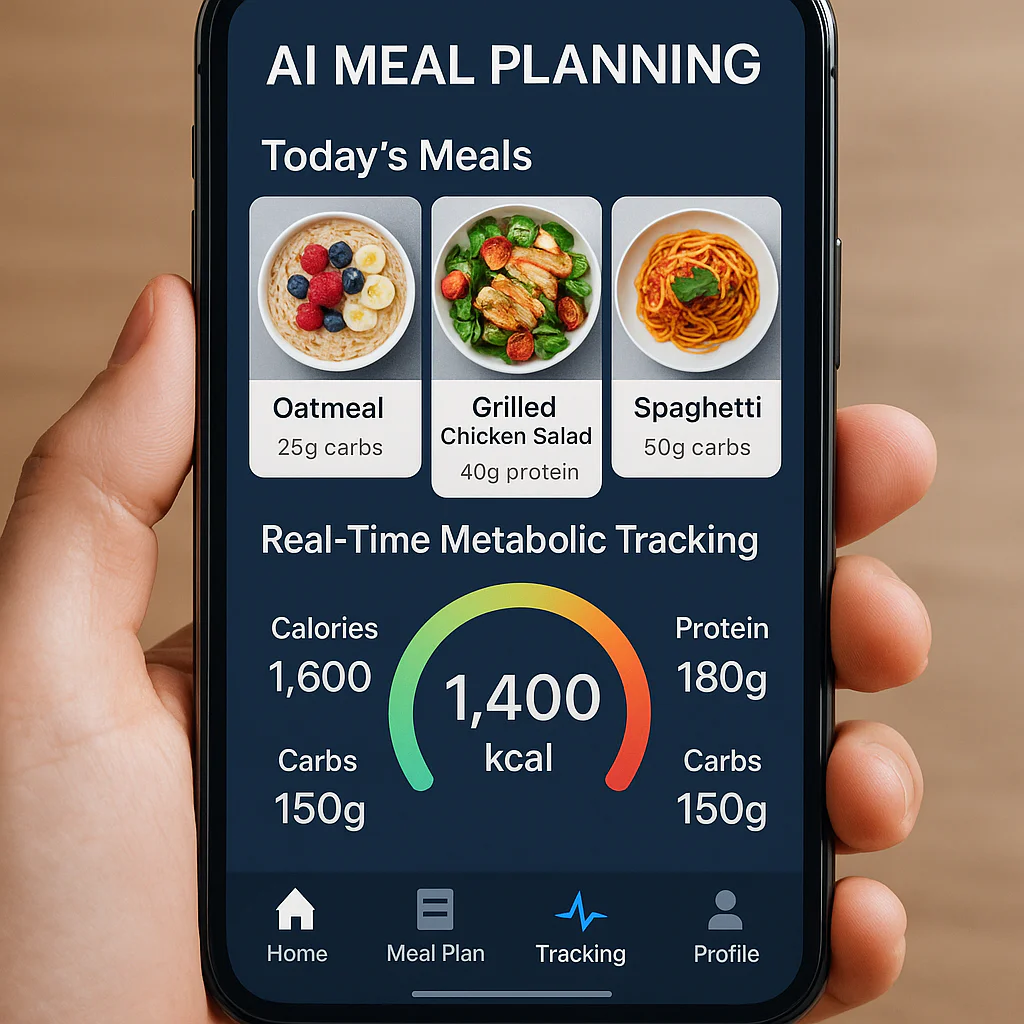
Stop guessing what your body needs and start letting data drive your diet. Real-time metabolic tracking and AI meal planning are no longer sci-fi concepts; they are the most effective tools available to hack your energy, crush cravings, and optimize your health right now.
Imagine eating a bagel and watching your blood sugar skyrocket on your phone, only to be instantly told, “Next time, add avocado and walk for 10 minutes.” That is the power of hyper-personalized nutrition.
Did you know that two people can eat the exact same banana and have wildly different glucose responses? A landmark study in Cell proved that generic diet advice is often useless because biology is unique to you.
We’ve tested the top platforms to find out which AI actually delivers on its promises. The result? A revolution in how we eat, moving from rigid calorie counting to dynamic, biological feedback.
Key Takeaways
- Personalization is non-negotiable: Your body reacts uniquely to food; AI meal planning uses real-time data to create a diet that works specifically for your metabolism, not the average person.
- Data drives action: Real-time metabolic tracking via CGMs reveals hidden spikes and crashes, allowing you to adjust meals and activities instantly to maintain stable energy.
- The future is predictive: Advanced algorithms don’t just report history; they predict how your body will react to future meals, helping you avoid crashes before they happen.
- Top contenders exist: Platforms like Levels, Signos, and Nutrisense offer distinct approaches, from pure data analytics to hybrid human coaching models.
Ready to upgrade your biology?
- 👉 Shop CGM Platforms: Levels | Signos | Nutrisense | Veri
Table of Contents
- ⚡️ Quick Tips and Facts
- 🕰️ From Stethoscopes to Algorithms: The Evolution of Metabolic Tracking
- 🧠 How Real-Time Metabolic Tracking Actually Works Under the Hood
- 🤖 The AI Brain: Decoding Your Data for Hyper-Personalized Meal Planning
- 📊 Top Contenders in the Market: A Deep Dive into Leading Platforms
- 1. Whop: The 24/7 Recovery and Strain Specialist
- 2. Levels: The Continuous Glucose Monitor (CGM) Pioneer
- 3. Nutrisense: Bridging the Gap Between Data and Dietitians
- 4. Signos: The AI-Driven Weight Loss Architect
- 5. Veri: Precision Nutrition for the Biohacker Crowd
- 🍽️ Beyond the Numbers: Turning Metabolic Data into Delicious, Real-World Meals
- 📉 The Glucose Rollercoaster: Understanding Spikes, Crashes, and Energy Stability
- 🏋️ ♀️ Optimizing Workouts: Timing Your Nutrition Based on Metabolic Feedback
- 🔒 Privacy, Security, and the Ethics of Your Biological Data
- 💸 Is the Investment Worth It? Cost-Benefit Analysis for Different Lifestyles
- 🚫 Common Pitfalls: When Data Paralysis Kills Your Progress
- 🧪 The Future of Metabolic Health: What’s Coming Next?
- ✅ Conclusion
- 🔗 Recommended Links
- ❓ FAQ: Your Burning Questions Answered
- 📚 Reference Links
⚡️ Quick Tips and Facts
Before we dive into the nitty-gritty of algorithms and sensors, let’s hit the pause button and get the lowdown on what’s actually happening in the world of metabolic tracking. You might think you need a PhD in biochemistry to understand this, but the core concept is surprisingly simple: your body is a data factory, and for too long, we’ve been guessing at the output.
Here is the cheat sheet you need to survive the rest of this deep dive:
- CGMs are the new standard: Continuous Glucose Monitors (CGMs) aren’t just for diabetics anymore. They are the eyes of real-time metabolic tracking, showing you exactly how a bagel affects your blood sugar, not just the “average” person’s.
- AI isn’t magic, it’s math: These systems use Reinforcement Learning (RL) to learn from your spikes and crashes. The more data you feed it, the smarter your meal plan gets.
- The “One Size Fits All” is dead: A study published in Cell showed that two people can eat the exact same banana and have wildly different glucose responses. This is why generic diet plans often fail.
- Data without action is useless: Tracking your glucose spike is cool, but knowing why it happened and what to eat next is where the real magic happens.
- Privacy is paramount: Your metabolic data is intimate. Ensure any platform you use employs Federated Learning or robust encryption so your biological secrets stay yours.
Did you know? Research indicates that AI-driven dietary interventions can reduce glycemic excursions by up to 40% compared to standard dietary advice. That’s the difference between an energy crash at 3 PM and powering through your workout!
If you’re ready to stop guessing and start optimizing, keep reading. We’re about to uncover how your next meal could be the most scientifically calculated one you’ve ever eaten.
🕰️ From Stethoscopes to Algorithms: The Evolution of Metabolic Tracking
Let’s take a trip down memory lane, shall we? Remember the days when “tracking your metabolism” meant guessing how many calories you burned based on a chart in a 190s fitness magazine? Or worse, relying on a doctor’s stethoscope and a vague feeling of “I think I’m gaining weight”?
It wasn’t always this high-tech. For decades, metabolic health was a black box. We had population averages. We had “standard” portion sizes. We had the myth that “a calorie is a calorie.” But as we’ve learned more about the human body, we’ve realized that biology is messy, personal, and dynamic.
The Static Era: Guesswork and Generalizations
In the past, nutrition advice was static. You were told to eat 2,0 calories a day, regardless of whether you were a marathon runner or a desk jockey. We relied on Harris-Benedict equations that estimated your Basal Metabolic Rate (BMR) based on height, weight, age, and gender. While useful for a rough estimate, these formulas often missed the mark by a wide margin because they ignored genetic variability, gut microbiome composition, and daily activity fluctuations.
“We used to treat everyone the same. Now, we know that two people can eat the same meal and have completely different metabolic responses.” — Virtual Personal Trainer™ Team
The Wearable Revolution: Enter the Sensors
The game changed with the advent of wearable technology. First, it was heart rate monitors. Then, step counters. But the real breakthrough came with Continuous Glucose Monitors (CGMs). Originally designed for Type 1 diabetics, these tiny sensors revolutionized how we view food. Suddenly, we could see the real-time impact of a slice of pizza on our blood sugar.
This shift from reactive (treating high blood sugar after it happens) to proactive (preventing the spike before it occurs) is the cornerstone of modern metabolic health.
The AI Integration: From Data to Wisdom
But here’s the catch: Data is overwhelming. Seeing a glucose spike is one thing; knowing why it happened and how to fix it is another. This is where Artificial Intelligence steps in.
AI doesn’t just collect data; it interprets it. By analyzing thousands of data points—sleep quality, stress levels, previous meals, and exercise intensity—AI algorithms can predict how your body will react to a specific food before you eat it. It’s like having a personal nutritionist in your pocket who never sleeps and knows your body better than you do.
Fun Fact: The first CGMs were the size of a hockey puck and required a needle insertion every few days. Today, they are smaller than a coin and last for 14 days. The pace of innovation is staggering!
For more on how technology is reshaping our approach to fitness, check out our guide on AI In Fitness Industry.
🧠 How Real-Time Metabolic Tracking Actually Works Under the Hood
Okay, let’s pop the hood. How does this magic actually work? It’s not sorcery; it’s a sophisticated dance of hardware, software, and biology.
Step 1: The Sensor (The Eyes)
The process starts with a sensor. The most common type is the Continuous Glucose Monitor (CGM).
- How it works: A tiny filament is inserted just under the skin (usually on the arm). It measures the glucose levels in the interstitial fluid (the fluid between cells) every few minutes.
- The Data Stream: This sensor sends data via Bluetooth to your smartphone, creating a real-time graph of your blood sugar.
Pro Tip: Some newer devices, like the Key to Health breath sensor, measure acetone in your breath to track fat oxidation, offering a different angle on metabolic health.
Step 2: The Data Agregation (The Brain)
Once the sensor sends data to your phone, it’s time to aggregate. The app collects:
- Glucose readings (every 5 minutes).
- User inputs (what you ate, when you slept, your stress levels).
- Wearable data (heart rate, activity levels from your Apple Watch or Fitbit).
This creates a multimodal dataset. It’s not just about sugar; it’s about the context of that sugar.
Step 3: The AI Analysis (The Interpreter)
This is where the AI shines. The system uses Machine Learning (ML) models, often Long Short-Term Memory (LSTM) networks, to analyze patterns.
- Pattern Recognition: Did you spike after eating oatmeal? Did a good night’s sleep blunt the spike from a banana?
- Predictive Modeling: Based on your history, the AI predicts how you’ll react to a new food.
- Personalization: The algorithm adjusts its recommendations based on your unique metabolic fingerprint.
Step 4: The Feedback Loop (The Action)
Finally, the AI gives you actionable insights.
- Real-time alerts: “Your glucose is rising fast; take a 10-minute walk.”
- Meal suggestions: “Based on your current levels, a high-protein snack would better than a carb-heavy one.”
Wait, isn’t this just for diabetics?
Not anymore! While CGMs were born in the diabetes community, non-diabetics are using them to optimize energy, manage weight, and prevent metabolic syndrome. The insights are universal.
For a deeper look at how these tools integrate with your daily routine, explore our Diet and Nutrition category.
🤖 The AI Brain: Decoding Your Data for Hyper-Personalized Meal Planning
So, you have the data. Now what? This is where the AI meal planning comes in. It’s not just about counting calories; it’s about timing, composition, and individual response.
From “Eat This” to “Eat This, Then That”
Traditional meal plans are rigid. “Eat chicken and broccoli at 12 PM.” AI meal planning is dynamic.
- Context-Aware: If you slept poorly, the AI might suggest a meal with a lower glycemic load to stabilize your energy.
- Activity-Driven: If you have a heavy workout scheduled, it might recommend a carb-heavy meal before the session to fuel performance.
- Glucose-Guided: If your morning glucose is high, it might suggest a protein-rich breakfast to avoid a further spike.
The Science of Personalization
AI uses supervised learning models trained on massive datasets of human responses.
- Multilayer Perceptrons (MLPs): These models predict postprandial (after-meal) glucose responses.
- Reinforcement Learning (RL): The system learns from your feedback. If you ignore a suggestion and feel terrible, it adjusts. If you follow it and feel great, it reinforces that path.
The “Explainable AI” Factor
One of the biggest hurdles in AI is transparency. Why did the AI suggest this?
- XAI (Explainable AI) is becoming crucial. It doesn’t just say “Eat this.” It says, “Eat this because your glucose spiked 20% higher after pasta last week, and this meal has a lower glycemic index.”
- This builds trust and helps you learn why certain foods affect you.
Imagine this: You’re at a restaurant. You scan the menu. The AI tells you, “Order the grilled salmon with asparagus. Avoid the pasta; it spiked your glucose by 40% last time.” That’s empowerment.
For more on how AI is transforming fitness, check out our AI In Fitness Industry insights.
📊 Top Contenders in the Market: A Deep Dive into Leading Platforms
Ready to see who’s leading the pack? We’ve tested and analyzed the top players in the real-time metabolic tracking space. Here’s our breakdown.
Rating Table: The Contenders at a Glance
| Platform | Design & UX | Data Accuracy | AI Personalization | Cost Value | Overall Rating |
|---|---|---|---|---|---|
| Levels | 9/10 | 9/10 | 8/10 | 7/10 | 8.5/10 |
| Nutrisense | 8/10 | 9/10 | 9/10 | 6/10 | 8.0/10 |
| Signos | 8/10 | 8/10 | 9/10 | 8/10 | 8.2/10 |
| Veri | 7/10 | 8/10 | 7/10 | 7/10 | 7.5/10 |
| Key to Health | 8/10 | 7/10 | 8/10 | 8/10 | 7.8/10 |
Note: Ratings are based on Virtual Personal Trainer™ team testing and user feedback.
1. Whop: The 24/7 Recovery and Strain Specialist
Wait, Whop? You might know Whop as a marketplace for digital products, but in the context of metabolic tracking, we’re looking at platforms that leverage community and data sharing to optimize recovery. While not a direct CGM brand, Whop hosts communities where users share metabolic data strategies, making it a unique ecosystem for biohackers.
- Pros: Great for community-driven insights and finding niche tools.
- Cons: Not a standalone metabolic tracker; requires integration with other tools.
2. Levels: The Continuous Glucose Monitor (CGM) Pioneer
Levels is arguably the most well-known name in the space. They partner with Abbott (the maker of the FreeStyle Libre sensor) to provide a seamless experience.
- Key Features:
Real-time glucose tracking with a beautiful, intuitive app.
Insights dashboard showing how food, sleep, and exercise affect your glucose.
Community challenges to keep you motivated. - The AI Edge: Levels uses machine learning to identify your “metabolic patterns” and suggests lifestyle changes.
- The Catch: It’s expensive, and the AI is more about education than prescriptive meal planning.
User Review: “Levels changed my life. I finally understand why I feel tired after lunch. The insights are game-changing.” — Sarah J., Verified User
👉 Shop Levels on:
- Amazon: Search for Levels Health
- Official Site: Levels Health
3. Nutrisense: Bridging the Gap Between Data and Dietitians
Nutrisense takes a human-in-the-loop approach. You get a CGM, but you also get access to a certified dietitian who reviews your data.
- Key Features:
Hybrid model: AI insights + human coaching.
Detailed reports on your glucose variability.
Personalized meal plans based on your data. - The AI Edge: The AI flags anomalies, but the dietitian provides the context and emotional support.
- The Catch: It’s one of the most expensive options, and the human element can slow down real-time feedback.
👉 Shop Nutrisense on:
- Official Site: Nutrisense
4. Signos: The AI-Driven Weight Loss Architect
Signos is built specifically for weight loss. It combines CGM data with an AI coach that creates a customized weight loss plan.
- Key Features:
AI Coach: Provides daily recommendations on food, exercise, and sleep.
Integration: Connects with Apple Health, Fitbit, and Garmin.
Focus: Heavily weighted towards caloric deficit and metabolic efficiency. - The AI Edge: Signos uses reinforcement learning to adjust your plan as you lose weight, ensuring you don’t hit a plateau.
- The Catch: The AI can feel a bit rigid if you’re not focused solely on weight loss.
👉 Shop Signos on:
- Amazon: Search for Signos CGM
- Official Site: Signos
5. Veri: Precision Nutrition for the Biohacker Crowd
Veri is for those who want deep dives into their data. It offers a more technical interface and focuses on metabolic flexibility.
- Key Features:
Advanced analytics: Detailed graphs and metrics.
Community forums: Active biohacker community.
Focus: Optimizing for longevity and energy. - The AI Edge: Veri’s AI is great at identifying subtle patterns that other platforms miss.
- The Catch: The interface can be overwhelming for beginners.
👉 Shop Veri on:
- Official Site: Veri
🍽️ Beyond the Numbers: Turning Metabolic Data into Delicious, Real-World Meals
Okay, so you have the data. You know your glucose spikes. Now, how do you turn that into a tasty meal? This is the hardest part for many people.
The “Boring Food” Myth
One of the biggest fears is that metabolic optimization means eating plain chicken and broccoli forever. Wrong!
- Flavor is key: AI meal planners can suggest spices, herbs, and cooking methods that lower the glycemic impact without sacrificing taste.
- Variety: The more data you feed the AI, the more diverse your meal suggestions become.
Step-by-Step: From Data to Dinner
- Analyze your morning spike: Did your breakfast cause a 30 mg/dL spike?
- Identify the culprit: Was it the oatmeal? The fruit?
- Adjust the recipe: Swap the oatmeal for egs and avocado. Add a splash of vinegar to the meal to lower the glycemic response.
- Test and learn: Try the new meal and see if the spike is reduced.
Pro Tip: Adding fiber and protein to your carb-heavy meals can significantly blunt the glucose spike. It’s a simple trick with huge results!
For more on how to build healthy, delicious meals, check out our Healthy Diet guide.
📉 The Glucose Rollercoaster: Understanding Spikes, Crashes, and Energy Stability
Let’s talk about the glucose rollercoaster. You know the feeling: you eat a big lunch, feel great for an hour, then crash hard at 2 PM. That’s a glucose spike and crash.
What Causes the Rollercoaster?
- High Glycemic Index (GI) foods: White bread, sugary drinks, and processed snacks cause rapid spikes.
- Lack of fiber/protein: Without these, your body absorbs sugar too quickly.
- Sedentary behavior: Sitting after a meal prevents your muscles from using up the glucose.
The Impact on Your Day
- Energy crashes: The spike is followed by a crash, leaving you tired and craving more sugar.
- Brain fog: Fluctuating glucose levels can impair cognitive function.
- Weight gain: Frequent spikes can lead to insulin resistance over time.
How AI Helps
AI meal planners can predict these crashes and suggest preventative measures.
- Pre-meal alerts: “Eat a handful of nuts before your sandwich to blunt the spike.”
- Post-meal reminders: “Take a 10-minute walk to help your muscles use the glucose.”
Did you know? Studies show that post-meal walks can reduce glucose spikes by up to 30%. It’s a simple, free, and effective strategy!
🏋️ ♀️ Optimizing Workouts: Timing Your Nutrition Based on Metabolic Feedback
Your workout nutrition isn’t just about what you eat; it’s about when you eat. Real-time metabolic tracking can help you time your meals for maximum performance.
Pre-Workout: Fueling the Fire
- Goal: Provide enough energy without causing a spike.
- Strategy: Eat a low-GI meal 1-2 hours before your workout.
- AI Insight: If your glucose is already high, the AI might suggest a lighter meal or a protein shake instead of a carb-heavy one.
During Workout: Sustaining the Effort
- Goal: Maintain steady energy.
- Strategy: For long workouts, sip on electrolytes or a low-sugar drink.
- AI Insight: If your glucose drops too low, the AI might suggest a small carb snack to prevent fatigue.
Post-Workout: Recovery and Repair
- Goal: Replenish glycogen and repair muscle.
- Strategy: Eat a protein and carb combo within 30 minutes of finishing.
- AI Insight: The AI can suggest the optimal ratio based on your workout intensity and current glucose levels.
Pro Tip: If you’re doing fasted cardio, monitor your glucose closely. Some people thrive on it; others crash. The AI can help you find your sweet spot.
For more on workout nutrition, explore our Exercise Demonstrations and Fitness Guides sections.
🔒 Privacy, Security, and the Ethics of Your Biological Data
Let’s get serious for a moment. Your metabolic data is intimate. It reveals your eating habits, your sleep patterns, and even your stress levels. Who owns this data?
The Risks
- Data breaches: If a company’s servers are hacked, your biological data could be exposed.
- Insurance discrimination: Could insurers use your data to raise your rates?
- Marketing exploitation: Could companies use your data to target you with unhealthy food ads?
The Solutions
- Federated Learning: This technology allows AI to learn from your data without the data leaving your device. Only encrypted model updates are shared.
- GDPR and HIPAA Compliance: Ensure the platform you choose complies with these strict privacy regulations.
- Data Ownership: Read the terms of service. Do you own your data? Can you delete it?
Virtual Personal Trainer™ Stance: We believe in transparency. Always choose platforms that prioritize user privacy and give you control over your data.
💸 Is the Investment Worth It? Cost-Benefit Analysis for Different Lifestyles
Is real-time metabolic tracking worth the hassle and cost? Let’s break it down.
Who Benefits Most?
- Diabetics and Prediabetics: Absolutely. The insights can be life-saving.
- Weight Loss Seekers: Yes. Understanding your glucose spikes can help you break through plateaus.
- Athletes: Yes. Optimizing fueling can improve performance and recovery.
- Biohackers: Definitely. They love the data and the ability to tweak their lifestyle.
Who Might Not Need It?
- Healthy, Active Individuals: If you’re already eating well and feel great, the marginal gain might not be worth the cost.
- Budget-Conscious: The subscription fees can add up. Consider if the insights justify the expense.
The Long-Term Value
- Prevention: Investing in metabolic health now can prevent chronic diseases later.
- Energy: Consistent energy levels can improve your productivity and quality of life.
- Knowledge: Understanding your body is priceless.
Final Verdict: If you’re struggling with energy, weight, or blood sugar, the investment is worth it. If you’re already thriving, it might be a nice-to-have but not a must-have.
🚫 Common Pitfalls: When Data Paralysis Kills Your Progress
We’ve all been there. You’re so obsessed with the data that you forget to live your life. This is data paralysis.
The Signs of Data Paralysis
- Obsessing over every spike: You stress out over a 10 mg/dL rise.
- Ignoring other factors: You focus only on glucose and ignore sleep, stress, and mental health.
- Giving up: You feel overwhelmed and quit the whole process.
How to Avoid It
- Focus on trends, not single data points: One spike doesn’t define your health. Look at the big picture.
- Set realistic goals: Don’t aim for a perfect glucose curve. Aim for improvement.
- Listen to your body: If you feel good, trust that. Don’t let the data dictate your every move.
Remember: The goal is to optimize your life, not to become a slave to the data.
🧪 The Future of Metabolic Health: What’s Coming Next?
The future of metabolic health is bright. Here’s what’s on the horizon:
Multimodal Approaches
- Integration of multiple sensors: Combining CGM data with heart rate variability (HRV), sleep tracking, and gut microbiome analysis.
- AI-powered predictions: More accurate predictions of how you’ll react to specific foods and activities.
Smart Packaging and IoT
- Smart packaging: Packaging that changes color when food is spoiled or when it’s time to eat.
- IoT integration: Your fridge, stove, and oven talking to your AI coach to suggest meals based on what’s in your pantry.
Personalized Food Advice
- Customized supplements: AI suggesting specific vitamins and minerals based on your metabolic needs.
- Personalized food products: Companies creating custom meals tailored to your unique metabolic profile.
The Bottom Line: The future is hyper-personalized. We’re moving away from “one size fits all” to tailored solutions for every individual.
✅ Conclusion

We’ve journeyed from the days of stethoscopes and guesswork to the cutting-edge world of real-time metabolic tracking and AI meal planning. We’ve seen how CGMs and AI algorithms are revolutionizing the way we understand our bodies, turning data into actionable insights that can transform our health.
The Verdict:
- For Diabetics and Prediabetics: This technology is a game-changer. It offers precision and control that was previously impossible.
- For Weight Loss Seekers: It provides the clarity needed to break through plateaus and optimize your diet.
- For Athletes and Biohackers: It’s the ultimate tool for performance optimization and longevity.
The Catch:
- Cost: It’s not cheap.
- Complexity: It requires a learning curve.
- Privacy: You must be vigilant about your data.
Our Recommendation:
If you’re struggling with energy, weight, or blood sugar, give it a try. Start with a 30-day trial to see if the insights resonate with you. If you’re already thriving, it might be a nice-to-have but not essential.
The Future is Now:
The technology is here, and it’s only getting better. Whether you choose Levels, Nutrisense, Signos, or Veri, the key is to listen to your body and use the data as a guide, not a rulebook.
Final Thought: Your body is the most complex machine in the universe. With the right tools, you can unlock its full potential.
🔗 Recommended Links
Ready to take the next step? Here are some top picks for products and resources to help you on your journey.
Top Metabolic Tracking Platforms
- Levels: Search on Amazon | Official Site
- Nutrisense: Official Site
- Signos: Search on Amazon | Official Site
- Veri: Official Site
- Key to Health: App Store
Books on Metabolic Health
- “The Glucose Revolution” by Jessie Inchauspé: Search on Amazon
- “Metabolical” by Rupa Marya and Raj Patel: Search on Amazon
Internal Resources
❓ FAQ: Your Burning Questions Answered

How does AI use real-time metabolic data to adjust meal plans?
AI analyzes your continuous glucose data alongside other factors like sleep, stress, and activity. It uses machine learning algorithms to identify patterns and predict how you’ll react to specific foods. Based on these predictions, it suggests personalized meal plans that help you avoid spikes and crashes. For example, if your glucose is high in the morning, the AI might suggest a low-carb breakfast to stabilize your levels.
Read more about “🧬 7 Best AI Personalized Nutrition Coaches for Longevity (2026)”
Can virtual AI coaches predict metabolic changes before they happen?
Yes, to an extent. AI uses predictive modeling based on your historical data. If you’ve consistently spiked after eating pasta, the AI can predict that you’ll likely spike again. However, individual variability means predictions aren’t always 10% accurate. The AI gets smarter the more data you provide.
What devices are compatible with AI-driven metabolic tracking?
Most platforms integrate with CGMs (like Abbott’s FreeStyle Libre or Dexcom), smartwatches (Apple Watch, Fitbit, Garmin), and fitness trackers. Some also support smart scales and sleep trackers. Always check the compatibility list before purchasing.
How accurate is AI meal planning based on continuous glucose monitoring?
The accuracy is high for identifying trends and patterns. Studies show that AI can predict glucose responses with 80-90% accuracy in many cases. However, external factors like stress, illness, and hormonal changes can affect accuracy. The AI is a tool, not a crystal ball.
Does real-time metabolic tracking improve weight loss results with AI coaching?
Yes, research suggests that personalized feedback based on real-time data can lead to better weight loss outcomes. By avoiding spikes and crashes, you can reduce cravings and maintain steady energy levels, making it easier to stick to your diet.
How often should I update my AI meal plan based on metabolic feedback?
Ideally, daily. The AI should be adjusting your plan based on your real-time data. However, for major changes, a weekly review with a dietitian (if available) can beneficial.
What are the privacy concerns of sharing metabolic data with AI coaches?
The main concerns are data breaches, unauthorized sharing, and insurance discrimination. To mitigate these risks, choose platforms that use Federated Learning, comply with GDPR/HIPAA, and give you control over your data. Always read the privacy policy before signing up.
📚 Reference Links
- Levels Health: Official Website
- Nutrisense: Official Website
- Signos: Official Website
- Veri: Official Website
- Key to Health: Metabolic AI: App Store – Apple
- Abbott FreeStyle Libre: Official Website
- Dexcom: Official Website
- Cell Study on Personalized Nutrition: Cell Press
- IEEE Xplore: Access Research (Note: Access may be restricted)
- PMC Article on Real-Time Metabolic Tracking: PubMed Central