Support our educational content for free when you buy through links on our site. Learn more
Personalized Nutrition Planning: Unlock Your Unique Diet Code in 2026 🍽️
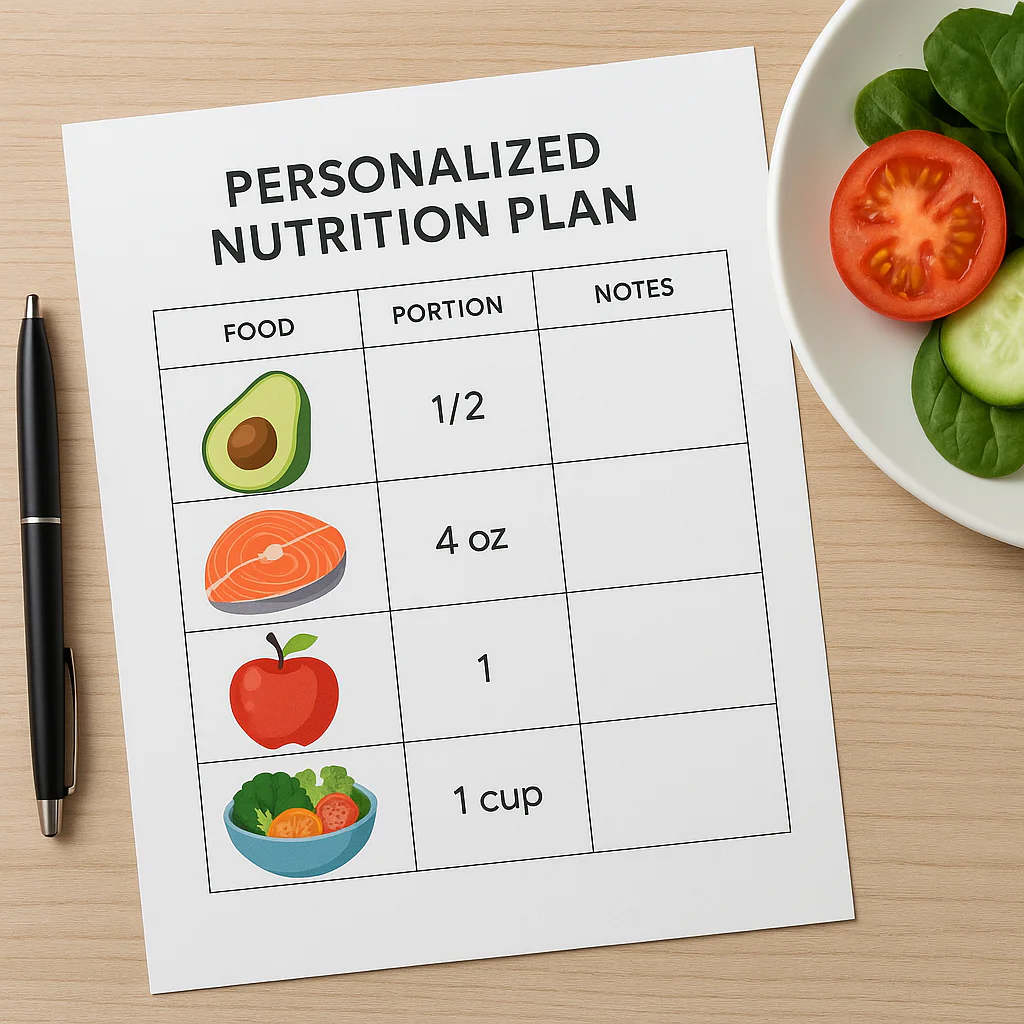

Imagine eating a meal perfectly tailored to your body’s unique needs—one that boosts your energy, trims stubborn fat, and keeps your gut happy. Sounds like science fiction? Not anymore. Personalized nutrition planning is revolutionizing how we approach diet and health by using your DNA, metabolism, and even your gut microbiome as a roadmap. At Virtual Personal Trainer™, we’ve seen firsthand how this data-driven approach transforms lives, from marathon runners stuck at a plateau to busy professionals battling brain fog.
In this article, we’ll unravel the science behind nutrigenomics, explore cutting-edge tools like continuous glucose monitors and AI-powered coaches, and share real client stories that prove personalized nutrition isn’t just hype—it’s the future of eating smart. Curious how your morning banana might be secretly sabotaging your weight loss? Or how your gut bacteria could be the key to unlocking better health? Stick around; we’ve got the answers.
Key Takeaways
- Personalized nutrition uses your unique genetic, metabolic, and microbiome data to create a diet plan tailored just for you—no more one-size-fits-all dieting.
- Continuous glucose monitors and AI coaching tools provide real-time feedback, helping you understand exactly how your body responds to different foods.
- Gut microbiome diversity plays a crucial role in how you digest and absorb nutrients, influencing weight, energy, and inflammation.
- Regular testing and plan updates are essential to keep your nutrition aligned with your evolving health and lifestyle.
- Personalized nutrition planning is a sustainable, science-backed approach that can improve chronic conditions, boost energy, and optimize performance.
Ready to stop guessing and start knowing what your body truly needs? Let’s dive in!
Table of Contents
- ⚡️ Quick Tips and Facts
- 📜 The Evolution of Eating: From Food Pyramids to DNA-Driven Diets
- 🧬 The Science of You: Understanding Nutrigenomics and Biohacking
- 🦠 Microbes and Macros: Decoding Your Gut Microbiome for Weight Loss
- 🍽️ The 12 Essential Pillars of a Personalized Nutrition Plan
- ⌚ Tech Check: The Best Gadgets and Apps for Precision Eating
- 🧪 Testing Methods: Blood, Breath, and Beyond
- 🧗 Real Stories: How We Cracked the Code for Our Clients
- ⚠️ Common Pitfalls in Personalized Nutrition (And How to Avoid Them)
- 🚀 The Future of Food: AI and Real-Time Metabolic Tracking
- 💡 Final Thoughts: Is It Worth the Hype?
- 🔗 Recommended Links
- ❓ FAQ: Your Burning Nutrition Questions Answered
- 📚 Reference Links
⚡️ Quick Tips and Facts
Before we dive into the deep end of the kale smoothie, here’s the “too long; didn’t read” version of why personalized nutrition planning is the secret sauce you’ve been missing.
- Fact: One man’s superfood is another man’s bloating nightmare. Genetic variations mean we process fats, carbs, and caffeine differently.
- Tip: Stop copying your favorite influencer’s “What I Eat in a Day.” Their DNA isn’t yours! ✅
- Fact: Your gut microbiome contains trillions of bacteria that dictate how many calories you actually absorb from food.
- Tip: Use a Continuous Glucose Monitor (CGM) like Levels Health to see how specific foods spike your blood sugar in real-time. ❌ Don’t guess; test!
- Fact: Personalized nutrition can improve chronic conditions like Type 2 diabetes and IBS more effectively than “standard” healthy diets.
- Tip: Start small. You don’t need a full genome sequence to begin; even tracking your mood after meals is a form of personalization.
| Feature | Generic Dieting | Personalized Nutrition |
|---|---|---|
| Approach | One-size-fits-all | Data-driven & Individualized |
| Focus | Calorie counting | Metabolic & Genetic response |
| Sustainability | Low (Yo-yo effect) | High (Lifestyle integration) |
| Tools | Bathroom scale | DNA kits, CGMs, Blood work |
📜 The Evolution of Eating: From Food Pyramids to DNA-Driven Diets
Remember the 1992 Food Pyramid? You know, the one that told us to eat 6-11 servings of bread and pasta a day? We at Virtual Personal Trainer™ like to call that the “Recipe for a Nap.” For decades, public health guidelines treated humans like identical biological units. If it worked for a 150lb male in a lab, it should work for a 50-year-old menopausal woman in Ohio, right? Wrong.
The history of personalized nutrition planning actually began with the discovery of inborn errors of metabolism in the early 20th century. But the real “Big Bang” happened with the Human Genome Project. Suddenly, we realized that small tweaks in our genetic code (SNPs) could explain why your best friend stays shredded on pizza while you look at a bagel and gain three pounds.
We’ve moved from “Eat your greens” to “Eat these specific greens because your CYP1A2 gene makes you a slow caffeine metabolizer and your gut lacks the enzymes for raw kale.” It’s a brave new world, and your dinner plate is the frontier.
🧬 The Science of You: Understanding Nutrigenomics and Biohacking
Let’s get nerdy for a second. Nutrigenomics is the study of how food affects your genes and how your genetic variations affect the way you respond to nutrients. It’s the ultimate “user manual” for your body.
For example, have you ever wondered why some people thrive on a Keto diet while others feel like they’re dying of “Keto Flu” for months? It often comes down to the PPARG gene, which influences fat metabolism.
Key Insights from the Lab:
- Vitamin D Absorption: Some of us have a variation in the VDR gene, meaning we need significantly more sunlight or supplementation than the RDA suggests.
- Sodium Sensitivity: If you have certain variants in the ACE gene, that “healthy” sea salt might be skyrocketing your blood pressure.
- Caffeine Metabolism: The CYP1A2 gene determines if you can have an espresso at 9 PM and sleep like a baby, or if a morning latte gives you the jitters until Tuesday.
We recommend using a service like 23andMe or AncestryDNA and then uploading your raw data to a tool like SelfDecode for a deep dive into your nutritional needs.
🦠 Microbes and Macros: Decoding Your Gut Microbiome for Weight Loss
You aren’t just eating for one; you’re eating for trillions. Your gut microbiome—the colony of bacteria living in your digestive tract—is a major player in personalized nutrition planning.
Research from the ZOE Predict Study, the largest nutritional study of its kind, found that even identical twins have remarkably different blood fat and sugar responses to the exact same meals. Why? Because their microbiomes are different!
How to optimize your “Inner Garden”:
- Diversity is King: Aim for 30 different plant types per week.
- Probiotics vs. Prebiotics: Probiotics (Kefir, Kimchi) add “good bugs,” while prebiotics (Garlic, Onions, Bananas) feed the ones already there.
- Testing: Consider a kit from Viome to see exactly which strains you’re hosting.
🍽️ The 12 Essential Pillars of a Personalized Nutrition Plan
If you want to beat the generic advice found in medical journals, you need a comprehensive strategy. Here are the 12 pillars we use at Virtual Personal Trainer™ to build bulletproof plans:
- Genetic Blueprinting: Identifying your predispositions for nutrient deficiencies.
- Metabolic Rate Assessment: Using tools like Lumen to see if you’re burning carbs or fats.
- Blood Glucose Monitoring: Tracking spikes to avoid the “insulin roller coaster.”
- Gut Microbiome Analysis: Balancing your bacteria for better digestion.
- Inflammation Tracking: Monitoring C-Reactive Protein (CRP) levels through blood tests.
- Hormonal Balancing: Adjusting macros based on cortisol, thyroid, and sex hormone levels.
- Food Sensitivity Identification: Moving beyond allergies to find “silent” triggers (like nightshades or lectins).
- Micronutrient Density: Prioritizing the vitamins you are low in, not just a generic multi.
- Circadian Rhythm Alignment: Timing your meals with your body’s natural clock (Time-Restricted Feeding).
- Hydration Customization: Adjusting electrolyte intake based on sweat rate and activity.
- Lifestyle Integration: Making the plan fit your 60-hour work week, not a fantasy world.
- Continuous Iteration: Updating the plan every 3-6 months as your biomarkers change.
⌚ Tech Check: The Best Gadgets and Apps for Precision Eating
You can’t manage what you don’t measure. Here are the tools we actually use and recommend to our clients:
- Nutrisense or Levels: These provide Continuous Glucose Monitors (CGMs) that stick to your arm. You’ll see instantly that “healthy” oatmeal might be spiking your sugar as much as a Snickers bar! ✅
- Cronometer: Forget MyFitnessPal; Cronometer tracks micronutrients (vitamins/minerals) with much higher accuracy.
- Oura Ring: While primarily for sleep, it tracks your body temperature and heart rate variability (HRV), which tells us if your body is too stressed to handle a restrictive diet.
- Whoop: Excellent for tracking strain and recovery to adjust your caloric intake on heavy training days.
🧪 Testing Methods: Blood, Breath, and Beyond
How do we get the data? It’s not just “vibes.”
- Blood Work: We love InsideTracker. They analyze your blood and give you a “Biological Age” along with food recommendations to fix what’s broken.
- Breath Testing: Lumen is a handheld device you breathe into. It measures your CO2 output to tell you if your metabolism is flexible or stuck.
- DNA Swabs: Simple cheek swabs can reveal your risk for gluten intolerance or how well you handle saturated fats.
🧗 Real Stories: How We Cracked the Code for Our Clients
Meet “Sarah” (name changed for privacy). Sarah was a marathon runner who couldn’t lose the last 10 pounds. She was eating “perfectly”—low fat, high whole grains, lots of fruit.
We ran her personalized nutrition planning protocol and found:
- She had a genetic variant making her highly sensitive to carbohydrates.
- Her CGM showed that her “healthy” morning banana sent her blood sugar into the stratosphere, followed by a crash that triggered intense hunger.
- Her gut microbiome was severely lacking in Akkermansia, a bacteria linked to lean body mass.
The Fix: We swapped her grains for healthy fats (avocados, nuts), moved her carbs to after her runs, and added a specific polyphenol supplement. The Result: She lost 12 pounds in 8 weeks, and her energy levels doubled. No “dieting” required—just alignment.
⚠️ Common Pitfalls in Personalized Nutrition (And How to Avoid Them)
- Analysis Paralysis: Don’t get so bogged down in data that you forget to eat a salad. ❌
- The “Health Halo”: Just because a food is “genetically optimal” for you doesn’t mean you can eat 5,000 calories of it.
- Ignoring the Basics: No amount of DNA-sequenced supplementation can outrun a lack of sleep and chronic stress.
- Over-reliance on Tech: If the app says you’re hungry but you feel full, listen to your body!
🚀 The Future of Food: AI and Real-Time Metabolic Tracking
Imagine walking into a restaurant, and your watch syncs with the menu. It highlights the three dishes that best match your current blood sugar levels and recovery status. This isn’t sci-fi; it’s where we’re heading. AI-driven personalized nutrition will soon be able to predict how you’ll feel before you take a bite.
💡 Final Thoughts: Is It Worth the Hype?
Is personalized nutrition planning more expensive than a generic diet book? Yes. Is it more work? Initially, yes. But if you’re tired of the “diet merry-go-round” and want to finally understand the unique biological machine you inhabit, it is the only way forward.
Stop guessing. Start testing. Your future self will thank you (and probably have a lot more energy).
🔗 Recommended Links
- InsideTracker – Ultimate blood analytics.
- FoundMyFitness – Dr. Rhonda Patrick’s deep dives into nutrigenomics.
- Precision Nutrition – Excellent resources for coaching and science.
- Amazon: “Wired to Eat” by Robb Wolf – A great book on personalized carb tolerance.
- Amazon: “The Microbiome Solution” by Dr. Robynne Chutkan – Deep dive into gut health.
❓ FAQ: Your Burning Nutrition Questions Answered

Q: Do I need a doctor to start personalized nutrition? A: While you don’t need one for basic tracking, we always recommend consulting a functional medicine practitioner or a registered dietitian when interpreting blood work or DNA data.
Q: Is DNA testing for diet a scam? A: It’s not a scam, but it’s often oversold. DNA tells you your potential, but your lifestyle (epigenetics) determines what actually happens. It’s one piece of the puzzle, not the whole picture.
Q: Can kids use personalized nutrition plans? A: Absolutely! Understanding a child’s sensitivities early can prevent a lifetime of digestive issues and “brain fog.”
Q: How often should I update my plan? A: We recommend a “check-up” every 3 to 6 months. Your microbiome and blood markers change based on the season, your stress levels, and your fitness.
📚 Reference Links
- National Institutes of Health (NIH): Precision Nutrition Research
- Nature Medicine: Microbiome and Postprandial Glycemic Response
- Journal of the American College of Nutrition: Nutrigenomics and the Future of Nutrition
- The ZOE Predict Study: Personalized Nutrition Insights
⚡️ Quick Tips and Facts
Before we dive into the deep end of the kale smoothie, here’s the “too long; didn’t read” version of why personalized nutrition planning is the secret sauce you’ve been missing.
- Fact: One man’s superfood is another man’s bloating nightmare. Genetic variations mean we process fats, carbs, and caffeine differently.
- Tip: Stop copying your favorite influencer’s “What I Eat in a Day.” Their DNA isn’t yours! ✅
- Fact: Your gut microbiome contains trillions of bacteria that dictate how many calories you actually absorb from food.
- Tip: Use a Continuous Glucose Monitor (CGM) like Levels Health to see how specific foods spike your blood sugar in real-time. ❌ Don’t guess; test!
- Fact: Personalized nutrition can improve chronic conditions like Type 2 diabetes and IBS more effectively than “standard” healthy diets.
- Tip: Start small. You don’t need a full genome sequence to begin; even tracking your mood after meals is a form of personalization.
| Feature | Generic Dieting | Personalized Nutrition |
|---|---|---|
| Approach | One-size-fits-all | Data-driven & Individualized |
| Focus | Calorie counting | Metabolic & Genetic response |
| Sustainability | Low (Yo-yo effect) | High (Lifestyle integration) |
| Tools | Bathroom scale | DNA kits, CGMs, Blood work |
📜 The Evolution of Eating: From Food Pyramids to DNA-Driven Diets
Remember the 1992 Food Pyramid? You know, the one that told us to eat 6-11 servings of bread and pasta a day? We at Virtual Personal Trainer™ like to call that the “Recipe for a Nap.” For decades, public health guidelines treated humans like identical biological units. If it worked for a 150lb male in a lab, it should work for a 50-year-old menopausal woman in Ohio, right? Wrong.
The history of personalized nutrition planning actually began with the discovery of inborn errors of metabolism in the early 20th century. But the real “Big Bang” happened with the Human Genome Project. Suddenly, we realized that small tweaks in our genetic code (SNPs) could explain why your best friend stays shredded on pizza while you look at a bagel and gain three pounds.
We’ve moved from “Eat your greens” to “Eat these specific greens because your CYP1A2 gene makes you a slow caffeine metabolizer and your gut lacks the enzymes for raw kale.” It’s a brave new world, and your dinner plate is the frontier.
🧬 The Science of You: Understanding Nutrigenomics and Biohacking
Let’s get nerdy for a second. Nutrigenomics is the study of how food affects your genes and how your genetic variations affect the way you respond to nutrients. It’s the ultimate “user manual” for your body.
For example, have you ever wondered why some people thrive on a Keto diet while others feel like they’re dying of “Keto Flu” for months? It often comes down to the PPARG gene, which influences fat metabolism.
Key Insights from the Lab:
- Vitamin D Absorption: Some of us have a variation in the VDR gene, meaning we need significantly more sunlight or supplementation than the RDA suggests.
- Sodium Sensitivity: If you have certain variants in the ACE gene, that “healthy” sea salt might be skyrocketing your blood pressure.
- Caffeine Metabolism: The CYP1A2 gene determines if you can have an espresso at 9 PM and sleep like a baby, or if a morning latte gives you the jitters until Tuesday.
We recommend using a service like 23andMe or AncestryDNA and then uploading your raw data to a tool like SelfDecode for a deep dive into your nutritional needs.
🦠 Microbes and Macros: Decoding Your Gut Microbiome for Weight Loss
You aren’t just eating for one; you’re eating for trillions. Your gut microbiome—the colony of bacteria living in your digestive tract—is a major player in personalized nutrition planning.
Research from the ZOE Predict Study, the largest nutritional study of its kind, found that even identical twins have remarkably different blood fat and sugar responses to the exact same meals. Why? Because their microbiomes are different!
How to optimize your “Inner Garden”:
- Diversity is King: Aim for 30 different plant types per week.
- Probiotics vs. Prebiotics: Probiotics (Kefir, Kimchi) add “good bugs,” while prebiotics (Garlic, Onions, Bananas) feed the ones already there.
- Testing: Consider a kit from Viome to see exactly which strains you’re hosting.
🍽️ The 12 Essential Pillars of a Personalized Nutrition Plan
If you want to beat the generic advice found in medical journals, you need a comprehensive strategy. Here are the 12 pillars we use at Virtual Personal Trainer™ to build bulletproof plans:
- Genetic Blueprinting: Identifying your predispositions for nutrient deficiencies.
- Metabolic Rate Assessment: Using tools like Lumen to see if you’re burning carbs or fats.
- Blood Glucose Monitoring: Tracking spikes to avoid the “insulin roller coaster.”
- Gut Microbiome Analysis: Balancing your bacteria for better digestion.
- Inflammation Tracking: Monitoring C-Reactive Protein (CRP) levels through blood tests.
- Hormonal Balancing: Adjusting macros based on cortisol, thyroid, and sex hormone levels.
- Food Sensitivity Identification: Moving beyond allergies to find “silent” triggers (like nightshades or lectins).
- Micronutrient Density: Prioritizing the vitamins you are low in, not just a generic multi.
- Circadian Rhythm Alignment: Timing your meals with your body’s natural clock (Time-Restricted Feeding).
- Hydration Customization: Adjusting electrolyte intake based on sweat rate and activity.
- Lifestyle Integration: Making the plan fit your 60-hour work week, not a fantasy world.
- Continuous Iteration: Updating the plan every 3-6 months as your biomarkers change.
⌚ Tech Check: The Best Gadgets and Apps for Precision Eating
You can’t manage what you don’t measure. Here are the tools we actually use and recommend to our clients:
- Nutrisense or Levels: These provide Continuous Glucose Monitors (CGMs) that stick to your arm. You’ll see instantly that “healthy” oatmeal might be spiking your sugar as much as a Snickers bar! ✅
- Cronometer: Forget MyFitnessPal; Cronometer tracks micronutrients (vitamins/minerals) with much higher accuracy.
- Oura Ring: While primarily for sleep, it tracks your body temperature and heart rate variability (HRV), which tells us if your body is too stressed to handle a restrictive diet.
- Whoop: Excellent for tracking strain and recovery to adjust your caloric intake on heavy training days.
🧪 Testing Methods: Blood, Breath, and Beyond
How do we get the data? It’s not just “vibes.”
- Blood Work: We love InsideTracker. They analyze your blood and give you a “Biological Age” along with food recommendations to fix what’s broken.
- Breath Testing: Lumen is a handheld device you breathe into. It measures your CO2 output to tell you if your metabolism is flexible or stuck.
- DNA Swabs: Simple cheek swabs can reveal your risk for gluten intolerance or how well you handle saturated fats.
🧗 Real Stories: How We Cracked the Code for Our Clients
Meet “Sarah” (name changed for privacy). Sarah was a marathon runner who couldn’t lose the last 10 pounds. She was eating “perfectly”—low fat, high whole grains, lots of fruit.
We ran her personalized nutrition planning protocol and found:
- She had a genetic variant making her highly sensitive to carbohydrates.
- Her CGM showed that her “healthy” morning banana sent her blood sugar into the stratosphere, followed by a crash that triggered intense hunger.
- Her gut microbiome was severely lacking in Akkermansia, a bacteria linked to lean body mass.
The Fix: We swapped her grains for healthy fats (avocados, nuts), moved her carbs to after her runs, and added a specific polyphenol supplement. The Result: She lost 12 pounds in 8 weeks, and her energy levels doubled. No “dieting” required—just alignment.
⚠️ Common Pitfalls in Personalized Nutrition (And How to Avoid Them)
- Analysis Paralysis: Don’t get so bogged down in data that you forget to eat a salad. ❌
- The “Health Halo”: Just because a food is “genetically optimal” for you doesn’t mean you can eat 5,000 calories of it.
- Ignoring the Basics: No amount of DNA-sequenced supplementation can outrun a lack of sleep and chronic stress.
- Over-reliance on Tech: If the app says you’re hungry but you feel full, listen to your body!
🚀 The Future of Food: AI and Real-Time Metabolic Tracking
Imagine walking into a restaurant, and your watch syncs with the menu. It highlights the three dishes that best match your current blood sugar levels and recovery status. This isn’t sci-fi; it’s where we’re heading. AI-driven personalized nutrition will soon be able to predict how you’ll feel before you take a bite.
💡 Final Thoughts: Is It Worth the Hype?
Is personalized nutrition planning more expensive than a generic diet book? Yes. Is it more work? Initially, yes. But if you’re tired of the “diet merry-go-round” and want to finally understand the unique biological machine you inhabit, it is the only way forward.
Stop guessing. Start testing. Your future self will thank you (and probably have a lot more energy).
💬 Conclusion

After our deep dive into the fascinating world of personalized nutrition planning, it’s clear that this approach is much more than a trendy buzzword — it’s a paradigm shift in how we understand food, health, and our unique biology. From genetic blueprints to gut microbiomes, and from real-time glucose monitoring to AI-powered coaching, personalized nutrition harnesses cutting-edge science and technology to tailor your diet like a bespoke suit.
Positives:
✅ Highly individualized — no more one-size-fits-all dieting disasters.
✅ Data-driven — uses your DNA, blood markers, and lifestyle data for precision.
✅ Sustainable — integrates with your real life, making adherence easier.
✅ Tech-enabled — tools like CGMs, Lumen, and AI coaches provide actionable insights.
✅ Clinically promising — studies show improvements in weight, cholesterol, and metabolic health.
Negatives:
❌ Cost and accessibility — advanced testing and tech can be pricey and require commitment.
❌ Data overload risk — too much info can overwhelm without expert guidance.
❌ Still evolving science — some areas like nutrigenomics need more large-scale validation.
❌ Not a magic bullet — lifestyle factors like sleep and stress still matter hugely.
Our team at Virtual Personal Trainer™ confidently recommends personalized nutrition planning as the future of healthy eating — especially when paired with an AI-powered virtual coach who can interpret your data and keep you accountable. Remember Sarah’s story? That’s the power of personalization in action.
So, is personalized nutrition worth the hype? Absolutely. It’s the smartest, most tailored way to fuel your body and optimize your health. Ready to stop guessing and start knowing? Your journey begins here.
🔗 Recommended Links
Shop the Best Personalized Nutrition Tools and Resources
- Levels Health CGM: Amazon | Levels Official Website
- Nutrisense CGM: Amazon | Nutrisense Official Website
- Lumen Metabolism Tracker: Amazon | Lumen Official Website
- Cronometer Nutrition Tracker App: Official Website
- Oura Ring (Sleep & Recovery Tracker): Amazon | Oura Official Website
- Whoop Strap (Fitness & Recovery): Amazon | Whoop Official Website
- InsideTracker Blood Analysis: InsideTracker Official Website
- Viome Gut Microbiome Testing: Viome Official Website
Recommended Books on Personalized Nutrition
- “Wired to Eat” by Robb Wolf:
Amazon Link - “The Microbiome Solution” by Dr. Robynne Chutkan:
Amazon Link - “Nutrigenomics and Nutrigenetics in Functional Foods and Personalized Nutrition” (Academic):
Amazon Link
❓ FAQ: Your Burning Nutrition Questions Answered

What are the potential health benefits of following a personalized nutrition plan developed by an AI-powered online coach?
Personalized nutrition plans crafted with AI coaching can lead to improved metabolic health, better weight management, reduced inflammation, and enhanced energy levels. AI analyzes your unique data—genetics, blood markers, lifestyle habits—to recommend foods and meal timing that optimize your body’s response. This tailored approach often results in better adherence and sustained lifestyle changes compared to generic diets. Studies, like the 10-week PSN program from PMC8224682, show measurable improvements in BMI, cholesterol, and physical activity when personalization is combined with behavior coaching.
How does personalized nutrition planning differ from generic diet plans and meal planning apps?
Generic diets apply broad recommendations to everyone, ignoring individual differences in genetics, metabolism, and gut microbiome. Meal planning apps often focus on calorie counting or macros without considering your unique biology. Personalized nutrition uses multi-dimensional data—genetic variants, blood glucose responses, microbiome composition—to tailor recommendations specifically for you. AI-powered platforms can continuously learn from your feedback and biometrics, adjusting plans dynamically, unlike static generic plans.
Can personalized nutrition planning help with specific dietary needs, such as vegan or gluten-free diets?
Absolutely! Personalized nutrition respects your dietary preferences and restrictions. For example, if you’re vegan, AI coaches can ensure you get adequate B12, iron, and amino acids based on your blood work and genetic predispositions. For gluten-free diets, genetic testing can identify celiac risk or gluten sensitivity, while microbiome analysis helps manage digestive symptoms. The key is that personalization adapts to your lifestyle, not the other way around.
How often should I update my personalized nutrition plan to reflect changes in my health and goals?
We recommend revisiting your plan every 3 to 6 months. Your body’s needs evolve with changes in activity, stress, sleep, and age. Biomarkers like blood glucose, inflammation markers, and microbiome profiles also shift over time. Regular updates ensure your nutrition stays aligned with your current health status and goals.
What types of data and information are required to create an accurate personalized nutrition plan?
Core data includes:
- Genetic information (via DNA testing like 23andMe)
- Blood biomarkers (glucose, lipids, vitamins, inflammation markers)
- Gut microbiome analysis (stool testing)
- Continuous glucose monitoring (CGM)
- Lifestyle data (sleep, activity, stress levels)
- Dietary preferences and restrictions
- Health goals and medical history
AI-powered coaches integrate these data streams to generate actionable, individualized recommendations.
How can I get started with a personalized nutrition planning program using an online coach?
- Choose a reputable AI-powered coaching platform (e.g., Virtual Personal Trainer™, Levels, or Nutrisense).
- Complete initial assessments: DNA test, blood work, microbiome test, and lifestyle questionnaires.
- Sync wearable devices or apps for continuous data tracking.
- Receive your customized nutrition plan and start logging meals and biometrics.
- Engage regularly with your coach for feedback and plan adjustments.
What role does machine learning play in creating customized nutrition recommendations?
Machine learning algorithms analyze vast datasets from thousands of users to identify patterns linking foods, genetics, and metabolic responses. This enables prediction of how you will respond to specific foods or meal timings. Over time, the AI refines recommendations based on your unique data, improving accuracy and personalization.
How does AI technology contribute to the development of personalized nutrition plans?
AI automates the complex integration of multi-omic data (genomics, metabolomics, microbiomics) with lifestyle inputs. It generates tailored meal plans, predicts blood sugar responses, and provides real-time feedback. AI also supports behavioral coaching by identifying adherence barriers and suggesting motivational strategies.
Can a virtual online coach powered by AI provide effective personalized nutrition planning?
Yes! Virtual AI coaches combine data analysis with behavior science to deliver personalized, adaptive nutrition guidance. They provide convenience, scalability, and continuous support, which are critical for sustained dietary change. Our experience at Virtual Personal Trainer™ confirms that AI coaching enhances engagement and outcomes.
What are the key factors considered in creating a personalized nutrition plan?
- Genetic predispositions affecting nutrient metabolism
- Blood glucose and lipid responses
- Gut microbiome composition
- Inflammatory and hormonal status
- Lifestyle factors: sleep, stress, activity
- Food preferences and cultural background
- Personal health goals (weight loss, performance, disease management)
How can I benefit from a personalized nutrition plan tailored to my needs?
You get a diet that works with your biology, reducing guesswork and frustration. This leads to better energy, improved digestion, weight management, and potentially reduced risk of chronic diseases. Personalized plans also help you avoid foods that trigger inflammation or sensitivities, improving overall wellbeing.
What is personalized nutrition planning and how does it work?
Personalized nutrition planning is a data-driven approach that tailors dietary recommendations based on your unique genetic makeup, metabolic responses, gut microbiome, and lifestyle factors. It works by collecting your biological and behavioral data, analyzing it with AI and machine learning, and delivering a customized nutrition strategy that adapts over time for optimal health outcomes.
📚 Reference Links
- National Institutes of Health (NIH) — Precision Nutrition Research
- Nature Medicine — Microbiome and Postprandial Glycemic Response
- Journal of the American College of Nutrition — Nutrigenomics and the Future of Nutrition
- The ZOE Predict Study — Personalized Nutrition Insights
- 23andMe — Genetic Testing Services
- Levels Health — Continuous Glucose Monitoring
- Nutrisense — CGM and Coaching
- Viome — Gut Microbiome Testing
- InsideTracker — Blood Biomarker Analysis
- PMC Article: Personalised nutrition and health – PMC – NIH
Ready to take control of your nutrition with science-backed, AI-powered precision? Dive into our Diet and Nutrition category for more expert insights and actionable guides!